42 citations
,
August 1995 in “British journal of dermatology/British journal of dermatology, Supplement” RXR-alpha is strongly expressed in both normal and psoriatic skin and may help in skin cell differentiation and hair growth.
June 2026 in “British Journal of Dermatology” Ritlecitinib shows promise for treating alopecia areata with significant hair regrowth and no serious side effects.
9 citations
,
July 2019 in “Dermatologic therapy” Alitretinoin can effectively treat frontal fibrosing alopecia.
May 2025 in “CPT Pharmacometrics & Systems Pharmacology” A 50 mg non-loading dose of ritlecitinib is safe for adults and adolescents.
 April 2025 in “Dermatology The American Medical Journal”
 Low-dose isotretinoin is effective for treating pediatric scarring alopecia.
January 2019 in “FarFar - Pharmacy Repository” Microemulsions improve adapalene's skin absorption for better acne treatment.
15 citations
,
March 2000 in “The journal of investigative dermatology/Journal of investigative dermatology” As skin cells mature, vitamin D receptor levels decrease while retinoid X receptor α levels increase.
 1 citations
,
July 2017 in “Global journal of pharmacy & pharmaceutical sciences”
1 citations
,
July 2017 in “Global journal of pharmacy & pharmaceutical sciences” A new hair loss treatment was created using minoxidil and tretinoin in stable niosomes, which effectively released the drugs over time.
June 2026 in “Journal of Investigative Dermatology” Retinoic acids temporarily change skin stem cells to a slower cycle and more differentiated state.
 September 2018 in “Reactions Weekly”
 Two women had skin reactions from a hair loss treatment and got better after stopping use.
 March 2026 in “American Journal of Clinical Dermatology”
 Ritlecitinib is effective and safe for long-term use in treating severe alopecia areata in people aged 12 and older.
 51 citations
,
January 2012 in “Annals of dermatology/Annals of Dermatology”
51 citations
,
January 2012 in “Annals of dermatology/Annals of Dermatology” A boy with alopecia regrew hair using a vitamin D cream after other treatments failed.
39 citations
,
August 1998 in “FEBS Letters” Two new enzymes, PAD-R11 and PAD-R4, were cloned and showed activity, with PAD-R11 resembling epidermal enzymes.
9 citations
,
January 2021 in “Mediators of Inflammation” 15d‐PGJ2 cream protects against UVB-induced skin damage in mice.
June 2026 in “British Journal of Dermatology” Ritlecitinib shows promise in improving severe alopecia areata, with 27% of patients seeing success.
 August 2018 in “Journal of The American Academy of Dermatology”
 Oral alitretinoin is effective for certain types of chronic hand eczema, with mild side effects.
58 citations
,
November 2018 in “Cochrane library” Oral isotretinoin may slightly improve acne but increases the risk of side effects like dry lips and skin; more research is needed to understand its full risks and benefits.
1 citations
,
January 1980 in “Side effects of drugs annual” Taking too much vitamin A can cause health problems like bone pain and hair loss.
2 citations
,
October 2025 in “Frontiers in Medicine” Isotretinoin has many serious side effects, including some new ones, needing better safety measures and updated labels.
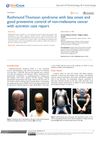 August 2024 in “Journal of Dermatology & Cosmetology”
 Acitretin effectively prevented skin cancer in a patient with late-onset Rothmund-Thomson syndrome.
March 2023 in “SKIN The Journal of Cutaneous Medicine” Ritlecitinib helped most alopecia areata patients regrow hair by Week 48.
7 citations
,
October 2024 in “Journal of the American Academy of Dermatology” Continued ritlecitinib treatment helps sustain hair regrowth in alopecia areata patients.
 August 2019 in “Journal of The American Academy of Dermatology”
 RV3466F lotion significantly reduces hair loss and improves acute telogen effluvium.
June 2005 in “Journal of Investigative Dermatology” A bull with a gene mutation was asymptomatic, synthetic retinoids cause hair loss, and new therapeutic targets were identified for skin diseases.
February 2026 in “The Journal of Dermatology” Ritlecitinib effectively regrows scalp, eyebrow, and eyelash hair in Asians with alopecia areata and is safe.
June 2026 in “British Journal of Dermatology” Ritlecitinib is effective and safe for treating alopecia areata, especially in newer cases.
4 citations
,
September 2006 in “Prescriber” Use topical retinoids for most acne cases, sometimes combined with other treatments.
26 citations
,
January 2005 in “PubMed” RUM-loaded SLN shows promise for treating acne and hair loss topically.
December 2025 in “International Journal of Innovative Technologies in Social Science” Oral supplements like Vitamin E and Omega-3 can help reduce isotretinoin side effects.
1 citations
,
July 2024 in “Journal of Investigative Dermatology” VYN201 shows promise as a safe and effective treatment for non-segmental vitiligo.