 32 citations
,
June 2012 in “PLoS ONE”
32 citations
,
June 2012 in “PLoS ONE” Blocking IL-8 can reduce skin rashes from cancer treatment.
2 citations
,
August 2021 in “Animal Cells and Systems” Egfl6 is not needed for zebrafish face development.
 February 2024 in “bioRxiv (Cold Spring Harbor Laboratory)”
 Activating TLR9 helps heal large wounds and regrow hair by involving a specific type of immune cell.
232 citations
,
January 2002 in “Mechanisms of development” Different enzymes are active in different parts of developing mouse organs.
107 citations
,
June 1997 in “PubMed” EGFR is essential for normal hair development and follicle differentiation.
 April 2023 in “Journal of Investigative Dermatology”
 CGRP MAbs treatment for migraines may also improve rosacea symptoms, but more research is needed to confirm its effectiveness and safety.
 January 2026 in “Frontiers in Immunology”
 Timely treatment of eosinophilic asthma in rheumatic disease patients can prevent organ damage.
 154 citations
,
November 2017 in “Development”
154 citations
,
November 2017 in “Development” Fibroblast Growth Factors (FGFs) are important for tissue repair and regeneration, influencing cell behavior and other factors involved in healing, and are crucial in processes like wound healing, bone repair, and hair growth.
 13 citations
,
January 1999 in “Postgraduate Medicine”
13 citations
,
January 1999 in “Postgraduate Medicine” New drugs for rheumatoid arthritis show improvement but have side effects and are not a cure.
September 2017 in “Journal of Investigative Dermatology” RCS-01 is safe and may help rejuvenate aging skin.
 26 citations
,
December 2017 in “Journal of Investigative Dermatology”
26 citations
,
December 2017 in “Journal of Investigative Dermatology” Disrupting Notch signaling in blood vessels increases scarring during wound healing in mice.
 40 citations
,
March 2019 in “Nature Communications”
40 citations
,
March 2019 in “Nature Communications” CRAC channels are crucial for the development and function of specialized immune cells, preventing severe inflammation and autoimmune diseases.
3 citations
,
March 2016 in “Experimental Dermatology” A mutation in the hairless gene speeds up severe itchy skin in mice on a special diet.
 1 citations
,
November 2018 in “bioRxiv (Cold Spring Harbor Laboratory)”
1 citations
,
November 2018 in “bioRxiv (Cold Spring Harbor Laboratory)” Signals from skin cells controlled by Rac proteins help turn certain precursor cells into white fat cells.
9 citations
,
May 2014 in “BMC medical genetics” A woman with a unique syndrome similar to TRPS has a genetic change near the TRPS1 gene, affecting its regulation.
44 citations
,
April 2013 in “Proceedings of the National Academy of Sciences of the United States of America” FGF13 gene changes cause excessive hair growth in a rare condition.
 13 citations
,
March 2020 in “Genes”
13 citations
,
March 2020 in “Genes” Disrupting the FGF5 gene in rabbits leads to longer hair by extending the hair growth phase.
4 citations
,
September 2024 in “Cell Reports” Granulocyte colony stimulating factor helps heal wounds without scars.
CRISPR gene editing reduces harmful molecules in cells from Emery–Dreifuss Muscular Dystrophy patients.
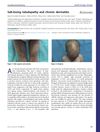 July 2018 in “Kidney international”
 Genetic testing for EGFR mutations is crucial in similar cases.
 January 2019 in “Medicine Science | International Medical Journal”
 Children with different rheumatologic diseases have specific skin symptoms that can help with diagnosis.
2 citations
,
January 2001 in “Medical Journal of National Defending Forces in Northwest China” Endogenous EGF helps heal second-degree scald wounds faster.
Children with Parry Romberg Syndrome had successful facial fat-grafting surgeries after disease stabilization with no complications.
 November 2024 in “Journal of Investigative Dermatology”
 TGF-β signaling is essential for new hair growth after wounds.
IL-18 signaling helps mature Tregs move into the thymus.
November 2024 in “Journal of Investigative Dermatology” Scalp hair follicle cells help protect and heal skin in certain skin conditions.
April 2017 in “The journal of investigative dermatology/Journal of investigative dermatology” Double stranded RNA helps skin wounds heal by coordinating specific proteins and signaling pathways.
April 2019 in “Journal of Investigative Dermatology” FGFR2 signaling controls Merkel cell formation in different skin regions.
 1 citations
,
January 2025 in “Advances in Dermatology and Allergology”
1 citations
,
January 2025 in “Advances in Dermatology and Allergology” Platelet-rich fibrin helps heal stubborn wounds in rats by reducing inflammation and boosting tissue repair.
20 citations
,
November 2003 in “American Journal Of Pathology” Fibroblasts from healthy donors can prevent changes seen in recessive epidermolysis bullosa simplex.