
The document showed detailed images of skin structures and discussed skin diseases and their diagnosis.
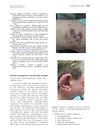
A 72-year-old man was diagnosed with a rare skin form of Rosai-Dorfman disease after years of misdiagnosis.
11 citations
,
November 2018 in “British Journal of Dermatology” Oxymetazoline cream 1.0% effectively reduces rosacea redness, and using baseline photos improves assessment accuracy.
 5 citations
,
January 2018 in “Springer eBooks”
5 citations
,
January 2018 in “Springer eBooks” Acne in dark skin is influenced by environmental factors and can lead to hyperpigmentation, with various treatment options available.
 December 2010 in “Zanco Journal of Medical Sciences”
 Acne is more common and severe in females, often with pre-menstrual flare-ups and associated with seborrhea.
 January 2019 in “Springer eBooks”
 Acne is linked to inflammation and insulin resistance, and is associated with various syndromes that require different treatments.
 January 2019 in “Springer eBooks”
 Acne can appear or persist in adulthood due to hormonal changes, external factors, or substance use, and requires appropriate treatment.
2 citations
,
August 2014 in “Journal of dermatological science” Adapalene 0.1% effectively reduces acne by decreasing comedones and altering skin properties.
1 citations
,
January 2025 in “Clinical Cosmetic and Investigational Dermatology” Higher levels of certain proteins may increase or decrease rosacea risk.
 19 citations
,
April 2019 in “Journal of the European Academy of Dermatology and Venereology”
19 citations
,
April 2019 in “Journal of the European Academy of Dermatology and Venereology” Acne lesions start with changes in hair follicles and increase in inflammation, suggesting a cycle that could affect treatment strategies.
15 citations
,
January 2006 in “British Journal of Dermatology” A woman with skin eruptions and hair loss improved significantly with ointment treatment.
September 2020 in “Journal of Mind and Medical Sciences” Combining NdYag laser with pulsed light effectively treats rosacea with manageable side effects.
 59 citations
,
January 2015 in “Nanoscale”
59 citations
,
January 2015 in “Nanoscale” The new micelle formulation delivers acne treatment more effectively and safely than current gels.
 18 citations
,
October 2016 in “Clinics in Dermatology”
18 citations
,
October 2016 in “Clinics in Dermatology” The document talks about hard-to-treat and rare acne types, their connection with other health issues, the importance of correct diagnosis, and the challenges in managing them.
research ACNE
58 citations
,
January 1997 in “Dermatologic Clinics” Acne significantly affects mental health and quality of life, with research suggesting hormonal and genetic factors in its development and emphasizing early treatment to prevent scarring.
 November 2022 in “The journal of investigative dermatology/Journal of investigative dermatology”
 Ivermectin 1% cream effectively reduces visible and invisible symptoms of rosacea.
 January 2024 in “International Journal of Dermatology Venereology and Leprosy Sciences”
 Patients with acne vulgaris have lower serum irisin levels.
 34 citations
,
October 2024 in “Clinical Cosmetic and Investigational Dermatology”
34 citations
,
October 2024 in “Clinical Cosmetic and Investigational Dermatology” Azelaic acid is effective for treating rosacea, acne, and melasma.
 November 1966 in “British Journal of Dermatology”
 The meeting discussed various skin conditions, treatments, and unusual cases, highlighting the effectiveness of tetracycline in treating rosacea.
 April 2017 in “Journal of Dermatological Science”
 Benzoyl peroxide and adapalene gels work differently to reduce acne in mice.
6 citations
,
January 1997 in “Pediatric dermatology” The case suggests a possible link between severe acne and certain bone deformities.
 June 2023 in “British journal of dermatology/British journal of dermatology, Supplement”
 A woman with rheumatoid arthritis had a unique type of scarring hair loss not caused by infection, requiring early treatment to avoid permanent hair loss.
 1 citations
,
November 2015 in “European medical journal”
1 citations
,
November 2015 in “European medical journal” Acne is common and can be linked to various systemic health conditions and syndromes.
 3 citations
,
July 2011 in “Journal of the Egyptian Women's Dermatologic Society (Print)”
3 citations
,
July 2011 in “Journal of the Egyptian Women's Dermatologic Society (Print)” Acne is common in adult women, often continues from adolescence, and can lead to scarring.

Rosacea may be linked to gut and brain issues, not just a skin problem.
 45 citations
,
January 1998 in “Dermatology”
45 citations
,
January 1998 in “Dermatology” Some skin conditions look like acne but are caused by drugs, and they usually get better when the drug is stopped.
 August 2023 in “British journal of dermatology/British journal of dermatology, Supplement”
 Rubbing or pressing on the face can cause small bumps, and changing posture along with certain creams can improve them.
12 citations
,
July 2020 in “Actas Dermo-Sifiliográficas” Frontal fibrosing alopecia mostly affects postmenopausal women, often involves eyebrows, and is linked to conditions like lichen planus and rosacea.
 3 citations
,
July 2015 in “Australasian Journal of Dermatology”
3 citations
,
July 2015 in “Australasian Journal of Dermatology” A man developed an allergic skin reaction to a rosacea treatment and improved after stopping the medication and receiving allergy-specific care.
Androgenetic alopecia is more common in male Chinese adolescents and linked to rosacea, but doesn't affect quality of life.