83 citations
,
March 1995 in “PLANT PHYSIOLOGY” The differentiation stage of root epidermal cells is crucial for root hair depolarization in Medicago sativa when exposed to specific Nod factors.
9 citations
,
July 2008 in “Archives of Dermatological Research” 2 citations
,
October 1931 in “Archives of Dermatology and Syphilology” A rare scalp infection in a child developed into a kerion with additional skin symptoms.
8 citations
,
March 2015 in “International Journal of Oncology” Tsc2-deficient stem cells can help understand and treat TSC-related tumors.
1 citations
,
September 2023 in “Journal of the American Academy of Dermatology” Continued ritlecitinib treatment can lead to hair regrowth in some patients with alopecia areata who initially don't respond.
January 2026 in “Advanced Healthcare Materials” The new bioreactor improves skin grafts by evenly stretching cells and monitoring conditions for better growth.
April 2022 in “Microbiology and Immunology” A specific DNA pattern in Malassezia restricta may be linked to hair loss in men.
52 citations
,
July 2011 in “PubMed” TRPS1 is crucial for bone, kidney, and hair follicle development.
1 citations
,
July 2025 in “Cancer Medicine” Colorectal cancer cells can adapt without losing their traits or drug sensitivity.
1 citations
,
September 2023 in “Journal of the American Academy of Dermatology” Ritlecitinib effectively regrows and maintains scalp, eyebrow, and eyelash hair in alopecia areata patients.
Ribonucleotide excision repair is crucial to prevent skin cancer.
Ribonucleotide excision repair is crucial to prevent skin cancer.
28 citations
,
October 2000 in “International Journal of Dermatology” A fungal infection developed on a herpes scar and was successfully treated with antifungal medication.
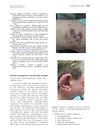
A 72-year-old man was diagnosed with a rare skin form of Rosai-Dorfman disease after years of misdiagnosis.
 March 2025 in “SKIN The Journal of Cutaneous Medicine”
 Certain patient characteristics can help predict hair regrowth success with ritlecitinib in alopecia areata.
 7 citations
,
July 2020 in “Pigment cell & melanoma research”
7 citations
,
July 2020 in “Pigment cell & melanoma research” RT1640 treatment reverses gray hair and promotes hair growth in mice.
34 citations
,
August 2018 in “Cancer research” Fixing DNA errors is crucial to prevent skin cancer.
34 citations
,
June 1992 in “Journal of Cutaneous Pathology” Harlequin ichthyosis involves abnormal skin cell structures and giant mitochondria, affecting skin and hair.
 12 citations
,
July 1957 in “Journal of Investigative Dermatology”
12 citations
,
July 1957 in “Journal of Investigative Dermatology” Giving dihydrotachysterol to mother rats caused skin hardening and bone issues in their babies through milk.
16 citations
,
March 2021 in “EvoDevo” Different species use the same genes for tooth regeneration.
5 citations
,
February 2025 in “Pediatric Dermatology” Ritlecitinib was generally well tolerated in children with alopecia areata.
 341 citations
,
November 2009 in “The FASEB Journal”
341 citations
,
November 2009 in “The FASEB Journal” Calreticulin has roles in healing, immune response, and disease beyond its known functions in the endoplasmic reticulum.
 47 citations
,
June 2019 in “Nature Communications”
47 citations
,
June 2019 in “Nature Communications” Noncoding dsRNA boosts hair growth by activating TLR3 and increasing retinoic acid.
 15 citations
,
February 2021 in “Scientific Reports”
15 citations
,
February 2021 in “Scientific Reports” A specific group of stem cells can help regenerate hair continuously.
13 citations
,
February 2025 in “Journal of the European Academy of Dermatology and Venereology” Ritlecitinib shows promise for treating alopecia areata, especially with early and extended treatment.
May 2026 in “Free Radical Biology and Medicine” 2 citations
,
January 2018 in “International Journal of Trichology” Two sisters had a rare hair condition without other usual symptoms.
 January 2024 in “American journal of clinical dermatology”
 Ritlecitinib is safe and well-tolerated for treating alopecia areata in patients aged 12 and older.
February 2022 in “DOAJ (DOAJ: Directory of Open Access Journals)” Retinoic acid reduces cell damage from oxidative stress.
 June 2020 in “Journal of Investigative Dermatology”
 The technique effectively shows how human skin and hair cells form into ball-like structures.