A new mutation in the TRPS1 gene caused Trichorhinophalangeal syndrome in a 17-year-old, highlighting the need for genetic testing.
 December 2022 in “The journal of pediatrics/The Journal of pediatrics”
 A young girl's foot lesion was actually a rare condition caused by a hair fragment under the skin, not a parasite.
18 citations
,
November 2009 in “Calcified tissue international” A genetic mutation caused severe rickets and alopecia in an Indian patient, but high-dose calcium and phosphate treatment improved their condition.
 3 citations
,
September 2024 in “Dermatology and Therapy”
3 citations
,
September 2024 in “Dermatology and Therapy” Previous alopecia areata treatments do not affect the long-term effectiveness of ritlecitinib.
1 citations
,
November 2016 in “Frontiers in neurology” Steroid treatment improved both gut and nerve symptoms in a man with Cronkhite–Canada syndrome.
21 citations
,
July 2011 in “Journal of the American Academy of Dermatology” A man developed a rash similar to pityriasis rubra pilaris after starting sorafenib for cancer, possibly due to the drug's effect on skin cells.
 13 citations
,
December 2008 in “Veterinary dermatology”
13 citations
,
December 2008 in “Veterinary dermatology” A rabbit with sebaceous adenitis was effectively treated with ciclosporin and medium-chain triglycerides.
 August 2023 in “Journal of animal research”
 Ivermectin effectively treats mange in rabbits.
Light tickling can be unpleasant and may feel worse for individuals with autism.
5 citations
,
February 2013 in “PubMed” An 11-year-old girl's hair loss was caused by a Cladosporium fungal infection, which was cured with itraconazole treatment.
25 citations
,
September 2005 in “Journal of the American Academy of Dermatology” Rapp-Hodgkin syndrome, AEC, and EEC are different expressions of the same genetic disorder caused by TP63 gene mutations.
 44 citations
,
March 1991 in “International Journal of Dermatology”
44 citations
,
March 1991 in “International Journal of Dermatology” Prompt treatment of inflammatory tinea capitis (kerion) is crucial to prevent scarring and hair loss.
December 2025 in “Mycoses” The study developed a successful mouse model to study skin infections, highlighting the importance of choosing the right fungal strains.
 January 2024 in “Pediatric rheumatology online journal”
 Early genetic testing and JAK inhibitors can help treat systemic inflammation in SAVI patients.
 June 2017 in “Çocuk Enfeksiyon Dergisi/Journal of Pediatric Infection”
 Tinea capitis can rarely cause urticarial skin reactions in children.
January 2023 in “Brazilian Journals Editora eBooks” 2 citations
,
June 2024 in “Dermatology” Ritlecitinib improves hair regrowth satisfaction in alopecia areata patients.
 9 citations
,
July 2017 in “Journal of medical case reports”
9 citations
,
July 2017 in “Journal of medical case reports” Ruxolitinib treatment may cause eyelash growth.
November 2024 in “SKIN The Journal of Cutaneous Medicine” Ritlecitinib effectively reduces severe hair loss in alopecia areata over 24 months.
 January 2021 in “Veterinary research forum”
 A Holstein calf in Iran with a severe genetic skin disorder was euthanized due to incurable symptoms.
6 citations
,
March 2024 in “SKIN The Journal of Cutaneous Medicine” Ritlecitinib is effective for long-term treatment of severe alopecia areata.
4 citations
,
November 1998 in “Pediatrics in review” Scalp fungal infections need oral antifungals, while other skin fungal infections can be treated with creams; keep areas dry and don't stop treatment early.
 29 citations
,
June 2005 in “Journal of Zoo and Wildlife Medicine”
29 citations
,
June 2005 in “Journal of Zoo and Wildlife Medicine” Most hair loss in captive rhesus macaques is likely due to environmental and behavioral factors.
5 citations
,
September 2008 in “Journal of the Chinese Medical Association” A kidney transplant patient got a fungal infection from her dogs, but treatment improved her condition and hair grew back.
 November 2025 in “Mendeley Data”
 JAK inhibitors can be safely used for alopecia areata in patients with latent hepatitis B or stable tuberculosis with proper monitoring.
March 2026 in “Microchemical Journal”  September 2023 in “Small animal advances”
 The kitten's skin infection was cured with medication in three weeks.
15 citations
,
January 2025 in “Journal of the European Academy of Dermatology and Venereology” Ritlecitinib is effective and safe for treating alopecia areata, promoting significant hair regrowth.
37 citations
,
June 2000 in “Experimental dermatology” The Lanceolate hair-J mutation in mice mimics human hair disorders like Netherton's syndrome.
 1 citations
,
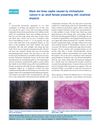
January 2015 in “Indian journal of dermatology, venereology, and leprology”
1 citations
,
January 2015 in “Indian journal of dermatology, venereology, and leprology” A woman's scalp infection caused by a fungus led to permanent hair loss and was hard to treat but responded to a specific antifungal.