 1 citations
,
May 2022 in “Research Square (Research Square)”
1 citations
,
May 2022 in “Research Square (Research Square)” Acetate helps reduce depression in rats with PCOS by lowering specific gene expression and DNA changes in the brain.
 November 2025 in “Clinical Cosmetic and Investigational Dermatology”
 LIPH mutations cause woolly hair in some Chinese people.
July 2024 in “Journal of Investigative Dermatology” PH-762 shows promise in treating skin cancer by effectively targeting and silencing PD-1 in tumors with minimal side effects.
 April 2023 in “Journal of Investigative Dermatology”
 Human TMEM2 does not break down hyaluronan but helps control its metabolism.
188 citations
,
June 1998 in “Molecular cell” Researchers created a mouse with the same mutation as humans with trichothiodystrophy, showing similar symptoms and confirming the condition is due to defects in DNA repair and gene activity.
1 citations
,
December 2016 in “Revista română de medicină de laborator” The NIPAL4 mutation c.527C>A is common in Romanian patients with autosomal recessive congenital ichthyosis.
 140 citations
,
February 2020 in “Frontiers in Plant Science”
140 citations
,
February 2020 in “Frontiers in Plant Science” RNAi-based biopesticides could be safe and effective for pest control with careful development and risk assessment.
 January 2023 in “International Journal of Contemporary Pediatrics”
 A rare genetic disease causes rickets and often hair loss in young children, which can improve with specific treatments.
 10 citations
,
January 2010 in “Veterinary pathology”
10 citations
,
January 2010 in “Veterinary pathology” A new mutation in the hairless gene causes hair loss and skin wrinkling in mice.
125 citations
,
February 2007 in “The EMBO Journal” Fgfr2b helps maintain healthy skin and prevent cancer.
4 citations
,
April 2019 in “JAAD Case Reports” DPR can cause skin, hair, and nail issues, sometimes appearing later in life.
77 citations
,
March 2000 in “Journal of Investigative Dermatology” The research identified six functional hair keratin genes and four pseudogenes, providing insights into hair formation and gene organization.
3 citations
,
November 2023 in “Journal of Investigative Dermatology” Over 45% of patients with alopecia areata benefit from ritlecitinib, mostly within a year.
October 2014 in “Dialnet (Universidad de la Rioja)” Snail2 is crucial for hair growth and affects skin cancer development.
1 citations
,
January 2001 in “PubMed” Mechanoreceptors convert physical touch into electrical signals through specialized nerve structures.
47 citations
,
October 2021 in “Journal of Nanobiotechnology” HPDAlR nanoparticles greatly improve skin wound healing without toxicity.
2 citations
,
August 2023 in “Aesthetic Surgery Journal” RHA fillers are effective and safe for treating nasolabial folds in people of color.
 5 citations
,
July 2020 in “JAMA Dermatology”
5 citations
,
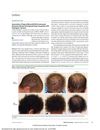
July 2020 in “JAMA Dermatology” Minoxidil solution applied twice daily improved hair growth in patients with Woolly Hair/Hypotrichosis due to LIPH gene issues, with mild side effects.
 January 2024 in “OPAL (Open@LaTrobe) (La Trobe University)”
 TRPV3 channels are involved in skin processes and are affected by shear stress, influencing itch and mechanotransduction.
Diphenyl cresyl phosphate has low toxicity but can harm the liver, kidneys, adrenal glands, and testicles at high doses.
January 2013 in “edoc (University of Basel)” TRF1 is crucial for creating and maintaining stem cells and marks both pluripotent and adult stem cells.
14 citations
,
December 2001 in “Journal of autoimmunity” Rats can develop an immune response to prion protein peptides, but it may cause severe skin issues in older rats.
50 citations
,
September 2009 in “Molecular Genetics and Metabolism” A new gene mutation causes vitamin D resistance and rickets, treatable with calcium therapy.
6 citations
,
January 2006 in “Journal of dermatological science” Runx1 helps control the KAP5 gene in human hair follicles.
5 citations
,
September 2021 in “Journal of Molecular Histology” LHX2, with other markers, can identify hair placodes in rats.
 February 2023 in “Acta Scientific Women s Health”
 New treatments like PBMC, G-CSF, and PRP show promise for helping with repeated implantation failure.
 7 citations
,
July 2020 in “Pigment cell & melanoma research”
7 citations
,
July 2020 in “Pigment cell & melanoma research” RT1640 treatment reverses gray hair and promotes hair growth in mice.
6 citations
,
August 2024 in “Advanced Science” A new method efficiently creates biaryl N-oxides with potential for cancer treatment and drug development.
 29 citations
,
January 2010 in “Methods in Enzymology”
29 citations
,
January 2010 in “Methods in Enzymology” The document concludes that careful design of genetic fate mapping experiments is crucial for accurate cell lineage tracing in mice.
Combining ATRA with TPO-RA effectively stabilizes platelet counts in ITP patients.