4 citations
,
June 2020 in “DOAJ (DOAJ: Directory of Open Access Journals)” A woman with Rhupus and Rowell syndrome was treated successfully with medication adjustments.
December 2017 in “Journal of the Hellenic Veterinary Medical Society” Canine acral lick dermatitis is a complex skin issue in dogs caused by excessive licking, often needing various treatments.
Lychnophora salicifolia extract in liposomes may protect skin from UV damage and inflammation.
 July 2023 in “Journal of Ayub Medical College Abbottabad”
 A woman in Pakistan was diagnosed with Lupus Vasculitis and treated successfully.
September 2022 in “Zenodo (CERN European Organization for Nuclear Research)” May 2023 in “Reactions Weekly” January 2013 in “Reactions Weekly” 2 citations
,
August 2023 in “Aesthetic Surgery Journal” RHA fillers are effective and safe for treating nasolabial folds in people of color.
24 citations
,
November 2023 in “International Journal of Molecular Sciences” PRP and ADSC therapies show promise in improving symptoms of genital lichen sclerosus with minimal side effects.
 July 2024 in “Pharmaceutical Development and Technology”
 Microsponges with rosemary oil significantly improve hair growth compared to regular rosemary oil and minoxidil.
6 citations
,
December 2021 in “Journal of Clinical Medicine” LiPADI is a useful tool for monitoring the severity and treatment of lichen planus.
Female rats showed more panic-related behavior than males, influenced by hormonal cycles and certain drugs.
May 2025 in “OPAL (Open@LaTrobe) (La Trobe University)” Linoleic acid and magnesium are key in alopecia areata progression, and tofacitinib can help by affecting their pathway.
February 2026 in “Endokrynologia Polska” Early diagnosis and treatment are crucial for managing Berardinelli–Seip syndrome.
October 2022 in “Zenodo (CERN European Organization for Nuclear Research)” 1 citations
,
September 2024 in “Life” Combining fractionated CO2 laser with tacrolimus may help treat chronic alopecia areata.
 February 2023 in “Cosmoderma”
 Combining red LED therapy with beta-carotene is more effective for treating photoaging than red LED therapy alone.
February 2013 in “Journal of the American Academy of Dermatology”  3 citations
,
January 2018 in “Postępy Dermatologii i Alergologii”
3 citations
,
January 2018 in “Postępy Dermatologii i Alergologii” Longer TA repeats in the SRD5A2 gene may increase acne risk in Chinese people.
 January 2023 in “Dermatologic Therapy”
 A new hand-held light therapy device was found to be safe and effective for treating mild-to-moderate acne.
 4 citations
,
January 2019 in “Acta dermato-venereologica”
4 citations
,
January 2019 in “Acta dermato-venereologica” Women with severe frontal fibrosing alopecia are more likely to have rosacea.
 July 2023 in “Medicina Estética Revista Científica de la Sociedad Española de Medicina Estética (SEME)”
 Infrared light, alone or with hyaluronic acid, effectively treats skin laxity with minimal side effects.
January 2026 in “Deutsches Ärzteblatt international” Lithium can cause sexual issues, hair loss, and skin problems, with some treatments available but needing more research.
41 citations
,
January 2022 in “Clinical Immunology” Females are more prone to lupus and arthritis due to X chromosome factors.
9 citations
,
January 1975 in “Munich Personal RePEc Archive (Ludwig Maximilian University of Munich)” Rothmund-Thomson syndrome causes skin changes, hair loss, and slightly high lysine and cystine in urine.
 7 citations
,
March 2023 in “Antioxidants”
7 citations
,
March 2023 in “Antioxidants” Rosemary may help treat various skin conditions due to its antioxidant and anti-inflammatory properties.
 6 citations
,
February 2010 in “Journal of The American Academy of Dermatology”
6 citations
,
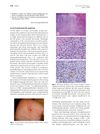
February 2010 in “Journal of The American Academy of Dermatology” A woman had a rare skin condition with recurring painful nodules that heal in 6 weeks, often without needing treatment.
 46 citations
,
August 2016 in “Journal of The American Academy of Dermatology”
46 citations
,
August 2016 in “Journal of The American Academy of Dermatology” The study found that family history, personal history of adolescent acne, no pregnancies, hirsutism, office work, stress, and low intake of fruits/vegetables and fish are risk factors for adult female acne.
4 citations
,
November 2019 in “Dermatology - Open Journal” Lichen planus pigmentosus is hard to treat and may be more common in North Africa than previously thought.