30 citations
,
June 2010 in “Endocrine Related Cancer” SRD5A1 is crucial in advanced prostate cancer, and blocking both SRD5A1 and SRD5A2 is more effective than targeting SRD5A2 alone.
January 2026 in “China CDC Weekly” Large language models can accurately identify monkeypox from medical records.
September 2019 in “Journal of Investigative Dermatology” PCE-DP brightens skin and promotes hair growth by enhancing cell growth and reducing melanin uptake.
May 2018 in “Journal of advanced research in medicine” The document's conclusion cannot be provided because the document is not accessible or understandable.
101 citations
,
October 2007 in “Journal of Biological Chemistry” Reduced matriptase activity causes skin and hair issues in both humans and mice.
 13 citations
,
September 2011 in “International Urology and Nephrology”
13 citations
,
September 2011 in “International Urology and Nephrology”  3 citations
,
January 1992 in “Clinical Pediatric Endocrinology”
3 citations
,
January 1992 in “Clinical Pediatric Endocrinology” Patients with the same vitamin D receptor mutation showed different symptoms due to other factors.
12 citations
,
March 2012 in “JEADV. Journal of the European Academy of Dermatology and Venereology/Journal of the European Academy of Dermatology and Venereology” A specific gene mutation in Japanese people can cause varying degrees of hair thinning in adulthood.
 March 2025 in “OncoTargets and Therapy”
 A specific genetic trait in tumor cells is linked to longer survival without disease in certain lymphoma patients.
 January 1997 in “Hair transplant forum international”
 The document's conclusion cannot be provided because the content is not available for analysis.
 April 2025 in “International Journal of General Medicine”
 The G allele of IFITM3 rs12252 is linked to more severe COVID-19.
Genetic analysis of rabbits identified key genes for traits like coat color, body size, and fertility.
July 2024 in “Journal of Investigative Dermatology” ATR12-351 ointment safely delivers LEKTI protein to the skin, reducing enzyme activity in Netherton syndrome.
2 citations
,
February 2018 Raman spectroscopy can help identify cancerous skin tissue during surgery.
January 2011 in “Reactions Weekly” 2 citations
,
May 2023 in “The Journal of Immunology” NXC736 significantly reduced hair loss in mice with alopecia areata.
March 2025 in “Medical Science Journal for Advance Research” miR-155 levels in blood could help identify alopecia areata.
 30 citations
,
June 2016 in “Journal of Human Genetics”
30 citations
,
June 2016 in “Journal of Human Genetics” Researchers found genetic mutations causing hypohidrotic ectodermal dysplasia in 88% of studied patients and identified new mutations and genetic variations affecting the disease.
 November 2023 in “The journal of investigative dermatology/Journal of investigative dermatology”
 ARQ-234, a protein designed to treat atopic dermatitis, shows increased effectiveness in early testing.
April 2018 in “Journal of Investigative Dermatology” Screening for the NUDT15 gene variant can prevent severe side effects from thiopurine drugs in East-Asian people.
7 citations
,
March 2023 in “JEADV. Journal of the European Academy of Dermatology and Venereology/Journal of the European Academy of Dermatology and Venereology” July 2021 in “British Journal of Dermatology” The boy's genetic diagnosis of ectodermal dysplasia helped improve management and counseling for him and his sister.
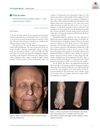 March 2019 in “Journal der Deutschen Dermatologischen Gesellschaft”
 Rothmund-Thomson syndrome type 2 can cause chronic, poorly healing wounds.

The document concludes that the development of certain tumors is influenced by genetic background and that a specific gene modification can lead to tumor regression and reduced growth.
July 2025 in “Journal of Investigative Dermatology” July 2026 in “Journal of the European Academy of Dermatology and Venereology”  July 2023 in “Institutional Repositories DataBase (IRDB)”
 Malassezia species may contribute to hair loss in AGA patients.
June 2023 in “Zenodo (CERN European Organization for Nuclear Research)” 3 citations
,
August 2010 in “Letters in Drug Design & Discovery”  20 citations
,
July 2011 in “PLoS ONE”
20 citations
,
July 2011 in “PLoS ONE” HPV-150 and HPV-151 are rare skin viruses linked to warts and some skin cancers.