A new method creates valuable compounds for drug discovery by breaking traditional chemical rules.
 2 citations
,
January 2025 in “Сибирский научный медицинский журнал”
2 citations
,
January 2025 in “Сибирский научный медицинский журнал” TS-13 effectively stops tumor growth and reduces chemotherapy side effects.
10 citations
,
April 2013 in “Revista cubana de plantas medicinales” Sida cordifolia L. is rich in saponins with antioxidant and antifungal properties.
6 citations
,
May 2022 in “Journal of Organometallic Chemistry” The process efficiently converts α-pinene oxide to campholenic aldehyde using a special catalyst, achieving high yields quickly.

A rigid compound with a common structural motif was successfully synthesized.
 December 2019 in “University of Malaya Students Repository”
 Mimosine from Leucaena leucocephala can enhance biodiesel stability.
July 2024 in “Journal of Investigative Dermatology” Baicalin may help treat severe drug-induced skin reactions.
54 citations
,
February 2002 in “Carcinogenesis” Increasing SSAT makes skin more prone to cancer.
Apeiba tibourbou seed oil has analgesic and anti-inflammatory effects, making it potentially useful for food and medicine.
 February 2026 in “Nature Synthesis”
 A new method creates unique chemical structures that could improve drug discovery.
 December 1998 in “Acta Crystallographica Section C-crystal Structure Communications”
 A new compound with strong antiandrogenic effects was found, potentially useful for treating conditions like acne and prostate cancer.
5 citations
,
April 2022 in “Egyptian Journal of Chemistry” Sansevieria trifasciata shows promise as a natural treatment for hair loss.
 60 citations
,
December 2013 in “PLoS ONE”
60 citations
,
December 2013 in “PLoS ONE” EETs can delay seizures by affecting GABA activity, offering potential new treatments for seizures.
November 2025 in “Journal of Investigative Dermatology”  April 2024 in “Journal of pharmacy & pharmacognosy research”
 A compound from Calophyllum inophyllum L. leaf may help treat non-small cell lung cancer.
![Effect of C-Ring Modifications in Benzo[c]quinolizin-3-ones, New Selective Inhibitors of Human 5α-Reductase 1](/images/assets/c687900f-ea40-4de1-8f0b-a5b818951b1c/small/15452.jpg) 12 citations
,
June 2001 in “Bioorganic & Medicinal Chemistry”
12 citations
,
June 2001 in “Bioorganic & Medicinal Chemistry” Changing the C-ring structure in certain compounds can make them better at blocking a specific human enzyme.
 1 citations
,
June 2023 in “International Journal of Pharmaceutical Sciences and Medicine”
1 citations
,
June 2023 in “International Journal of Pharmaceutical Sciences and Medicine” The snake plant has many health benefits and is safe to use.
8 citations
,
July 2022 in “Chinese Journal of Integrative Medicine” Related plant species often have similar chemicals and healing properties.
 5 citations
,
March 2019 in “Journal of lipid research”
5 citations
,
March 2019 in “Journal of lipid research” New probes were created to effectively measure specific enzymes involved in fat metabolism, which could help develop new drugs.
 November 2024 in “International Journal of Research in Dermatology”
 SesZen-BioTM improves skin health and reduces signs of aging.
 4 citations
,
January 2014 in “RSC Advances”
4 citations
,
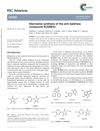
January 2014 in “RSC Advances” A new, less toxic and more efficient method to create the anti-baldness compound RU58841 was developed in 2014.
 25 citations
,
February 2013 in “The journal of investigative dermatology/Journal of investigative dermatology”
25 citations
,
February 2013 in “The journal of investigative dermatology/Journal of investigative dermatology” Blocking SCD1 in the skin with XEN103 shrinks sebaceous glands in mice.
 June 2023 in “Journal of biological chemistry/The Journal of biological chemistry”
 Sdr16c5 and Sdr16c6 genes regulate a key point in lipid production that affects eye and skin gland function.
 April 2017 in “Journal of Investigative Dermatology”
 SIG-1451 could be a promising new treatment for atopic dermatitis.
December 2022 in “Scientific Reports” Compound 4 is a promising treatment for hair loss with low toxicity.
 March 2022 in “Institutional Repositories DataBase (IRDB)”
 Philippine stingless bee propolis may promote hair growth and fight cancer.
1 citations
,
March 2004 in “Patty's Toxicology” These chemicals can be toxic, causing health issues like cancer, liver damage, and irritation.
8 citations
,
January 2023 in “Journal of Research in Pharmacy” Compounds from turmeric and bitter show strong potential as antiviral agents against the influenza A virus.
 April 2017 in “Journal of Investigative Dermatology”
 SB414 may be an effective treatment for atopic dermatitis by reducing swelling and bacterial infection.
 March 2026 in “Tropical Journal of Natural Product Research”
 Albizia saponaria bark extract may help treat hair loss.