 September 1998 in “Journal of The European Academy of Dermatology and Venereology”
 The conclusion is that proper recognition and treatment of skin conditions are crucial for the elderly due to changes in skin, nails, and hair with age, and the impact of these conditions on health and mobility.
8 citations
,
May 2024 in “Advanced NanoBiomed Research” Nanocarriers can improve skin drug delivery but face challenges in clinical use.
7 citations
,
September 1980 in “Zoological Journal of the Linnean Society” Dendritic cells help regulate skin development and hair growth in mice.
1 citations
,
June 2015 in “Experimental Dermatology” Fat may help skin health and repair, but more research is needed.
 May 2023 in “Experimental Dermatology”
 RCM and OCT are effective for diagnosing and monitoring hair-related skin diseases but lack standardized protocols and need more research.
 130 citations
,
June 2003 in “Journal of Investigative Dermatology Symposium Proceedings”
130 citations
,
June 2003 in “Journal of Investigative Dermatology Symposium Proceedings” Estrogen Receptor ß (ERß) is the main hormone controller in human skin and hair follicles, not Estrogen Receptor α (ERα) or the Androgen Receptor (AR).
 24 citations
,
September 2002 in “Dermatologic Surgery”
24 citations
,
September 2002 in “Dermatologic Surgery” The study found that hair follicles are above muscle connections in the scalp, which may help protect stem cell areas.
52 citations
,
February 2009 in “Journal of the American Academy of Dermatology” A 93-year-old woman developed a rare scalp condition after therapy, which improved with steroids, not antibiotics.
 20 citations
,
June 2011 in “ISRN Dermatology (Print)”
20 citations
,
June 2011 in “ISRN Dermatology (Print)” A woman lost most of her hair due to an allergic reaction to a hair dye ingredient.
 3 citations
,
July 2013 in “Journal of Cutaneous Pathology”
3 citations
,
July 2013 in “Journal of Cutaneous Pathology” A woman's hair loss, resembling an autoimmune condition, improved after treatment, but requires ongoing checks due to potential serious associations.
1 citations
,
August 2016 in “Journal of Investigative Dermatology” Vδ1+ T-cells in the skin contribute to hair loss in alopecia areata and could be targeted for treatment.

Tumid lupus erythematosus can cause non-scarring hair loss on the scalp and requires careful diagnosis.
January 2022 in “Clinical Cases in Dermatology” Hypothyroidism can cause hair loss, which is often reversible with treatment.
 January 2019 in “Springer eBooks”
 PRP may help with hair loss and improve hair quality with few side effects, but more research is needed.
 September 2016 in “Springer eBooks”
 Fat-derived stem cells may help treat skin aging and hair loss.
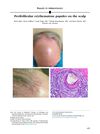 January 2016 in “Journal of The American Academy of Dermatology”
 The woman has a type of scarring hair loss with red bumps around hair follicles.
GHK-Cu and propolis may help prevent scalp aging and hair loss.
1 citations
,
November 2025 in “Journal of Education Health and Sport” Cannabinoids like CBD may help treat skin diseases by reducing inflammation and infections.
A special diet can help manage Feline Atopic Skin Syndrome and reduce medication needs in cats.
 51 citations
,
January 1989 in “Journal of Investigative Dermatology”
51 citations
,
January 1989 in “Journal of Investigative Dermatology” Men with male-pattern baldness have more androgen receptors in their scalp's oil glands, which may contribute to hair loss.
40 citations
,
April 1999 in “Journal of Histochemistry & Cytochemistry” S100A3 protein is mainly found in specific parts of human hair cells.
 19 citations
,
November 2012 in “British Journal of Dermatology”
19 citations
,
November 2012 in “British Journal of Dermatology” Dopamine stops hair growth and pigment production in human scalp hair follicles.
 January 2016 in “Faculty Opinions – Post-Publication Peer Review of the Biomedical Literature”
 A substance called prostaglandin D2 is found more in bald scalps and it stops hair from growing. Blocking its receptor could potentially treat hair loss.
 September 2021 in “PubMed”
 Hair transplantation is effective for treating scar-related hair loss on the head and neck.
 July 2021 in “World journal of plastic surgery”
 Hair transplantation is effective for treating scar-related hair loss on the head and neck.
 January 2015 in “Springer eBooks”
 Fat-derived stem cells and their secretions show promise for treating skin aging and hair loss.
 205 citations
,
March 2012 in “Science Translational Medicine”
205 citations
,
March 2012 in “Science Translational Medicine” PGD2 stops hair growth and is higher in bald men with AGA.
 May 2012 in “Faculty Opinions – Post-Publication Peer Review of the Biomedical Literature”
 Prostaglandin D2, found in higher levels in bald scalps, stops hair growth, suggesting that blocking its receptor could potentially treat hair loss.
4 citations
,
January 2013 in “Stem cell discovery” Researchers created a cell line from a hair follicle to study hair loss.
July 2025 in “Journal of Investigative Dermatology” Breezula® may be more effective than Minoxidil in promoting hair growth by reducing a hair growth inhibitor.