4 citations
,
June 2019 in “Case Reports in Ophthalmological Medicine” Anxiety from bedwetting caused a boy to pull out his eyelashes, but it was resolved with family and school support.
April 2024 in “JAAD Case Reports” Wearing fire helmets may worsen lichen planopilaris in firefighters.
 2 citations
,
June 2021 in “Cosmoderma”
2 citations
,
June 2021 in “Cosmoderma” Platelet-rich plasma (PRP) shows promise in skin and hair treatments but results vary with preparation methods.
July 2026 in “Journal of Dermatological Treatment” Excimer laser therapy may help improve scarring alopecia symptoms and hair appearance.
6 citations
,
April 2024 in “Journal of Investigative Dermatology” CRISPR-based tools improve understanding and treatment of skin development and conditions.
4 citations
,
January 2018 in “Journal of dermatology & dermatologic surgery” There is no gold standard treatment for hidradenitis suppurativa due to insufficient evidence.
 7 citations
,
January 2017 in “Clinical and medical investigations”
7 citations
,
January 2017 in “Clinical and medical investigations” Suriname uses many plants for beauty, with potential for a beauty industry, but more evidence is needed for product effectiveness.
February 2026 in “Exploration” Advancements in gene therapy, stem cells, and biomaterials show promise for reducing scarring in wound healing, but face clinical challenges.
April 2024 in “Surgical Techniques Development” The 11th AICPE Congress in Rimini was a major event in European aesthetic plastic surgery.
Permanent micropigmentation can help cancer survivors feel better about themselves by restoring eyebrows lost during chemotherapy.
 9 citations
,
January 2010 in “International Journal of Trichology”
9 citations
,
January 2010 in “International Journal of Trichology” The study found that the cause of alopecia areata can be identified through tissue analysis, and vertical sections are enough for diagnosis.
 May 2025 in “The Journal of Rheumatology”
 SLE can cause unusual gastrointestinal symptoms, and immunosuppressive therapy can be effective.
 November 2021 in “Research, Society and Development”
 Individualized treatment and psychological support are crucial for alopecia.
 May 2025 in “The Journal of Rheumatology”
 Correct diagnosis is crucial for treating overlapping conditions like NMOSD and SLE effectively.
 36 citations
,
September 2014 in “Paediatric drugs”
36 citations
,
September 2014 in “Paediatric drugs” More pediatric-specific research and guidelines are needed to improve hidradenitis suppurativa treatment in children and adolescents.
 218 citations
,
April 2012 in “British Journal of Dermatology”
218 citations
,
April 2012 in “British Journal of Dermatology” Guidelines suggest various treatments for alopecia areata, but leaving it untreated is also an option as 80% cases may recover on their own.
 May 2025 in “The Journal of Rheumatology”
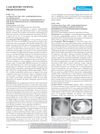
 Antiphospholipid syndrome can severely damage adrenal glands, requiring early diagnosis and treatment.
 101 citations
,
July 2021 in “Nature Communications”
101 citations
,
July 2021 in “Nature Communications” 4D polycarbonate scaffolds show promise for soft tissue repair due to their biocompatibility, shape memory, and minimal immune response.
Surgeons should evaluate new technologies critically, offer a range of services including non-surgical options, and be aware of marketing influences to meet patient needs and maintain a successful practice.
 January 2025 in “Dermatologic Therapy”
 Low-dose oral minoxidil may help with symptoms and hair regrowth in lichen planopilaris without serious side effects.
Pseudopelade is likely an independent disease due to its distinct features.
September 2024 in “JEADV Clinical Practice” Alopecia areata significantly affects patients' lives, causing physical, psychological, social, and financial challenges.
90 citations
,
April 2013 in “Dermatology online journal” Different treatments for Hidradenitis suppurativa range from antibiotics and hormonal therapies to surgery, depending on severity.
 May 2026 in “European Burn Journal”
 The scalp is a safe and effective donor site for skin grafts in children with burns.
8 citations
,
August 2025 in “Journal of Translational Medicine” CD44 signaling can help heal wounds without scars.
 July 2003 in “British Journal of Dermatology”
 Some skin conditions are associated with other serious diseases, and office microscopy may miss many fungal infections.
 11 citations
,
August 2013 in “Facial Plastic Surgery Clinics of North America”
11 citations
,
August 2013 in “Facial Plastic Surgery Clinics of North America” Tissue expanders effectively repair large scalp defects and restore a natural-looking scalp.
 August 2024 in “Research Square (Research Square)”
 Using 5-alpha reductase inhibitors may lower the risk of breast cancer in females.
 July 2022 in “SKIN The Journal of Cutaneous Medicine”
 A new lotion with halobetasol and tazarotene successfully treats acne keloidalis nuchae.
 January 2011 in “Elsevier eBooks”
 Alopecia in animals can be hereditary, congenital, or acquired, with treatments and outcomes varying widely.