October 2022 in “Amplla Editora eBooks” COVID-19 can cause temporary hair loss in some people.
 October 2022 in “Research, Society and Development”
 Hair loss is a symptom of long COVID and can be treated with a protein-rich diet.
May 2022 in “Brazilian Journal of Health Review” COVID-19 infection can cause temporary hair loss due to stress, treatment drugs, psychological impact, and pandemic-related stress.
 April 2022 in “Brazilian Medical Students”
 People with androgenetic alopecia may have a higher risk of severe COVID-19.
 June 2021 in “Aesthetic Cosmetology and Medicine”
 Some people lose a lot of hair after having COVID-19.
Children under 18 had milder SARS with no deaths, but teenagers faced higher severe illness risk, and effective treatments were uncertain.
January 2005 in “中华医学杂志:英文版” Scar tissue may regenerate sweat glands from remaining glands or stem cells.
 January 2021 in “International Journal of Dermatology”
 Possible link between COVID-19 and hair loss; more research needed.
 80 citations
,
March 2000 in “Journal of cutaneous pathology”
80 citations
,
March 2000 in “Journal of cutaneous pathology” The VVG stain effectively differentiates scar tissue from normal skin and helps classify types of permanent alopecia.
 62 citations
,
October 2017 in “JAMA facial plastic surgery”
62 citations
,
October 2017 in “JAMA facial plastic surgery” Condensed nanofat with fat grafts effectively improves atrophic facial scars.
51 citations
,
September 2013 in “JEADV. Journal of the European Academy of Dermatology and Venereology/Journal of the European Academy of Dermatology and Venereology” FRMS is a safe and effective treatment for acne scars in Asians with minimal side effects.
48 citations
,
May 2012 in “Journal of cosmetic and laser therapy” Fractional bipolar RF energy safely and effectively treats acne scars.
 47 citations
,
November 2012 in “Wound repair and regeneration”
47 citations
,
November 2012 in “Wound repair and regeneration” Nude mice with grafted human skin developed scars similar to human hypertrophic scars.
 42 citations
,
December 2014 in “Clinical, cosmetic and investigational dermatology”
42 citations
,
December 2014 in “Clinical, cosmetic and investigational dermatology” Nonablative radiofrequency treatments, especially microneedle and fractional types, can improve acne scars by 25%–75% after 3-4 sessions, with full results in 3 months and some side effects.
41 citations
,
January 2015 in “Burns & Trauma” Tissue engineering improves burn scar reconstruction by using skin substitutes and replacing damaged tissues.
36 citations
,
July 2022 in “Stem Cell Research & Therapy” SVF may improve nanofat treatment for acne scars, but more research is needed.
35 citations
,
October 2014 in “Wound Repair and Regeneration” The model helps understand scar contraction and develop new treatments.
32 citations
,
December 2015 in “PloS one” P144® improves hypertrophic scars by reducing size and thickness and increasing elasticity.
 26 citations
,
December 2013 in “Aesthetic Plastic Surgery”
26 citations
,
December 2013 in “Aesthetic Plastic Surgery” Micropigmentation safely and effectively hides scalp hair loss and scars.
21 citations
,
December 2023 in “Bioengineering & Translational Medicine” Fibroblast and endothelial cell interactions are crucial in forming hypertrophic scars.
18 citations
,
November 2009 in “Archives of Dermatology” Calcipotriol doesn't prevent hypertrophic scars, but keratinocyte activation is important in scar formation.
15 citations
,
August 2023 in “Journal of Nanobiotechnology” Nanotechnology could improve scar treatment but needs more development.
13 citations
,
June 2012 in “Dermatologic Surgery” Severe scars need a mix of treatments for best results.
 11 citations
,
August 2017 in “American Journal of Dermatopathology”
11 citations
,
August 2017 in “American Journal of Dermatopathology” EVG staining helps tell apart follicular scars from follicular streamers, aiding in diagnosing different types of hair loss.
 10 citations
,
January 2018 in “Elsevier eBooks”
10 citations
,
January 2018 in “Elsevier eBooks” Burn scars heal abnormally and more research is needed to find better treatments.
 10 citations
,
May 2012 in “Journal of Plastic Reconstructive and Aesthetic Surgery”
10 citations
,
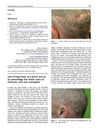
May 2012 in “Journal of Plastic Reconstructive and Aesthetic Surgery” Beard hair can effectively hide hair transplant scars.
10 citations
,
December 2011 in “PubMed” Methotrexate effectively managed SAPHO syndrome symptoms when other treatments failed.
 10 citations
,
January 2007 in “Dermatologic Surgery”
10 citations
,
January 2007 in “Dermatologic Surgery” Artificial hair fibers help treat scalp scars with few complications and a 20% yearly fiber fall rate.
 10 citations
,
January 2007 in “Dermatologic Surgery”
10 citations
,
January 2007 in “Dermatologic Surgery” New scalp surgery technique results in thinner, less visible scars.