 8 citations
,
April 2024 in “Cureus”
8 citations
,
April 2024 in “Cureus” CO2 lasers are better for severe acne scars, while Er:YAG lasers are gentler with fewer side effects.
8 citations
,
August 2023 in “Lasers in Surgery and Medicine” Concurrent laser and isotretinoin treatment improves acne scars more than delayed treatment.
 6 citations
,
May 2004 in “Dermatologic Surgery”
6 citations
,
May 2004 in “Dermatologic Surgery” The article concludes that using the single-scar technique for hair transplants can result in a more attractive scar and that concerns about the technique can be managed with proper methods.
 6 citations
,
March 1996 in “The American Journal of Cosmetic Surgery”
6 citations
,
March 1996 in “The American Journal of Cosmetic Surgery” A new hair transplant method creates one appealing scar, uses donor hair better, and speeds up surgery.
5 citations
,
November 2011 in “Journal of Cutaneous Medicine and Surgery” Hairless dogs can be used to study human hypertrophic scars.
 4 citations
,
January 2020 in “Journal of Cutaneous and Aesthetic Surgery”
4 citations
,
January 2020 in “Journal of Cutaneous and Aesthetic Surgery” Keloid scars can form after hair transplant surgery and should be prevented and treated early.
 4 citations
,
September 2019 in “Journal of The American Academy of Dermatology”
4 citations
,
September 2019 in “Journal of The American Academy of Dermatology” Platelet-rich plasma combined with other treatments improves acne scars better than those treatments alone.
4 citations
,
June 1988 in “The American journal of cosmetic surgery” The technique removes pitted scars by replacing them with skin from behind the ear and then smoothing the area after a few weeks.
 3 citations
,
February 2014 in “Atlas of the Oral and Maxillofacial Surgery Clinics”
3 citations
,
February 2014 in “Atlas of the Oral and Maxillofacial Surgery Clinics” New facelift techniques lead to less scarring and faster recovery, with high patient satisfaction after 4 years.
 3 citations
,
January 2012 in “Elsevier eBooks”
3 citations
,
January 2012 in “Elsevier eBooks” Burn scars form abnormally due to changes in wound healing, and more research is needed to improve treatments.
 3 citations
,
August 2003 in “International Journal of Cosmetic Surgery and Aesthetic Dermatology”
3 citations
,
August 2003 in “International Journal of Cosmetic Surgery and Aesthetic Dermatology” Fiber implants effectively treat permanent hair loss with over 85% success and minimal complications.
2 citations
,
May 2024 in “PubMed” PRP's effectiveness for acne scars is uncertain.
 2 citations
,
January 2020
2 citations
,
January 2020 Tailored scar treatments are needed for different body areas to improve appearance and function.
2 citations
,
November 2014 in “International Scholarly Research Notices” The terpenoid fraction may cause thicker scars by delaying wound healing.
 2 citations
,
June 2012 in “Journal of Cosmetic Dermatology”
2 citations
,
June 2012 in “Journal of Cosmetic Dermatology” Hair transplant using beard hair made acne scars on cheeks less visible with minimal scarring in the donor area.
1 citations
,
September 2023 in “Skin Appendage Disorders” Chronic burn scars may lead to scalp skin issues, so doctors should consider this when diagnosing.
1 citations
,
April 2022 in “Journal of cosmetic dermatology” Krox20 overexpression in fibroblasts may play a role in abnormal scar formation and could be a target for new treatments.
 1 citations
,
July 2017 in “Hair transplant forum international”
1 citations
,
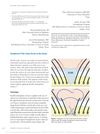
July 2017 in “Hair transplant forum international” Scalp laxity, elasticity, and glidability are important in hair transplants and can predict scar width at the donor site.
 1 citations
,
December 2015 in “Dermatologic Surgery”
1 citations
,
December 2015 in “Dermatologic Surgery” Double trichophytic closure effectively treats thin scalp scars and reduces patient costs.
 April 2026 in “Biomedical Research and Therapy”
 CYB5R1 and IL1A genes may be linked to different types of acne scars.
October 2025 in “Journal of Cosmetic Dermatology” Botulinum toxin Type A helps reduce hypertrophic scars and is generally safe.
 October 2025 in “Pediatric Dermatology”
 A 16-year-old boy's facial condition improved with doxycycline, suggesting an immune response to hair follicle damage.
 October 2025 in “International Wound Journal”
 Gamma-irradiated amniotic fluid improves healing and reduces thickness of hypertrophic scars.
July 2025 in “Burns & Trauma” 3D cell spheroids can help reduce scars by delivering therapeutic vesicles.
 July 2025 in “Interdisciplinary materials”
 A microneedle patch with curcumin and stem cell components effectively treats hypertrophic scars and promotes healing.
 December 2024 in “Journal of Cutaneous and Aesthetic Surgery”
 Dermoscopy effectively assesses and improves acne scar treatments.
July 2024 in “Journal of Investigative Dermatology” Mechanical tension worsens keloid scars by activating inflammation and fibrosis pathways.
 July 2024 in “International Journal of Dermatology Venereology and Leprosy Sciences”
 The combination treatment improved acne scars.
 April 2024 in “Journal of burn care & research”
 Surgery for burn scar alopecia often involves multiple procedures, and treatment options should be more accessible to improve self-image.
 February 2024 in “Australasian journal of dermatology”
 Inflammatory acne damages skin stem cells and reduces their growth, leading to atrophic acne scars.