 91 citations
,
January 2009 in “International Journal of Trichology”
91 citations
,
January 2009 in “International Journal of Trichology” Different hair evaluation methods have their own pros and cons, and using multiple methods together is best for accurate hair loss diagnosis and tracking.
The document concludes that measuring hair density, shaft diameter, growth rate, and anagen:telogen ratio is important for assessing hair growth treatments.
 5 citations
,
February 2014 in “PubMed”
5 citations
,
February 2014 in “PubMed” The document concludes that objective methods are important for diagnosing different types of alopecia and monitoring treatment, and standardizing these techniques is necessary.
 41 citations
,
July 2002 in “Clinical and Experimental Dermatology”
41 citations
,
July 2002 in “Clinical and Experimental Dermatology” Effective hair loss assessment requires a mix of precise measurement methods.
 January 2015 in “Hair therapy & transplantation”
 New hair and scalp disease diagnosis methods are important for correct treatment.
 October 2018 in “InTech eBooks”
 Better tools are needed to assess alopecia effectively.
 May 2017 in “InTech eBooks”
 Trichoscopy and trichogram are useful for diagnosing hair and scalp conditions.
 January 2024 in “International Journal of Trichology”
 Hair root dermoscopy is a simple, noninvasive tool to diagnose telogen effluvium.
Non-invasive methods can effectively diagnose and manage alopecia areata.
 206 citations
,
September 2010 in “PLoS ONE”
206 citations
,
September 2010 in “PLoS ONE” The PIRL laser cuts tissue with less damage and scarring than traditional methods.
 5 citations
,
May 2008 in “Nature Precedings”
5 citations
,
May 2008 in “Nature Precedings” Trichoscopy is a useful non-invasive method to diagnose female hair loss with high accuracy.
 January 2024 in “Wiadomości Lekarskie”
 Aortic aneurysm treatment has shifted to less invasive methods, improving safety and outcomes.
 September 2017 in “Journal of Investigative Dermatology”
 Thermal imaging is a useful non-invasive method to diagnose active inflammation in frontal fibrosing alopecia.
 211 citations
,
February 2009 in “European journal of pharmaceutics and biopharmaceutics”
211 citations
,
February 2009 in “European journal of pharmaceutics and biopharmaceutics” Hair follicles help absorb and store topical compounds, aiding targeted drug delivery.
 67 citations
,
January 2022 in “Theranostics”
67 citations
,
January 2022 in “Theranostics” Advanced nanocarrier and microneedle drug delivery methods are more effective, safer, and less invasive for treating skin diseases.
 November 2019 in “Journal of Aesthetic Nursing”
 The article concludes that a thorough diagnosis and treatment plan, including medications, non-invasive methods, or surgery, is important for managing hair loss, with a combination of minoxidil and finasteride being particularly effective.
14 citations
,
December 2024 in “Pharmaceutics” Hydrogel microneedles offer a promising, minimally invasive way to treat diseases like cancer and hair loss, but need improvements in strength and standardization.
 March 2026 in “Preprints.org”
 Robotic systems in cosmetic surgery are promising but need more development and research.
March 2024 in “Journal of pharmacy & pharmaceutical sciences” Polymeric microneedles offer a less invasive, long-lasting drug delivery method that improves patient compliance and reduces side effects.
1 citations
,
January 2025 in “JAAD reviews.” Hypertrichosis involves excessive hair growth and needs careful diagnosis and treatment, considering its psychological effects.
 January 2024 in “Wiadomości Lekarskie”
 New methods are being developed to improve drug delivery to the brain.
 March 2024 in “International journal of pharmaceutical sciences and drug research”
 Androgenetic alopecia is influenced by various factors and can be treated with medications, procedures, and non-drug methods.
 5 citations
,
January 2012 in “Journal of Tissue Science & Engineering”
5 citations
,
January 2012 in “Journal of Tissue Science & Engineering” Collagen membranes improve melanocyte growth for treating skin depigmentation.
1 citations
,
August 2025 in “Medicina” Non-invasive imaging techniques improve scalp condition diagnosis and patient quality of life.
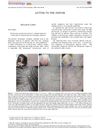 July 2021 in “Australasian Journal of Dermatology”
 The trichoscopy-assisted hair pull test is useful for diagnosing different types of hair loss.
10 citations
,
June 2023 in “Preprints.org” Hydrogel-forming microneedles are a safe and effective method for delivering drugs through the skin.
 January 2024 in “Wiadomości Lekarskie”
 AI improves vascular surgery by enhancing precision and safety, but doctors make final decisions.
 January 2024 in “Wiadomości Lekarskie”
 New technologies improve diagnosis and treatment of digestive disorders.
 November 2020 in “Skin Research and Technology”
 Videodermoscopy better identifies female hair loss than clinical diagnosis.
 July 2025 in “Journal of medical & health sciences review.”
 Ultrasound-assisted gene therapy could revolutionize tissue regeneration by improving gene delivery.