 January 2011 in “Journal of Society of Cosmetic Chemists of Japan”
 18-MEA and SPDA can restore damaged hair's smoothness and reduce frizz.
13 citations
,
January 1993 in “Archives of dermatological research” Human hair follicles can grow and stay healthy for up to 8 days in a lab setting.
Gray hair affects hair's movement and appearance, making it less bouncy and more wavy.
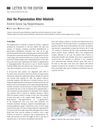 April 2025 in “Turkish Journal of Hematology”
 Nilotinib may cause gray hair to return to its original color.
 236 citations
,
January 1951 in “Physiological zoology”
236 citations
,
January 1951 in “Physiological zoology” Hair growth and pigmentation in mice involve specific stages crucial for research.
36 citations
,
October 1993 in “British Journal of Dermatology” Human hair follicles can grow in a lab for at least 9 days without serum, keeping their natural characteristics.
 November 2022 in “The journal of investigative dermatology/Journal of investigative dermatology”
 The study found markers indicating that cells responsible for hair color are differentiating in specific areas of the hair follicle.
2 citations
,
June 2013 in “In Vitro Cellular & Developmental Biology - Animal” Melanocytes from human fetal hair follicles were successfully cultured, showing potential for hair disease research and clinical use.
16 citations
,
February 2008 in “PubMed” Vitamin B12 deficiency can cause skin darkening and white hair, but it's reversible.
 1 citations
,
January 2009 in “Journal of S C C J”
1 citations
,
January 2009 in “Journal of S C C J” Changing disulfide bonds in human hair affects its melting behavior and thermal stability.
 August 2023 in “International journal of research in medical sciences”
 The serum is safe and helps treat premature greying of hair.
1 citations
,
October 2009 in “International Journal of Cosmetic Science” A new keratin treatment can strengthen and protect aging hair.
32 citations
,
March 2016 in “American Journal of Physical Anthropology” African hair is curled, Asian hair is thick, European hair is lighter, and chemical methods help identify hair color differences.
 8 citations
,
January 2009 in “Transactions of the Materials Research Society of Japan”
8 citations
,
January 2009 in “Transactions of the Materials Research Society of Japan” Water-soluble wool keratin can protect human hair from damage during treatments.
5 citations
,
September 2021 in “PubMed” Hair removal methods vary in effectiveness and side effects, with electrolysis being the only permanent solution.
 1 citations
,
March 2007 in “Hair transplant forum international”
1 citations
,
March 2007 in “Hair transplant forum international” Use hair-styling methods to hide thinning hair after surgery in women.
23 citations
,
November 2007 in “Actas Dermo-Sifiliográficas” Thyroid hormone (T3) may reverse gray hair by stimulating hair growth.
18 citations
,
March 2009 in “Skin pharmacology and physiology” Sunlight damages hair, causing cuticle loss, protein changes, and discoloration.
3 citations
,
April 2023 in “Research Journal of Pharmacy and Technology” Calendula Officinalis extract can be used to create an effective natural hair dye.
50 citations
,
February 2004 in “Journal of Investigative Dermatology” 1 citations
,
January 2012 in “Human health handbooks” Hair color is determined by melanin types and gene activity.
 August 2023 in “Journal of Health and Beauty”
 K-30 treatment restores protein and weight in damaged hair, making it similar to healthy hair.
A new method using stamps improves symmetry in hair restoration surgery.
 2 citations
,
December 2013 in “Cancer Research”
2 citations
,
December 2013 in “Cancer Research” Some early breast cancer patients have long-term hair loss after chemotherapy, especially older and postmenopausal women.
 January 2025 in “MEDS Public Health and Preventive Medicine”
 Spermidine supplements can help extend the hair growth phase and may be useful for treating hair loss.
 5 citations
,
January 2015 in “Skin appendage disorders”
5 citations
,
January 2015 in “Skin appendage disorders” Colored hair-thickening fibers can help hide hair loss in some people with Epidermolysis Bullosa but may cause scalp irritation.
 September 2022 in “bioRxiv (Cold Spring Harbor Laboratory)”
 A new staining method shows a special area in the hair's skin layer with lots of proteoglycans.
May 2016 in “Hair transplant forum international”  27 citations
,
April 2011 in “International journal of legal medicine”
27 citations
,
April 2011 in “International journal of legal medicine” In situ DNA labeling in hair can help predict forensic DNA analysis success.
 8 citations
,
September 2004 in “Contact dermatitis”
8 citations
,
September 2004 in “Contact dermatitis” Avoiding dyed wigs and clothing improved severe allergic reactions in a woman treated with diphencyprone.