7 citations
,
May 2021 in “Animal Genetics” The CORIN gene variant causes the golden color in Siberian cats.
 October 2025 in “HAL (Le Centre pour la Communication Scientifique Directe)”
 Variegated coat color in cats is linked to the Silver locus.
 4 citations
,
March 2022 in “Frontiers in pharmacology”
4 citations
,
March 2022 in “Frontiers in pharmacology” Prunus mira Koehne is valuable for hair growth and has potential for sustainable use, but needs more research and conservation.
 7 citations
,
June 2015 in “The anatomical record”
7 citations
,
June 2015 in “The anatomical record” Hexi cashmere goats' hair growth varies by stage, with Hoxc13 linked to hair activity.
 5 citations
,
June 2011 in “PLoS ONE”
5 citations
,
June 2011 in “PLoS ONE” Mammoth hair grew faster than human hair and showed seasonal changes in growth and mineral content.
 17 citations
,
January 2006 in “Veterinary Dermatology”
17 citations
,
January 2006 in “Veterinary Dermatology” Topical melatonin and brushing did not affect hair regrowth in Siberian Huskies.
 1 citations
,
February 2023 in “Drug Design Development and Therapy”
1 citations
,
February 2023 in “Drug Design Development and Therapy” Plant adaptogens may help treat skin diseases and improve skin health, but more research is needed to fully understand how they work.
 January 2019 in “Jui rinsho hifuka”
 A dog's skin and digestive problems improved after treatment for thyroid cancer.
12 citations
,
December 1981 in “Journal of Endocrinology” α-MSH increases melanin production in moulting hair follicles, while AVT inhibits it.
 January 2015 in “VetPharma”
 Alopecia X causes hair loss in young plush-coated dogs and can be treated with various therapies, but hair may regrow and then fall out again.
 May 2026 in “Journal of Wildlife and Conservation Medicine”
 Mange-like skin lesions in snow leopards and prey in Kyrgyzstan raise concerns about disease spread.
 14 citations
,
July 2001 in “American Journal of Human Genetics”
14 citations
,
July 2001 in “American Journal of Human Genetics” Haplogroup X found in Altaian population supports Amerindian origin.
 52 citations
,
October 2004 in “Veterinary dermatology”
52 citations
,
October 2004 in “Veterinary dermatology” Melatonin and mitotane treatment led to hair re-growth in 62% of dogs with Alopecia X, but this was not always linked to normal hormone levels.
 34 citations
,
March 2003 in “Veterinary Dermatology”
34 citations
,
March 2003 in “Veterinary Dermatology” Most dogs with alopecia had higher than normal levels of certain hormones, but hair loss might not always be linked to these hormone changes.
33 citations
,
November 1999 in “The Veterinary clinics of North America. Small animal practice/Veterinary clinics of North America. Small animal practice” Dogs with zinc-responsive dermatosis need zinc supplements or dietary changes for treatment.
2 citations
,
July 2013 in “Journal of Animal Physiology and Animal Nutrition” Shorthaired and hairless cat breeds excrete more felinine than longhaired breeds.
 1 citations
,
January 2017 in “Evolutionary studies”
1 citations
,
January 2017 in “Evolutionary studies” Different human traits like skin color and hair type vary between populations due to genetic adaptations to the environment.
 August 2024 in “Siberian Journal of Life Sciences and Agriculture”
 Melatonin and lyotritone improve hair growth and quality in white rats.
 January 2025 in “JOURNAL of SIBERIAN MEDICAL SCIENCES”
 Age-related hair loss is linked to changes in blood vessels, stem cells, and aging cells, and understanding these can help keep hair healthy as we age.
 January 2013 in “Journal of Siberian Medical Sciences”
 Deer antler products improved hair growth and thickness for people with hair loss.
 January 2010 in “JOURNAL of SIBERIAN MEDICAL SCIENCES”
 Early phosphorus-calcium disorders in children with chronic kidney disease can lead to bone issues, highlighting the need for early bone density testing.
25 citations
,
June 2024 in “Pharmaceutics” Scaffold-based drug delivery systems improve oral cancer treatment by targeting drugs directly to cancer cells, reducing side effects.
8 citations
,
May 2025 in “Biomimetics” Cellulose nanofibers are promising for wound dressings due to their healing and drug delivery benefits.
 February 2024 in “BMC genomics”
 The TRPV3 gene variant may cause the long-haired suri alpaca coat.
 28 citations
,
May 2017 in “Molecular ecology”
28 citations
,
May 2017 in “Molecular ecology” Researchers found genes that control hair color and growth change before the visible coat color changes in snowshoe hares.
 May 2012 in “Nature Genetics”
 Blond hair in Solomon Islanders is due to a unique genetic variant, not European ancestry.
 2 citations
,
September 2022
2 citations
,
September 2022 The PER3 rs772027021 SNP may cause mild skin pigmentation changes in a new subtype of dyschromatosis universalis hereditaria.
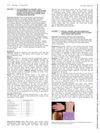
A TNFAIP3 gene mutation can cause unusual and varied symptoms of lupus and Sjogren's syndrome.
1 citations
,
August 2025 in “Genes” Genetic markers linked to sheep body traits were identified, aiding future breeding.
February 2026 in “Small Ruminant Research” The IRF2BP2 gene affects sheep fleece quality by influencing fiber traits.