45 citations
,
November 2024 in “International Journal of Molecular Sciences” Functional foods and nutrients like flavonoids, vitamin D, omega-3s, and probiotics can boost brain health and reduce stress.
141 citations
,
May 2007 in “Cancer Research” CD34 is crucial for skin tumor development in mice.
8 citations
,
February 2021 in “Biomolecules & therapeutics” Myristoleic acid helps hair growth by boosting cell growth and recycling processes in hair follicle cells.
7 citations
,
October 2024 in “Cells” PRP therapy shows promise for anti-aging but lacks consistent evidence and standardization.
 3 citations
,
December 2022 in “npj Regenerative Medicine”
3 citations
,
December 2022 in “npj Regenerative Medicine” HSPGs help control stem cell behavior, affecting hair growth and offering a target for hair loss treatments.
 3 citations
,
December 2022 in “Cells”
3 citations
,
December 2022 in “Cells” Cannabinoids like CBD and THC may help treat non-cancer skin diseases, but more research is needed.
 October 2025 in “Gene Expression”
 Exosome therapy could be a promising new way to treat hair loss.
August 2025 in “Current Issues in Molecular Biology” Key pathways like WNT, EGF, FGF, SHH, and BMP regulate poultry feather growth, with BMP inhibiting it.
 September 2023 in “Stem Cells International”
 Substances from fat-derived stem cells can promote hair growth and counteract hormone-related hair loss by activating a key hair growth pathway.
200 citations
,
March 2023 in “Nature Reviews Molecular Cell Biology” Quiescent adult stem cells are crucial for tissue repair and maintenance.
5 citations
,
June 2024 in “Free Radical Biology and Medicine” Maintaining natural oxygen levels is crucial for healthy skin cells and effective treatments.
1 citations
,
April 2025 in “BMC Veterinary Research” PSAT1 is key for hair growth and stem cell function in cashmere goats.
29 citations
,
March 2022 in “Biomedicines” Enhancing antioxidant responses can improve treatments for various diseases.
 1 citations
,
January 2023 in “Burns & Trauma”
1 citations
,
January 2023 in “Burns & Trauma” Wnt4 protein makes the outer skin layer thicker in burn wounds by turning on a specific healing pathway and loosening the connections between skin cells.
 May 2026 in “The EMBO Journal”
 Feather follicles form through specific cellular flows and mechanical changes in the skin.
 November 2023 in “Nature Communications”
 Cells lacking the Bax protein can outcompete others, leading to better tissue repair and hair growth.
4 citations
,
December 2022 in “Cells” Engineered nanovesicles from fibroblasts may help treat hair loss by promoting hair growth.
 April 2025 in “Journal of Pharmaceutical Investigation”
 Low-dose rapamycin microdepots can help regrow hair by activating certain cell processes.

Hair RiseTM microemulsion effectively promotes hair growth and treats hair loss better than standard treatments.

Ganoderma lucidum extract may help treat stress-related hair loss.
June 2024 in “Regenerative Therapy” Exosomes from stem cells may help rejuvenate skin and regrow hair, but more research is needed.
 21 citations
,
May 2022 in “Frontiers in Cell and Developmental Biology”
21 citations
,
May 2022 in “Frontiers in Cell and Developmental Biology” Hair growth and health are influenced by factors like age, environment, and nutrition, and are controlled by various molecular pathways. Red light can promote hair growth, and understanding these processes can help treat hair-related diseases.
 April 2026 in “Signal Transduction and Targeted Therapy”
 Balancing testosterone may reduce COVID-19 severity.
 38 citations
,
September 2021 in “Signal Transduction and Targeted Therapy”
38 citations
,
September 2021 in “Signal Transduction and Targeted Therapy” Genetic differences affect COVID-19 severity and treatment development.
 159 citations
,
October 2015 in “Science Advances”
159 citations
,
October 2015 in “Science Advances” Blocking JAK-STAT signaling can lead to hair growth.
 49 citations
,
October 2009 in “Cancer research”
49 citations
,
October 2009 in “Cancer research” Disrupting Stat3 in hair follicle stem cells greatly reduces skin tumor formation.
 January 2025 in “Acta Dermatovenerologica Alpina Pannonica et Adriatica”
 Baricitinib is effective and safe for treating severe alopecia areata.
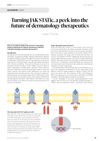 August 2024 in “New Zealand Medical Student Journal”
 JAK inhibitors show promise for treating skin diseases effectively and safely.
 January 2023 in “National Journal of Physiology, Pharmacy and Pharmacology”
 Tofacitinib effectively reduced hair loss in alopecia areata patients without adverse effects.
 August 2022 in “Nature Biotechnology”
 Drug approvals slowed in 2Q22, but notable drugs like Amvuttra, Camzyos, and Olumiant were approved.