January 2026 in “American Journal of Medical Genetics Part A” A new genetic variant causes trichothiodystrophy in two brothers, but their mother may carry it without showing symptoms.
20 citations
,
December 2020 in “Frontiers in Immunology” The immune processes causing VKH and vitiligo are similar in dogs and humans.
November 2005 in “PubMed” The hairless gene in Kunming mice is important for hair and skin, and shows genetic variations.
11 citations
,
November 2019 in “The FASEB Journal” A mutation in the MAP2 gene causes reduced hair follicle density, leading to hairlessness.
 4 citations
,
October 2021 in “Scientific Reports”
4 citations
,
October 2021 in “Scientific Reports” NKIRAS2 can suppress certain skin tumors but its effect on cancer varies with context and expression level.
 4 citations
,
March 2020 in “Berkala Ilmu Kesehatan Kulit dan Kelamin”
4 citations
,
March 2020 in “Berkala Ilmu Kesehatan Kulit dan Kelamin” HIV-infected men who have sex with men are at higher risk for aggressive syphilis, but treatment and tests are effective.
Inhibiting AP-1 changes skin tumor types and affects tumor cell identity.
12 citations
,
October 2024 in “Cell” November 2025 in “The Journal of Immunology” Different γδ T cell types have unique roles in causing alopecia areata.
15 citations
,
June 2015 in “PLoS ONE” Thymosin beta-4 promotes hair growth in mice.
1 citations
,
March 2023 in “Journal of the Turkish Academy of Dermatology” Temporal triangular alopecia may be linked to sebaceous nevus and shows a new pinkish background feature.
3 citations
,
January 2017 in “Acta Dermato Venereologica” Lipid-antigen stimulation may play a role in folliculotropic mycosis fungoides.
 December 2025 in “Al-Iraqia Medical College Journal”
 Virus infection risk is linked to heat tolerance and size, but decreases with high humidity and mutation rate.
2 citations
,
May 2022 in “The journal of immunology/The Journal of immunology” BST2 protein and certain T cells increase in early alopecia areata.
 1 citations
,
March 2015 in “Journal of the European Academy of Dermatology and Venereology”
1 citations
,
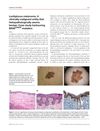
March 2015 in “Journal of the European Academy of Dermatology and Venereology” A clinically suspected melanoma appeared benign under the microscope but was confirmed by specific tests and a rare mutation.
 4 citations
,
March 2023 in “Journal of the European Academy of Dermatology and Venereology”
4 citations
,
March 2023 in “Journal of the European Academy of Dermatology and Venereology” COVID-19 can cause a temporary hair loss condition.
July 2026 in “The Journal of Immunology” Prior infections reduced alopecia areata development in mice.
 29 citations
,
January 2021 in “Translational Psychiatry”
29 citations
,
January 2021 in “Translational Psychiatry” The research suggests that Tourette syndrome is linked to both brain signaling and immune system pathways.
21 citations
,
July 2004 in “British Journal of Dermatology” HPV type 56 can hide in hair follicles even without visible warts.
19 citations
,
July 2004 in “Journal of Medical Primatology” Infant baboons suffered from zinc poisoning due to poor cage conditions.
The balance between cell renewal and differentiation controls the growth of cancerous cells in mouse skin.
47 citations
,
April 2000 in “Experimental Dermatology” A new gene mutation causes a rare type of hair loss.
6 citations
,
January 2014 in “Genetics and Molecular Research” The method successfully created stable transfection donor cells for goat hair follicle research.
69 citations
,
February 2008 in “The American journal of pathology” Controlled delivery of specific RNA and IL-4 restored hair growth in mice with autoimmune alopecia.
April 2026 in “Veterinary Medicine and Science” Adrenal tumors in hamsters are rare and hard to diagnose, highlighting the need for better diagnostic tools.
409 citations
,
May 1991 in “Genes & Development” TGF-alpha affects skin thickness, hair growth, and may contribute to psoriasis and papilloma formation.
17 citations
,
June 1994 in “Archiv für Pathologische Anatomie und Physiologie und für Klinische Medicin” Tenascin is present in normal skin and certain skin tumors but not in sebaceous glands or their tumors.
51 citations
,
December 2006 in “Mammalian Genome”  April 2023 in “Journal of Investigative Dermatology”
 Injecting anti-herpes antibodies locally can prevent skin lesions and sweating problems caused by herpes simplex virus in mice.