50 citations
,
November 1984 in “Journal of Heredity” Lethal-milk mice produce zinc-deficient milk, causing health issues in pups unless supplemented with zinc.
 45 citations
,
May 2003 in “Journal of Cell Science”
45 citations
,
May 2003 in “Journal of Cell Science” α3β1-integrin is crucial for maintaining normal hair follicle shape and function but not needed for the development of the surrounding skin.
28 citations
,
December 2015 in “Journal of biological chemistry/The Journal of biological chemistry” Prostasin has two roles in skin: one for normal skin development without needing activation, and another for proper hair growth that requires activation.
 23 citations
,
July 1982 in “International Journal of Dermatology”
23 citations
,
July 1982 in “International Journal of Dermatology” The review concludes that accurate diagnosis of different types of hair loss requires proper biopsy techniques and understanding the hair growth cycle and underlying causes.
 20 citations
,
February 2019 in “Genes”
20 citations
,
February 2019 in “Genes” The study concludes that mutations in the AEBP1 gene can cause a form of Ehlers-Danlos syndrome and should be considered in diagnosis.
 19 citations
,
February 2008 in “Facial Plastic Surgery”
19 citations
,
February 2008 in “Facial Plastic Surgery” The article concludes that microvascular free flaps, especially the latissimus dorsi flap, are recommended for large scalp reconstructions, and hair transplantation offers high survival rates and excellent aesthetic results.
17 citations
,
May 2013 in “Journal of Investigative Dermatology” Mutations in β1 integrins cause embryonic death but have milder effects on skin.
 16 citations
,
April 1978 in “Genetics Research”
16 citations
,
April 1978 in “Genetics Research” Mice with the ab gene have abnormal sebaceous gland development, affecting sebum production.
 11 citations
,
August 2003 in “Plastic and Reconstructive Surgery”
11 citations
,
August 2003 in “Plastic and Reconstructive Surgery” Hair restoration in children, tailored to their specific needs, can yield good aesthetic results with minimal complications.
10 citations
,
October 2018 in “JDDG Journal der Deutschen Dermatologischen Gesellschaft” Most skin conditions in Down syndrome are benign and involve dry or thickened skin.
 4 citations
,
May 2013 in “Annals of Plastic Surgery”
4 citations
,
May 2013 in “Annals of Plastic Surgery” Hair transplants onto a scalp reconstruction flap improved appearance successfully.
 1 citations
,
January 2021 in “Wiadomości Lekarskie”
1 citations
,
January 2021 in “Wiadomości Lekarskie” The gel with hops extract effectively treats severe acne wounds by healing and reducing infection.
 1 citations
,
May 2015 in “Plastic and Reconstructive Surgery”
1 citations
,
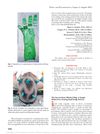
May 2015 in “Plastic and Reconstructive Surgery” The Sacred Heart Bilobed Flap is a surgical method for repairing small scalp defects with local flaps, relying on scalp elasticity and hair regrowth to hide any imperfections.
The conclusion is that closing scalp wounds is possible, but restoring hair without donor material is still a major challenge.
 1 citations
,
January 2010 in “Elsevier eBooks”
1 citations
,
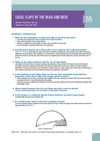
January 2010 in “Elsevier eBooks” The document concludes that local flaps are effective for reconstructive surgery in the head and neck, offering good skin match and function.
 May 2026 in “Nature Communications”
 H3K9me3 is crucial for proper skin development and structure.
 October 2025 in “International Journal of Medical Science and Clinical Research Studies”
 Modern techniques improve scalp reconstruction after trauma.
September 2025 in “Journal of Investigative Dermatology” SLC3A2 is crucial for hair follicle stem cell function and hair growth.
November 2024 in “Journal of Investigative Dermatology” Reducing neutrophils or inhibiting NETs improves wound healing in sickle cell disease.

The transcription factor Meis2 is essential for touch sensation and proper nerve development in touch receptors.
January 2024 in “Journal of Scleroderma and Related Disorders” PRP injections improve skin appearance and are safe for treating morphea.
 January 2024 in “The journal of investigative dermatology/Journal of investigative dermatology”
 AP-2α and AP-2β are crucial for healthy skin and hair.
 January 2023 in “Indian dermatology online journal”
 A child with ectodermal dysplasia-syndactyly syndrome has a new mutation in the NECTIN4 gene.
 January 2022 in “Acta dermatovenerologica Alpina, Pannonica et Adriatica (Tiskana izd.)”
 Uncombable hair syndrome causes frizzy hair and can affect the nervous system, eyes, and ears, often co-occurring with other hair, skin, nail, and teeth conditions, and is linked to three specific gene mutations.
April 2019 in “The journal of investigative dermatology/Journal of investigative dermatology” Disrupting the Tsc2 gene in certain cells leads to thicker skin, larger hair, and changes in hair growth signaling, which can be partly reversed with specific treatment.
 April 2018 in “Journal of Investigative Dermatology”
 Basonuclin 1 (BNC1) helps skin cells multiply and move, which is crucial for wound healing.
September 2017 in “The journal of investigative dermatology/Journal of investigative dermatology” EGFR inhibitors cause skin issues and hair loss by weakening skin defenses, suggesting antibiotics and targeted treatments can help.
 December 2016 in “Journal of Pakistan Association of Dermatology”
 Tissue expansion is a safe primary method for hair restoration in patients with large scalp defects before hair transplantation.
 April 2016 in “The journal of investigative dermatology/Journal of investigative dermatology”
 RPGRIP1L helps skin cells stick together by blocking PKCβII, which can prevent skin blistering like in pemphigus.
January 2014 in “International Journal of Clinical Medicine” Premature aging increases the risk of immune problems and autoimmune diseases.