8 citations
,
June 2023 in “Journal of clinical medicine” Nanofat shows promise for facial rejuvenation and treating skin issues but needs more research for long-term safety.
3 citations
,
September 2025 in “Cosmetics” Extracellular vesicles could revolutionize skincare by improving skin repair and anti-aging, but face regulatory and cost challenges.
 1 citations
,
January 2014 in “Journal of Cutaneous and Aesthetic Surgery”
1 citations
,
January 2014 in “Journal of Cutaneous and Aesthetic Surgery” Regenerative medicine shows promise for aesthetic surgery, but needs more research for widespread use.
July 2026 in “Dermatological Reviews” Exosomes have potential in medicine but face challenges in standardization and approval.
 January 2025 in “Dialnet (Universidad de la Rioja)”
 ADSC-enriched fat grafting is the best and safest aesthetic treatment, combining effectiveness and ethical confidence.
 December 2024 in “Здобутки клінічної і експериментальної медицини”
 Advancements in skin regeneration focus on stem cells, nanotechnology, and bioengineered skin to improve healing and reduce scarring.
March 2024 in “Cosmetics” New regenerative techniques show promise for improving skin, healing wounds, and growing hair.
 November 2021 in “Current Otorhinolaryngology Reports”
 New treatments for hair loss could involve using stem cells and a process called the Wnt/beta-catenin pathway to stimulate hair growth.
 263 citations
,
February 2013 in “Wiley interdisciplinary reviews. Nanomedicine and nanobiotechnology”
263 citations
,
February 2013 in “Wiley interdisciplinary reviews. Nanomedicine and nanobiotechnology” Polymeric nanoparticles show promise for treating skin diseases.

Treating vitiligo with stem cells and melanocytes from hair, along with UVB light, works better than without the light.
January 1998 in “Boletín de la Asociación Andaluza de Bibliotecarios/Boletín de la Asociación Andaluza de Bibliotecarios” ADSC therapy is promising for antiaging skin treatment.
 30 citations
,
April 2020 in “Stem Cell Research & Therapy”
30 citations
,
April 2020 in “Stem Cell Research & Therapy” PI3K/Akt pathway is crucial for hair growth and regeneration.
1 citations
,
September 2022 in “Biomaterials advances” 3D bioprinting can effectively regenerate hair follicles and skin tissue in wounds.
16 citations
,
August 2019 in “Journal of the Chinese Medical Association” Stem cell therapy could improve burn healing but has challenges to overcome.
April 2017 in “Journal of dermatological science” Researchers created a cell model to study hair growth and test hair-growth drugs.
 66 citations
,
May 2012 in “Scientific Reports”
66 citations
,
May 2012 in “Scientific Reports” Scientists successfully created and transplanted bioengineered hair follicles that function like natural ones, suggesting a new treatment for hair loss.
 September 2013 in “Experimental Dermatology”
 The document concluded that stem cells are crucial for skin repair, regeneration, and may help in developing advanced skin substitutes.
 November 2022 in “Journal of Investigative Dermatology”
 Human-induced stem cell-created skin models can help understand skin diseases by studying the skin's layers.
 17 citations
,
February 2015 in “International Journal of Molecular Sciences”
17 citations
,
February 2015 in “International Journal of Molecular Sciences” A special mix from certain skin cells can help hair grow by making hair root cells grow faster and activating growth signals.
 March 2026 in “Journal of Drugs in Dermatology”
 Exosome-based therapies may improve skin conditions but need more research for safety and effectiveness.
9 citations
,
April 2025 in “Stem Cell Research & Therapy” MSC-derived conditioned media can improve skin treatments.
2 citations
,
February 2022 in “bioRxiv (Cold Spring Harbor Laboratory)” Impaired LEF1 activation speeds up skin cell development in Hutchinson-Gilford Progeria Syndrome.
 July 2023 in “Bioengineering & translational medicine”
 Mesenchymal stem cell proteins in a special gel improved healing of severe burns.
 7 citations
,
December 2013 in “The Journal of Dermatology”
7 citations
,
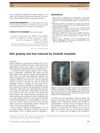
December 2013 in “The Journal of Dermatology” A woman's hair turned gray and fell out after starting a cancer drug called imatinib mesylate.
High concentrations of retinoic acid kill hair follicle stem cells, while low concentrations may help treat skin diseases.
164 citations
,
February 2010 in “Journal of Cell Science” Human dermal stem cells can become functional skin pigment cells.
 31 citations
,
August 2015 in “Stem Cells Translational Medicine”
31 citations
,
August 2015 in “Stem Cells Translational Medicine” Human skin can provide stem cells for tissue repair and regeneration, but there are challenges in obtaining and growing these cells safely.
16 citations
,
February 2013 in “Molecular Medicine Reports” CD34+ cells from fat tissue help form hair follicles and blood vessels in skin.
 3 citations
,
January 2020 in “PubMed”
3 citations
,
January 2020 in “PubMed” Adding insulin-like growth factor 1 and bone marrow-derived stem cells to a collagen-chitosan scaffold helps wounds heal faster and regrows hair follicles.
 8 citations
,
April 2009 in “International journal of oncology”
8 citations
,
April 2009 in “International journal of oncology” Hair follicle cells resist turning into skin cells.