12 citations
,
January 2013 in “Indian dermatology online journal” Dermatopathia pigmentosa reticularis causes skin discoloration, hair loss, and nail problems.
 July 2023 in “Turkish journal of veterinary research”
 Wild boar bristles in Balıkesir vary in length and thickness but are unsuitable for species separation.
December 2020 in “Pathology” A man's skin condition and poor diet led to a scurvy diagnosis.
4 citations
,
October 2021 in “Journal of Clinical Medicine” Carriers of a specific gene mutation have subtle skin changes without visible symptoms.
7 citations
,
February 2019 in “Anais Brasileiros de Dermatologia” Hair dysplasias involve various hair disorders causing fragility, breakage, and poor hair adhesion.
January 2024 in “International Journal of Trichology” Recognizing perinevoid alopecia and concentric regrowth is important for diagnosing and treating alopecia areata.
April 2026 in “International Journal of Agriculture and Food Science” Early diagnosis and treatment can effectively manage mite infestations in goats.
 1 citations
,
January 2020 in “Skin appendage disorders”
1 citations
,
January 2020 in “Skin appendage disorders” A family was found with both Trichorhinophalangeal syndrome and Loose Anagen Syndrome, suggesting a genetic connection.
24 citations
,
February 2002 in “The journal of investigative dermatology/Journal of investigative dermatology” Two new proteins, hKAP1.6 and hKAP1.7, are found in the hair follicle cortex.
 1 citations
,
September 2023 in “Rheumatology advances in practice”
1 citations
,
September 2023 in “Rheumatology advances in practice” A woman's rare scalp condition worsened after using a specific arthritis medication, suggesting such medications can sometimes trigger or aggravate psoriasis.
 4 citations
,
February 2022 in “Frontiers in molecular biosciences”
4 citations
,
February 2022 in “Frontiers in molecular biosciences” Chronic stress in mice changes skin metabolism and gene expression, leading to hair loss.
June 2025 in “AgroLife Scientific Journal” Early diagnosis and treatment of dermatophytosis in hedgehogs are crucial for recovery and public health.
23 citations
,
December 1977 in “Virchows Archiv B Cell Pathology” 89 citations
,
March 1996 in “Proceedings of the National Academy of Sciences” CD18-deficient mice developed psoriasis-like skin disease, useful for studying inflammatory skin disorders.
1 citations
,
May 2024 in “Skin Appendage Disorders” Early detection of Lichen Planopilaris is important to prevent worsening and misdiagnosis.
 March 2026 in “Buletin Veteriner Udayana”
 The cat's hair loss and skin issues improved with less stress and more owner attention.
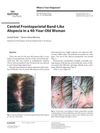 January 2018 in “Skin appendage disorders”
 A woman's hair loss was correctly diagnosed as Lichen planopilaris after initial misdiagnosis, highlighting the usefulness of trichoscopy in diagnosing hair disorders.
11 citations
,
January 2005 in “Brazilian Journal of Medical and Biological Research” Hairless USP mice have enlarged skin cysts as they age.
July 2024 in “Clinical Case Reports” Recognizing rare hair loss patterns in young females can improve understanding and treatment.
July 2022 in “Journal of Investigative Dermatology” TRPS1 loss in balding scalp areas contributes to hair loss in androgenic alopecia.
Accurate diagnosis is crucial for effective treatment of similar hair loss conditions.
1 citations
,
November 2014 in “Actas dermo-sifiliográficas/Actas dermo-sifiliográficas” 51 citations
,
January 2007 in “The journal of investigative dermatology/Journal of investigative dermatology” Scientists discovered a unique hair protein, KAP24.1, with a special structure, found only in the upper part of hair cuticles.
19 citations
,
July 2022 in “PNAS Nexus” Similar treatments might work for different types of scarring hair loss.
 3 citations
,
January 2019 in “Jikken doubutsu ihou/Jikken doubutsu/Experimental animals/Jikken Dobutsu”
3 citations
,
January 2019 in “Jikken doubutsu ihou/Jikken doubutsu/Experimental animals/Jikken Dobutsu” Pigs without the Hairless gene showed skin and thymus changes, useful for studying human hair disorders.
 April 2023 in “Journal of Investigative Dermatology”
 POUF51 and HES3 are key in controlling stem cell numbers in psoriasis.
46 citations
,
January 1991 in “Tissue and Cell” The male silkmoth's antenna develops olfactory structures over 21 days, with full hair formation by day 15.
14 citations
,
April 2016 in “PloS one” The KRTAP11-1 gene promoter is crucial for specific expression in sheep wool cortex.
 42 citations
,
September 2018 in “Journal of Fungi”
42 citations
,
September 2018 in “Journal of Fungi” Terbinafine and itraconazole are more effective against Microsporum canis than fluconazole and griseofulvin.