 November 2021 in “Research Square (Research Square)”
 3D spheroid cultures of human hair follicle cells are better for hair growth research than 2D cultures, and they provide new insights into how hair growth treatments like minoxidil and TCQA work.
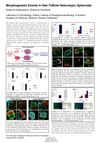
Researchers developed a method to create artificial hair follicles that may help with hair loss treatment and research.
The method effectively creates uniform, viable cell spheroids for 3D cell culture.
 44 citations
,
June 2018 in “Journal of Cellular Physiology”
44 citations
,
June 2018 in “Journal of Cellular Physiology” Researchers developed a 3D model of human hair follicle cells that can help understand hair growth and test new hair loss treatments.
July 2024 in “International Journal of Molecular Sciences” The inhibitor DPP can promote hair growth.
 3 citations
,
January 2019 in “Advances in stem cells and their niches”
3 citations
,
January 2019 in “Advances in stem cells and their niches” Dermal papilla cells are key for hair growth and color, influencing hair type and size, and their interaction with stem cells could help treat hair loss and color disorders.
 August 2023 in “Cell Proliferation”
 Human cells in plasma-derived gels can potentially mimic hair follicle environments, improving hair regeneration therapies.
June 1967 in “Journal of Cellular Physiology” The 3D hair follicle model improves understanding of hair growth and drug testing.
 1 citations
,
September 2019 in “Journal of Investigative Dermatology”
1 citations
,
September 2019 in “Journal of Investigative Dermatology” Human hair matrix cells and dermal papilla fibroblasts can form early hair follicle structures but don't produce hair shafts yet.
 62 citations
,
February 2016 in “ACS Applied Materials & Interfaces”
62 citations
,
February 2016 in “ACS Applied Materials & Interfaces” Technique creates 3D cell spheroids for hair-follicle regeneration.
8 citations
,
May 2024 in “ACS Applied Materials & Interfaces” PCL nanoscaffold-based liver spheroids are effective for drug screening and studying liver toxicity.
 July 2025 in “bioRxiv (Cold Spring Harbor Laboratory)”
 A new Wnt surrogate specifically targets the Frizzled7 receptor, promoting organoid formation and hair growth.
June 2026 in “Strathprints: The University of Strathclyde institutional repository (University of Strathclyde)” Topical IKKα inhibitors may help prevent CCS tumours.
1 citations
,
July 2025 in “Scientific Reports” CD133+ cells are crucial for hair growth.
36 citations
,
January 1994 in “Cell and Tissue Research”  223 citations
,
October 2020 in “Microsystems & Nanoengineering”
223 citations
,
October 2020 in “Microsystems & Nanoengineering” Microtechnology methods improve organoid production for medical research.
 September 2025 in “bioRxiv (Cold Spring Harbor Laboratory)”
 Basement membrane supports fibroblast aggregation, aiding hair follicle development.
 21 citations
,
October 2009 in “Biochemical Engineering Journal”
21 citations
,
October 2009 in “Biochemical Engineering Journal” Stem cell therapy is a promising approach for hair regrowth despite potential side effects.
 4 citations
,
September 2024 in “Oncology Research Featuring Preclinical and Clinical Cancer Therapeutics”
4 citations
,
September 2024 in “Oncology Research Featuring Preclinical and Clinical Cancer Therapeutics” 3D models and organoids improve liposarcoma research and therapy development.
 61 citations
,
December 2016 in “The EMBO Journal”
61 citations
,
December 2016 in “The EMBO Journal” The study showed that hair follicle stem cells can maintain and organize themselves in a lab setting, keeping their ability to renew and form hair and skin.
 88 citations
,
January 2019 in “Journal of Tissue Engineering and Regenerative Medicine”
88 citations
,
January 2019 in “Journal of Tissue Engineering and Regenerative Medicine” Conditioned media from mesenchymal stem cell cultures could be a more effective alternative for regenerative therapies, but more research is needed.
1 citations
,
March 2024 in “Nanomaterials” Biomimetic scaffolds are better than traditional methods for growing cells and could help regenerate various tissues.
17 citations
,
August 2020 in “Stem Cell Research & Therapy” A 3D cell model can rejuvenate stem cells to improve wound healing.
 1 citations
,
December 2023 in “Scientific reports”
1 citations
,
December 2023 in “Scientific reports” 3D microenvironments in microwells improve hair follicle stem cell behavior and hair regeneration.
 38 citations
,
January 2006 in “Journal of Cellular Biochemistry”
38 citations
,
January 2006 in “Journal of Cellular Biochemistry” Researchers isolated a new type of stem cell from mouse skin that can renew itself and turn into multiple cell types.
 April 2018 in “Journal of Investigative Dermatology”
 Removing STAT5 from 3D-cultured human skin cells reduces their ability to grow hair.
 23 citations
,
December 2013 in “Regenerative Medicine”
23 citations
,
December 2013 in “Regenerative Medicine” Hair follicle culture helps develop new treatments for hair loss.
 16 citations
,
August 2019 in “Cell Proliferation”
16 citations
,
August 2019 in “Cell Proliferation” Keratinocytes help keep hair follicle cells and skin cells separate in 3D cultures, which is important for hair growth research.
 5 citations
,
November 2020 in “Frontiers in Cell and Developmental Biology”
5 citations
,
November 2020 in “Frontiers in Cell and Developmental Biology” The "Two-Cell Assemblage" assay is a new, simple method to identify substances that may promote hair growth.
 18 citations
,
November 2013 in “Molecules and Cells”
18 citations
,
November 2013 in “Molecules and Cells” New culture method keeps human skin stem cells more stem-like.