 19 citations
,
December 2015 in “European Journal of Human Genetics”
19 citations
,
December 2015 in “European Journal of Human Genetics” A rare ITGB6 gene variant causes intellectual disability, hair loss, and dental issues.
73 citations
,
June 2006 in “Animal genetics” The FGF5 gene determines hair length in dogs.
3 citations
,
August 2024 in “Molecular Biology Reports” LncRNA018392 helps goat skin cells grow by increasing CSF1R.
37 citations
,
January 1993 in “Journal of Investigative Dermatology” 6 citations
,
October 2022 in “International Journal of Molecular Sciences” Male mice with FGF5 mutations grow longer hair than females.
22 citations
,
April 2012 in “The American journal of pathology” Loss of Msx2 function causes eye development issues similar to Peters anomaly.
March 2026 in “Tissue Engineering and Regenerative Medicine” 37 citations
,
June 2004 in “Human molecular genetics online/Human molecular genetics” The HCR gene contributes to psoriasis risk.
52 citations
,
September 2012 in “Oncogene” 4 citations
,
July 2022 in “The Journal of Clinical Endocrinology & Metabolism” A specific genetic mutation causes POMC deficiency, leading to symptoms like weight gain and red hair.
 1 citations
,
April 2017 in “Journal of Investigative Dermatology”
1 citations
,
April 2017 in “Journal of Investigative Dermatology” CCL5 is important for the hair growth potential of human dermal papilla cells.
 16 citations
,
February 2018 in “BMC Genomics”
16 citations
,
February 2018 in “BMC Genomics” Certain genetic markers linked to reproductive potential were identified by their impact on a protein's ability to bind to genes.
 7 citations
,
October 2018 in “BMC genomics”
7 citations
,
October 2018 in “BMC genomics” Key genes can rewire networks, changing skin appendage types.
 February 2026 in “Frontiers in Medicine”
 Personalized sonidegib dosing can effectively treat Gorlin-Goltz syndrome with fewer side effects.
4 citations
,
January 2023 in “bioRxiv (Cold Spring Harbor Laboratory)” PrrH sRNA controls pyochelin gene expression in Pseudomonas aeruginosa based on heme levels.
7 citations
,
May 2021 in “EBioMedicine” Increased methylation of the Filip1l gene may contribute to aggressive skin cancer.
9 citations
,
November 2007 in “Blood” TMPRSS6 is crucial for controlling hepcidin and normal iron absorption.
1 citations
,
July 2024 in “New Phytologist” ZmSPL10, ZmSPL14, and ZmSPL26 genes are essential for forming maize structures needed for pollen capture and kernel production.
33 citations
,
September 1990 in “Proceedings of the National Academy of Sciences” The study showed that a specific DNA sequence can control gene expression in hair growth areas of mice.
January 2007 in “Journal of Inner Mongolia University” The research helps in creating genetically modified animals to study hair growth.
 23 citations
,
December 2013 in “British Journal of Dermatology”
23 citations
,
December 2013 in “British Journal of Dermatology” A new gene mutation linked to a skin condition was found in a Spanish family.
 50 citations
,
April 2014 in “Nature Communications”
50 citations
,
April 2014 in “Nature Communications” The research identified new skin traits in mice, some linked to human skin conditions.
 17 citations
,
September 2014 in “PLoS ONE”
17 citations
,
September 2014 in “PLoS ONE” SK2 channels help control sensory signals in rat muscle spindles and hair follicles.
 3 citations
,
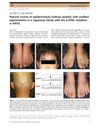
January 2019 in “Journal of Dermatology”
3 citations
,
January 2019 in “Journal of Dermatology” The p.P25L mutation in the KRT5 gene causes a rare skin condition that worsens over time and may lead to hair loss starting in young adulthood.
31 citations
,
October 1992 in “PubMed” A mycobacterial protein shares a similar region with a human skin protein, possibly affecting skin diseases.
1 citations
,
April 2021 in “IntechOpen eBooks” The PCR technique can identify genetic differences in a wool-related gene among different sheep breeds, which may help improve wool and pelt quality.
 February 2026 in “Applied Biosciences”
 The study found potential new DNA patterns in fertility genes, but further testing is needed.
May 2005 in “Molecular Carcinogenesis” mrp/plf-mRNA can indicate tumor-promoting effects in skin.
![[4-t-Butylphenyl]-N-(4-imidazol-1-yl phenyl)sulfonamide (ISCK03) Inhibits SCF/c-kit Signaling in 501mel Human Melanoma Cells and Abolishes Melanin Production in Mice and Brownish Guinea Pigs](/images/assets/4eb017dc-711d-4926-bcd0-c3b8f48e3a99/small/19974.jpg) 26 citations
,
July 2007 in “Biochemical Pharmacology”
26 citations
,
July 2007 in “Biochemical Pharmacology” ISCK03 stops melanin production in human melanoma cells and lightens skin color in mice and guinea pigs.
12 citations
,
December 2013 in “Immunological Investigations” The SNP rs6457452 is linked to a higher risk of alopecia areata in Koreans.