Search
for
Sort by
Research
180-210 / 1000+ results
research 301 The Spectrum of PLEC Sequence Variants and Related Plectinopathies Including Novel Association with Epidermolysis Bullosa Pruriginosa
Neutrophils quickly respond to skin injury.
research Abstract 3372: Mouse keratinocyte side-population plays an important role during malignant progression to skin squamous cell carcinomas
Mouse skin cancer progression involves a unique group of cells marked by ABCG2 and MTS24.

research Madarosis and facial keratinaceous spines
Reducing immunosuppression and using antiviral creams improved the woman's skin condition.
research Dermatoscopy case of the month: Trichodysplasia spinulosa
A man with a weakened immune system was diagnosed with a rare skin condition called trichodysplasia spinulosa using skin examination techniques.
research Relevance of the Axis Spermidine/eIF5A for Plant Growth and Development
Spermidine is essential for plant growth and adaptation to stress.
research A Study of the Expression of Small Conductance Calcium-Activated Potassium Channels (SK1-3) in Sensory Endings of Muscle Spindles and Lanceolate Endings of Hair Follicles in the Rat
SK2 channels help control sensory signals in rat muscle spindles and hair follicles.
research SP1 and KROX20 Regulate the Proliferation of Dermal Papilla Cells and Target the CUX1 Gene
SP1 promotes and KROX20 inhibits hair cell growth by affecting the CUX1 gene.
research Active mitochondria in healthy spiny mouse fibroblasts resemble megamitochondria and remain resilient across lifespan
Spiny mice have resilient, large mitochondria that help them regenerate tissue.

research The PER3 rs772027021 SNP induces pigmentation phenotypes of dyschromatosis universalis hereditaria
The PER3 rs772027021 SNP may cause mild skin pigmentation changes in a new subtype of dyschromatosis universalis hereditaria.

research DSP c.6310delA p.(Thr2104Glnfs*12) associates with arrhythmogenic cardiomyopathy, increased trabeculation, curly hair, and palmoplantar keratoderma
A specific gene variant is linked to heart disease, increased heart muscle, curly hair, and thick skin on palms and soles.
research A Case of Relapsed Leprosy Successfully Treated With Sparfloxacin
A man's relapsed leprosy was successfully treated with the antibiotic sparfloxacin.

research 1365 Elf5, a novel regulator of skin stem/progenitor cells fate during skin development?
Elf5 is important for skin stem cell growth and could help treat skin and hair problems.
research Expression of novel keratin associated protein 5 genes in the cuticle layer of human hair follicles
The study found nine new hair protein genes in human hair follicles.
research Splenic eumelanin differs from hair eumelanin in C57BL/6 mice.
Splenic eumelanin in C57BL/6 mice is different from hair eumelanin.
research Skipping of Exons by Premature Termination of Transcription and Alternative Splicing within Intron-5 of the Sheep SCF Gene: A Novel Splice Variant
A new mRNA variant of the SCF gene in sheep skin produces a shorter, different protein.
research Transcriptome Profile at Different Physiological Stages Reveals Potential Mode for Curly Fleece in Chinese Tan Sheep
Genetic differences between young and old Tan sheep explain why their fleece changes from curly to straight as they age.

research Comparative Spatial Transcriptomic and Single-Cell Analyses of Human Nail Units and Hair Follicles Show Transcriptional Similarities between the Onychodermis and Follicular Dermal Papilla
Human nails and hair follicles have similar gene activity, especially in the cells that contribute to their growth and development.
research Site of beige (bg) and leaden (ln) pigment gene expression determined by recombinant embryonic skin grafts and aggregation mouse chimaeras employing sash (Wsh) homozygotes
Beige and leaden pigment genes act within melanocytes, affecting pigment patterns.
research Spiny mice ( Acomys ) have evolved cellular features to support regenerative healing
Spiny mice can regenerate tissues instead of forming scars.
research P25 ELF5 regulation of normal skin development and homeostasis
ELF5 is essential for skin cell growth and maintenance.
research Mycobacterial 65,000 MW heat-shock protein shares a carboxy-terminal epitope with human epidermal cytokeratin 1/2.
A mycobacterial protein shares a similar region with a human skin protein, possibly affecting skin diseases.
research PIXE microanalysis in green hair
Copper levels in green hair decreased significantly after treatment.
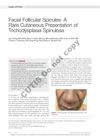
research Facial Follicular Spicules: A Rare Cutaneous Presentation of Trichodysplasia Spinulosa
Trichodysplasia spinulosa can occur after a heart transplant due to immunosuppressive drugs.

research COX2-ATP Synthase Regulates Spine Follicle Size in Hedgehogs
COX2 and ATP synthase control the size of hedgehog spines.
research Adult spiny mice (Acomys) exhibit endogenous cardiac recovery in response to myocardial infarction
Adult spiny mice recover better from heart attacks than common lab mice.
research Linc-PINT downregulation of TGF-β signaling pathway in heart arrhythmia: an in silico analysis
Monitoring TGF-β and linc-PINT expression may help identify and treat high-risk heart arrhythmia patients.
research 965 In search of the common mechano-chemical pathways during the regeneration of spiny (acomys cahirinus) and laboratory (mus musculus) mouse skin
Spiny mice regenerate skin better than laboratory mice due to larger hair bulges, more stem cells, and different collagen ratios.
research 心音図の読み方の基礎 (心電図・心音図の価値と限界(特集))
Lichen spinulosus, usually seen in young people, can rarely occur in adults, as shown by a 52-year-old woman with a rough, bumpy rash.
research A Scandinavian case of skin fragility, alopecia and cardiomyopathy caused byDSPmutations
A child with skin and heart issues had rare genetic mutations affecting skin and heart cell cohesion.