 1 citations
,
September 2023 in “Acta dermato-venereologica”
1 citations
,
September 2023 in “Acta dermato-venereologica” Certain genetic variants are linked to frontal fibrosing alopecia in Spanish patients.
 1 citations
,
August 2023 in “Acta dermato-venereologica”
1 citations
,
August 2023 in “Acta dermato-venereologica” Corticosteroids are the most common treatment for alopecia areata, but many patients need better options.
 1 citations
,
May 2023 in “Prospects in Pharmaceutical Sciences”
1 citations
,
May 2023 in “Prospects in Pharmaceutical Sciences” New cytokine-targeted therapies show promise for treating alopecia areata.
 1 citations
,
January 2021 in “Skin appendage disorders”
1 citations
,
January 2021 in “Skin appendage disorders” A woman with alopecia regrew her hair after taking a higher dose of tocilizumab.
 1 citations
,
January 2019 in “Springer eBooks”
1 citations
,
January 2019 in “Springer eBooks” Hidradenitis Suppurativa is a chronic skin condition best treated early with surgery for better outcomes and less recurrence.
 1 citations
,
October 2018 in “InTech eBooks”
1 citations
,
October 2018 in “InTech eBooks” Only minoxidil and finasteride are FDA-approved for hair loss, with other treatments available but less effective or with side effects.
 1 citations
,
April 2016 in “Journal of The American Academy of Dermatology”
1 citations
,
April 2016 in “Journal of The American Academy of Dermatology” Ixekizumab helps improve life quality, physical ability, and work performance in patients with psoriatic arthritis who haven't used biologic drugs before.
 July 2026 in “Frontiers in Medicine”
 A new treatment plan for alopecia areata considers disease severity, quality of life, and progression to offer personalized care.
 June 2026 in “Dermatology and Therapy”
 Ritlecitinib provides new treatment options for diverse alopecia areata patients.
 June 2026 in “Frontiers in Materials”
 Smart hydrogel dressings can improve healing for severe wounds by mimicking natural tissue and delivering treatments.
 April 2026 in “Inflammopharmacology”
 Punica granatum leaf extract may help treat skin fibrosis by reducing inflammation and oxidative stress.
 April 2026 in “Frontiers in Medicine”
 Upadacitinib effectively treats psoriasis and lichen planus together.
 April 2026 in “Dermatology and Therapy”
 TNFα inhibitors are effective and well-tolerated for treating severe scalp cellulitis.
 April 2026 in “Dermatology and Therapy”
 Pregnancy can cause skin changes and issues that need careful management.
 February 2026 in “Frontiers in Immunology”
 Ivarmacitinib significantly improved hair regrowth in severe alopecia areata after tofacitinib was less effective.
 February 2026 in “Plastic and Aesthetic Research”
 Regenerative aesthetic medicine aims to restore tissue function, but needs more consistent evidence and standardized practices.
 January 2026 in “Dermatology Practical & Conceptual”
 Children with alopecia areata often have vitiligo, allergic asthma, ADHD, and low vitamin B12 and ferritin levels.
 January 2026 in “Frontiers in Medicine”
 Alopecia areata in Taiwan has a high disease burden and needs better research and diagnostic criteria.
 January 2026 in “Asian Journal of Pharmaceutical and Clinical Research”
 Umbilical cord and cord blood stem cells are promising for treating chronic diseases due to their versatility and ethical acceptability.
 December 2025 in “Cureus”
 Using 5α-reductase inhibitors for hair loss may increase the risk of dry eye disease.
 November 2025 in “Clinical Cosmetic and Investigational Dermatology”
 Tattoos may trigger autoimmune symptoms in some people.
 September 2025 in “International Journal of Innovative Technologies in Social Science”
 Biologic agents are effective for severe hidradenitis suppurativa when other treatments fail.

Dual TCR Treg cells are common in mouse tissues and vary by location.
 January 2025 in “International Journal of Dermatology Venereology and Leprosy Sciences”
 Obesity worsens skin health and losing weight can improve skin conditions.

Dual TCR Treg cells are common in various mouse tissues and show diverse characteristics.
 September 2024 in “Cureus”
 Guselkumab effectively treats skin reactions caused by adalimumab in certain conditions.
 September 2024 in “Drugs & Therapy Perspectives”
 Ritlecitinib effectively regrows hair in severe alopecia areata and is well tolerated.
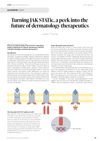 August 2024 in “New Zealand Medical Student Journal”
 JAK inhibitors show promise for treating skin diseases effectively and safely.
 May 2024 in “Journal of Education, Health and Sport”
 Current treatments for folliculitis decalvans include antibiotics, isotretinoin, and potential new therapies like botulinum toxin A and PRP.
 March 2024 in “Dermatology and therapy”
 AA patients with comorbid conditions face more severe hair loss and need specific treatments.