1 citations
,
June 2016 in “FEBS open bio” Fish oil increased cell growth and macrophages in the skin but didn't affect COX-2 expression.
February 1999 in “The anatomical record” Two mouse mutants have defective hair cuticle cross-linking.
12 citations
,
May 2016 in “British Journal of Dermatology” A 6-year-old boy's skin condition improved after stopping a specific treatment and starting new medications.
The scant hair in snthr-1Bao mice is likely caused by a deletion affecting the Plcd1 gene.
 July 2022 in “Journal of the Dermatology Nurses' Association”
 The document encourages attending the 2023 Dermatology Nurses' Association Convention.
19 citations
,
February 2001 in “Journal of paediatrics and child health” A new mutation in the mitochondrial DNA was found in a boy with MELAS, even though his family didn't show typical signs.
 20 citations
,
July 2017 in “Scientific Reports”
20 citations
,
July 2017 in “Scientific Reports” A single amino acid change in the vitamin D receptor can disrupt its function and lead to hair loss.
 17 citations
,
June 2011 in “The journal of investigative dermatology/Journal of investigative dermatology”
17 citations
,
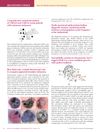
June 2011 in “The journal of investigative dermatology/Journal of investigative dermatology” The G60S Connexin43 mutation causes hair growth issues and poor hair quality in mice, similar to human ODDD patients.
 January 2012 in “Journal of Investigative Dermatology”
 Some Greek melanoma patients have gene mutations linked to increased cancer risk, a new color feature helps diagnose melanoma, the incidence of a skin condition in the Netherlands is rare, and a gene possibly affects male-pattern baldness.
17 citations
,
April 2011 in “Journal of Dermatological Science” The study created a mouse model that survives longer and shows fewer symptoms of pemphigus vulgaris.
 1 citations
,
May 2018 in “Clinical chemistry”
1 citations
,
May 2018 in “Clinical chemistry” The girl's unexpected pubic hair growth led to a diagnosis different from complete androgen insensitivity syndrome.
 23 citations
,
June 2010 in “Journal of Investigative Dermatology”
23 citations
,
June 2010 in “Journal of Investigative Dermatology” A mutation in the Soat1 gene causes hair structure defects and other health issues in AKR/J mice.
 January 2016 in “Experimental Dermatology”
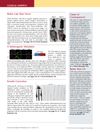
 New findings suggest potential treatments for melanoma, hyperpigmentation, hair defects, and multiple sclerosis, and show skin microbiome changes don't cause atopic dermatitis.
5 citations
,
January 2017 in “Arquivos Brasileiros de Oftalmologia” A rare genetic disorder causes sparse hair and vision loss due to a CDH3 gene mutation.
 April 2026 in “Research Square”
 COVID-19 can harm male fertility by reducing sperm stem cells and damaging testicular function.
 March 2004 in “Journal of The American Academy of Dermatology”
 Patients with SLE experienced non-scarring hair loss with fewer hair follicles, and DIF did not help identify lupus.
 January 2024 in “Wiadomości Lekarskie”
 A multidisciplinary approach is crucial for managing Silver-Russell syndrome effectively.
33 citations
,
October 2018 in “BMJ Case Reports” Aggressive treatment in young patients with certain drug reactions may lead to multiple autoimmune diseases later.
8 citations
,
February 2002 in “Journal of Medical Genetics” Skin changes can indicate a risk for breast cancer.
December 2021 in “Folia veterinaria” Over half of the dog skin disorders discussed have known gene variants, enabling genetic testing for diagnosis and responsible breeding.
March 2021 in “Medico-Legal Update” The androgen receptor gene doesn't affect women with recurrent spontaneous abortions, but having a mutant genotype might protect against it.
 24 citations
,
November 2016 in “Cell death and disease”
24 citations
,
November 2016 in “Cell death and disease” Skin-derived stem cells can become various cell types, including germ cell-like and oocyte-like cells.
2 citations
,
July 1994 in “Journal of Dermatological Science” Grafted human scalp samples on mice can produce human hair, useful for studying hair genetics.
 36 citations
,
March 2019 in “European Journal of Human Genetics”
36 citations
,
March 2019 in “European Journal of Human Genetics” The research found genetic differences in identical twins that could explain why one twin has a disease while the other does not.
1 citations
,
August 2019 Anti-Desmocollin 3 antibodies can cause atypical pemphigus symptoms.
 February 2009 in “Journal of The American Academy of Dermatology”
 The document concludes that detailed clinical descriptions of seven family cases help understand dominant dystrophic epidermolysis bullosa's symptoms and inheritance.
13 citations
,
September 2007 in “International Journal of Dermatology” Vitamin D receptor gene variations are not linked to alopecia areata.
 30 citations
,
June 2014 in “Seminars in Immunology”
30 citations
,
June 2014 in “Seminars in Immunology” Future research on ectodysplasin should explore its role in diseases, stem cells, and evolution, and continue developing treatments for genetic disorders like hypohidrotic ectodermal dysplasia.
January 2024 in “Wiadomości Lekarskie” DEC cells show promise as a safe and effective treatment for Duchenne muscular dystrophy.
8 citations
,
March 2010 in “The journal of investigative dermatology/Journal of investigative dermatology” The 14-3-3σ gene is essential for preventing hair loss.