 1 citations
,
June 2021 in “International Journal of Dermatology”
1 citations
,
June 2021 in “International Journal of Dermatology” People with alopecia areata had lower vitamin D levels, but these levels didn't relate to many aspects of the condition.
 1 citations
,
March 2021 in “Current Dermatology Reports”
1 citations
,
March 2021 in “Current Dermatology Reports” Various treatments help hair growth, but more research needed for safety and effectiveness.
 1 citations
,
January 2021 in “Dermatologic Therapy”
1 citations
,
January 2021 in “Dermatologic Therapy” Trichobiolight effectively treats hair loss with 82.5% success.
 1 citations
,
September 2020 in “Cochrane library (CD-ROM)”
1 citations
,
September 2020 in “Cochrane library (CD-ROM)” The analysis aims to identify the most effective and safest treatments for alopecia areata.
 1 citations
,
July 2018 in “Elsevier eBooks”
1 citations
,
July 2018 in “Elsevier eBooks” Heredity and hormones cause common hair loss, and topical minoxidil is the first recommended treatment.
 1 citations
,
May 2017 in “InTech eBooks”
1 citations
,
May 2017 in “InTech eBooks” Hair loss in Androgenetic alopecia (AGA) is due to altered cell sensitivity to hormones, not increased hormone levels. Hair growth periods shorten over time, causing hair to become thinner and shorter. This is linked to miscommunication between cell pathways in hair follicles. There's also a change in gene expression related to blood vessels and cell growth in balding hair follicles. The exact molecular causes of AGA are still unclear.
 1 citations
,
August 2002 in “Zeitschrift für Hautkrankheiten”
1 citations
,
August 2002 in “Zeitschrift für Hautkrankheiten” Male androgenetic alopecia involves hair follicle miniaturization due to DHT, with potential treatments using inhibitors and blockers.
 1 citations
,
January 2001 in “American Journal of Kidney Diseases”
1 citations
,
January 2001 in “American Journal of Kidney Diseases” Hair loss in three Southeast Asian women with kidney failure may be linked to their anemia treatment with erythropoietin.
 1 citations
,
August 1994 in “Journal of Cutaneous Pathology”
1 citations
,
August 1994 in “Journal of Cutaneous Pathology” Hair loss happens due to faster cell growth and fewer cells in affected follicles.
 July 2026 in “Frontiers in Cellular and Infection Microbiology”
 Staphylococcus levels may indicate hair loss in men and could help develop new treatments.
 March 2026 in “Dermatology Reports”
 FFA has higher long-term remission rates than LPP.
 March 2026 in “European journal of ecology, biology and agriculture.”
 Patients with alopecia areata have higher levels of certain immune markers, suggesting new treatment targets.
 January 2026 in “Supportive Care in Cancer”
 New cooling caps can help prevent hair loss from chemotherapy in a cost-effective and eco-friendly way.
 January 2026 in “Clinical Cosmetic and Investigational Dermatology”
 Early diagnosis and targeted anti-inflammatory treatments can improve outcomes in androgenetic alopecia with perifollicular inflammation and fibrosis.
 December 2025 in “IP Indian Journal of Clinical and Experimental Dermatology”
 Androgenetic alopecia treatments are becoming more personalized and include new therapies like topical antiandrogens and regenerative strategies.
 March 2025 in “HAL (Le Centre pour la Communication Scientifique Directe)”
 De nouvelles thérapies promettent de mieux traiter la perte de cheveux due à l'alopécie androgénétique.
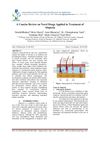
New therapies like JAK inhibitors, PRP, and stem cell treatments show promise for better alopecia management.
 October 2024 in “Journal of Education Health and Sport”
 Alopecia areata treatment should be personalized, using topical or systemic therapies based on severity, with promising options like JAK inhibitors needing more research.

The combined treatment increased hair density in most patients with Androgenetic Alopecia.

The new gel for hair loss is safe, effective, and reduces side effects.
 May 2024 in “Deleted Journal”
 Dutasteride effectively treats hair loss in men who don't respond to finasteride.
 December 2023 in “International journal of multidisciplinary research and analysis”
 SH-MSCs gel can effectively treat alopecia by increasing IL-10 and decreasing TNF-α gene expression.
 July 2023 in “The Egyptian Journal of Hospital Medicine ”
 Alopecia areata is a hair loss condition caused by immune factors and can be treated with JAK inhibitors.

There are many treatments for common hair loss, but more trials are needed to decide which are best.
 February 2022 in “Global academic journal of medical sciences”
 People with alopecia areata have much lower Vitamin-D levels than healthy individuals.
 January 2022 in “Al-Azhar Medical Journal”
 Higher antigliadin antibody levels are linked to alopecia areata severity.
 April 2021 in “Sohag Medical Journal”
 Alopecia areata is an autoimmune condition causing hair loss, linked to genetic factors and immune system issues, with no cure yet.
Hair loss in young men in Central India is linked to severe heart disease.
 January 2020 in “Clinical dermatology open access journal”
 Changing certain hairstyles can prevent worsening hair loss in Mexican women.
Accurate diagnosis and tailored treatments are crucial for managing hair loss in humans and animals.