May 2021 in “bioRxiv (Cold Spring Harbor Laboratory)” Calprotectin starves Pseudomonas aeruginosa of essential metals, affecting its growth and resistance.
July 2026 in “SKIN The Journal of Cutaneous Medicine” Accurate diagnosis of AANS is crucial for effective treatment and hair regrowth.
1 citations
,
May 2022 in “European Journal of Dermatology” Longer treatment with vismodegib lowers relapse risk in basal cell carcinoma.
28 citations
,
October 2000 in “International Journal of Dermatology” A fungal infection developed on a herpes scar and was successfully treated with antifungal medication.
 17 citations
,
December 2004 in “Bioorganic & Medicinal Chemistry Letters”
17 citations
,
December 2004 in “Bioorganic & Medicinal Chemistry Letters” Scientists found new, better-working inhibitors for a hormone-related enzyme.
17 citations
,
October 2020 in “South African Medical Journal” Fungal infections are common in severe COVID-19 cases but their impact on disease severity is unclear.
 84 citations
,
March 2010 in “Infectious Disease Clinics of North America”
84 citations
,
March 2010 in “Infectious Disease Clinics of North America” The document concludes that rapid identification, isolation, and strict infection control are crucial to manage SARS outbreaks.
 September 2025 in “Media Kedokteran Hewan”
 90% of African pygmy hedgehogs in the study had fungal infections.
June 2021 in “International Journal of Biosciences (IJB)” Tridax procumbens flower extracts can kill bacteria.
October 2012 in “International journal of child health and human development” Adolescents often face skin issues like impetigo, acne, and dermatitis, which can be managed with proper treatments.
1 citations
,
April 2022 in “Frontiers in Microbiology” Amputation stump skin disease worsens life quality, especially in men during summer, and long prosthesis use increases fungal infection risk.
 13 citations
,
January 2022 in “Advances in Dermatology and Allergology”
13 citations
,
January 2022 in “Advances in Dermatology and Allergology” Alopecia areata may be linked to imbalanced gut bacteria.
July 2026 in “Frontiers in Oncology” EGFR inhibitors can cause skin eruptions different from acne, needing specific management.
3 citations
,
January 2024 in “Allergy Asthma and Immunology Research” Understanding the skin's bacteria and chemicals may help manage scalp issues in atopic dermatitis.
 April 2019 in “Journal of Medical Science And clinical Research”
 The grey patch variant of tinea capitis is most common, mainly spread through family and animals.
8 citations
,
January 2009 in “Bulletin of the Veterinary Institute in Pulawy” A goat's skin infection was cured with itraconazole and D-biotin.
 3 citations
,
January 2022 in “Medical Mycology Journal”
3 citations
,
January 2022 in “Medical Mycology Journal” Malassezia fungi in healthy noses can form a "spaghetti-and-meatballs" structure.
10 citations
,
April 2017 in “Journal of Investigative Dermatology” The gut microbiome affects the development of alopecia areata.

A Moroccan athlete got a rare scalp infection, stressing the need for better hygiene in sports.
14 citations
,
May 1979 in “International Journal of Dermatology” Trichostasis spinulosa mainly affects the nose, with many tiny hairs in one follicle, possibly influenced by hormones and sunlight.
April 2019 in “Journal of Investigative Dermatology” Gut microbiota influences the development of alopecia areata.
 6 citations
,
November 2015 in “Equine Veterinary Education”
6 citations
,
November 2015 in “Equine Veterinary Education” A sick foal with Rhodococcus equi pneumonia was successfully treated for multiple complications with targeted therapy and careful monitoring.
November 2025 in “Probiotics and Antimicrobial Proteins” January 2015 in “Pathology” A 64-year-old man had a rare skin cancer near his ear, unresponsive to antibiotics, with specific skin and hair follicle changes.
 4 citations
,
June 2002 in “Clinical and experimental dermatology”
4 citations
,
June 2002 in “Clinical and experimental dermatology” Effective treatment for hidradenitis suppurativa varies, with antibiotics commonly used and surgery as an option, but no single method is universally successful.
 32 citations
,
August 2003 in “Journal of the American Academy of Dermatology”
32 citations
,
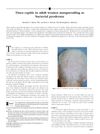
August 2003 in “Journal of the American Academy of Dermatology” Tinea capitis can be misdiagnosed as bacterial infection in adult women but is treatable with antifungal medication.
1 citations
,
February 2020 in “The Journal of clinical investigation/The journal of clinical investigation” Certain cancer drugs interact with skin bacteria to cause acne-like rashes.
 4 citations
,
April 2021 in “Experimental Dermatology”
4 citations
,
April 2021 in “Experimental Dermatology” Antibiotics might affect hair growth by changing the bacteria in hair follicles.
 May 2023 in “Australasian Journal of Dermatology”
 Various substances, including cosmetic sponges, vein glue, chai tea, skincare products, and medicaments, can cause allergic contact dermatitis, and healthcare workers often react to N95 masks.
9 citations
,
October 1947 in “The Lancet”