 5 citations
,
May 2022 in “Biomedicines”
5 citations
,
May 2022 in “Biomedicines” Botryococcus terribilis and its compounds may promote hair growth and improve hair health.
March 2026 in “Journal of Burn Care & Research” Folliculitis and pseudofolliculitis barbae are common but often overlooked issues in burn survivors, needing better awareness and treatment strategies.
February 2026 in “International Journal of Clinical Dermatology” A multi-drug treatment can effectively clear extensive calcinosis in juvenile dermatomyositis.
 January 2024 in “Genetics in Medicine Open”
 A new IL6ST gene variant may cause a unique form of hyper-IgE syndrome with skin abscesses and high IgE levels.
 December 2022 in “KSBB Journal”
 Activating TLR3 boosts autophagy gene expression in skin cells.
11 citations
,
June 2025 in “Advanced Functional Materials” The new nanosilver treatment effectively kills bacteria and speeds up wound healing with less toxicity.
 August 2026 in “Cosmetics”
 Biotics can help reduce acne and scalp issues, but more research is needed.
1 citations
,
January 2008 in “China Journal of Bioinformatics” Goat skin has more keratin genes, while the mammary gland has more immunity-related genes.
 September 2025 in “Media Kedokteran Hewan”
 90% of African pygmy hedgehogs in the study had fungal infections.
69 citations
,
January 2021 in “Journal of Biological Chemistry” Plant-derived amino acids can help develop new antimicrobial drugs.
 March 2026 in “Zenodo (CERN European Organization for Nuclear Research)”
 A herbal gel with natural ingredients can safely and effectively treat folliculitis.
 36 citations
,
September 2013 in “PLoS ONE”
36 citations
,
September 2013 in “PLoS ONE” Sweat gland stem cells help maintain glands, aid wound healing, and can regenerate skin structures.
October 2025 in “Australasian Journal of Dermatology” Bimekizumab effectively treated a man's chronic beard hair loss.
 March 2026 in “Zenodo (CERN European Organization for Nuclear Research)”
 The herbal gel effectively treats folliculitis with fewer side effects.
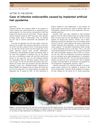 1 citations
,
June 2018 in “The Journal of Dermatology”
1 citations
,
June 2018 in “The Journal of Dermatology” A man got heart infection from scalp infection caused by artificial hair implants.
November 2012 in “Transplantation” Large corneum layer cells can cover wounds effectively.
1 citations
,
May 2022 in “European Journal of Dermatology” Longer treatment with vismodegib lowers relapse risk in basal cell carcinoma.
May 2026 in “Frontiers in Immunology” Extracellular vesicles can both worsen and potentially treat atopic dermatitis.
47 citations
,
January 2024 in “iScience” Stress keratins are expressed less in diseased skin and are linked to differentiation, inflammation, and immunity.
165 citations
,
May 2023 in “Science Advances” The hydrogel speeds up healing of infected wounds by providing oxygen and fighting bacteria.
 July 2025 in “BMC Microbiology”
 Pancreatic cancer can alter gut and skin bacteria, possibly causing skin issues.
 May 2020 in “International Journal of Engineering Applied Sciences and Technology”
 Bioactive plant materials like lemon, garlic, and neem effectively fight harmful bacteria.
 6 citations
,
January 2020 in “BMC Medical Genetics”
6 citations
,
January 2020 in “BMC Medical Genetics” A new mutation in the STS gene causes X-linked ichthyosis, even in rare female cases.
September 2023 in “Journal of the American Academy of Dermatology” Dermatologists should consider alpha-gal syndrome in patients with unexplained chronic skin issues.
7 citations
,
September 2020 in “Bioscience Biotechnology and Biochemistry” The scalp has more diverse bacteria, while hair has more bacteria and unique types.
18 citations
,
September 2023 in “Experimental Dermatology” The skin microbiome plays a key role in treating atopic dermatitis.
9 citations
,
January 2015 in “Veterinary record case reports” A dog in Germany was successfully treated for a rare bacterial infection without spreading it to humans.
75 citations
,
August 2018 in “Plant physiology” Hydrogen sulfide disrupts protein function and root hair growth in plants by modifying proteins.
 January 2020 in “Annals of the Academy of Romanian Scientists Series of Medicine”
 Folliculitis decalvans is a rare skin disease causing hair loss and requires personalized treatment.

Some bacteria use arsenic compounds as antibiotics, and others have evolved resistance; a particular arsenic-based compound shows potential as a new antimalarial treatment.