 1 citations
,
September 2022 in “Pharmaceutics”
1 citations
,
September 2022 in “Pharmaceutics” The stiffness of a wound affects hair growth during healing, with less stiff areas growing more hair.
February 2016 in “Science” Foxc1 and COL17A1 are crucial for maintaining healthy hair follicles and preventing hair loss.
56 citations
,
December 1990 in “Differentiation” Growth factors can either promote or inhibit hair follicle cell growth and collagen breakdown.
 17 citations
,
November 2015 in “Oxidative Medicine and Cellular Longevity”
17 citations
,
November 2015 in “Oxidative Medicine and Cellular Longevity” Fibroblast Growth Factor-9 helps repair heart damage after a heart attack by creating new blood vessels, especially in diabetics.
 8 citations
,
October 2018 in “Journal of The American Academy of Dermatology”
8 citations
,
October 2018 in “Journal of The American Academy of Dermatology” The review suggests there's no agreed treatment for Frontal Fibrosing Alopecia, but hydroxychloroquine and 5a-reductase inhibitors are most effective. New treatments like platelet-rich plasma and LED light could help if standard treatments fail.
 October 2013 in “Faculty Opinions – Post-Publication Peer Review of the Biomedical Literature”
 FGF9 from certain T cells helps create new hair follicles during wound healing, which could potentially be used for hair loss treatments.
 23 citations
,
November 2018 in “Journal of the European Academy of Dermatology and Venereology”
23 citations
,
November 2018 in “Journal of the European Academy of Dermatology and Venereology” The study concluded that severity of Frontal fibrosing alopecia is not linked to how long someone has it, can start before menopause, and eyebrow loss may be an early sign.
IL-1 and IL-7 help activate cells that boost hair follicle stem cell growth, aiding wound healing.
 1 citations
,
January 2010 in “Springer eBooks”
1 citations
,
January 2010 in “Springer eBooks” Hair loss in androgenetic alopecia may be due to ongoing tiny inflammation and tissue changes around hair follicles.
 January 2026 in “Current Issues in Molecular Biology”
 FGF-7 helps hair grow by activating hair follicles and is a promising target for hair loss treatments.
32 citations
,
December 2015 in “PloS one” P144® improves hypertrophic scars by reducing size and thickness and increasing elasticity.
 June 2026 in “Scientific Reports”
 Nestin-expressing hair follicle cells may be useful for nerve repair and regeneration.
20 citations
,
January 2014 in “International Journal of Oral and Maxillofacial Surgery” Using superficial temporal fascia helps prevent Frey syndrome after parotid surgery.
 8 citations
,
October 2019 in “International Journal of Dermatology”
8 citations
,
October 2019 in “International Journal of Dermatology” The study concluded that combination therapy with topical corticosteroids and hydroxychloroquine or finasteride is effective in treating Frontal fibrosing alopecia in Asians.

The study concluded that Frontal fibrosing alopecia can affect younger people, is often missed in men, and may be autoimmune-related.
 20 citations
,
January 1979 in “JAMA”
20 citations
,
January 1979 in “JAMA” Fiber implantation for baldness is not recommended because it causes many problems and doesn't work well.
November 2019 in “British Journal of Dermatology” FOL-005 peptide may help treat excessive hair growth safely.
January 2025 in “Online Publication Service of Würzburg University (Würzburg University)” A protocol was developed to create 3D skin models from adult diseased cells to study Small Fiber Neuropathy.
3 citations
,
July 2017 in “Endogenous locus-driven H-Ras G12V expression induces senescence-like phenotype in primary fibroblasts of the Costello syndrome mouse model” Mouse hair follicle stem cells have a flexible chromatin state that supports skin health and hair growth.
46 citations
,
July 2015 in “Wound repair and regeneration” Keloid scars may form due to changes in skin cell characteristics and specific protein signaling.
June 2020 in “The journal of investigative dermatology/Journal of investigative dermatology” Hair follicle bumps with stem cells might contribute to permanent hair loss by getting disconnected due to scarring.
 9 citations
,
July 2008 in “Oncology Reports”
9 citations
,
July 2008 in “Oncology Reports” HPV16-transformed cells can change human skin cell properties, aiding tumor growth.
28 citations
,
January 2023 in “Cell Transplantation” Nanofat with stem cells is promising for treating hair loss, scars, and skin rejuvenation.
18 citations
,
January 2019 in “International journal of trichology” The treatment improved hair growth in three patients with alopecia.
May 2019 in “Faculty Opinions – Post-Publication Peer Review of the Biomedical Literature” 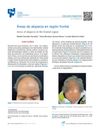 January 2025 in “Revista del Centro Dermatológico Pascua”
 Early diagnosis and treatment can help manage fibrosing alopecia in older women.
 40 citations
,
January 2009 in “Skin Pharmacology and Physiology”
40 citations
,
January 2009 in “Skin Pharmacology and Physiology” Fetal cells could improve skin repair with minimal scarring and are a potential ready-to-use solution for tissue engineering.
 October 2025 in “International Wound Journal”
 Gamma-irradiated amniotic fluid improves healing and reduces thickness of hypertrophic scars.
 14 citations
,
March 2002 in “The journal of investigative dermatology/Journal of investigative dermatology”
14 citations
,
March 2002 in “The journal of investigative dermatology/Journal of investigative dermatology” Patients with severe alopecia areata have higher levels of MIF, which decrease after successful treatment.
19 citations
,
August 1996 in “British Journal of Dermatology” Alopecia areata affects hair follicle structure, even in non-balding areas.