Search
for
Sort by
Research
300-330 / 1000+ resultsresearch TRICHOSCOPY IN ALOPECIA AREATA : A SUPER TOOL FOR DIAGNOSIS
Trichoscopy is a cost-effective and non-invasive tool for diagnosing alopecia areata.

research Faculty Opinions recommendation of Value of trichoscopy versus trichogram for diagnosis of female androgenetic alopecia.
Trichoscopy is better than trichogram for diagnosing early female hair loss.
research Mapping the hair density, thickness, and volume in normal and androgenetic alopecia subjects with the digital microscope
Hair density and thickness decrease in specific scalp areas in people with androgenetic alopecia.
research Painless Hair Analysis
TrichoScan offers a painless way to analyze and manage hair loss.
research A Prospective Study on Trichoscopy as a Diagnostic and Monitoring Tool for Assessment of Therapeutic Response in Patients with Tinea Capitis
Trichoscopy effectively diagnoses and monitors treatment in children with tinea capitis.
research Innovative Approaches to the Assessment of Alopecia Areata: Incorporating the SALT Index Through Transparent Devices

research Comparison of the effects of 665 nm low level diode Laser Hat versus and a combination of 665 nm and 808nm low level diode Laser Scanner of hair growth in androgenic alopecia
The laser scanner device was more effective at increasing hair density than the laser hat in treating androgenic alopecia.
research The dark art of light measurement: accurate radiometry for low-level light therapy
Most low-level light therapy studies did not accurately report how light was measured, affecting treatment reliability.

research Application of multiphoton microscopy in dermatological studies: A mini-review
Multiphoton microscopy is a promising tool for detailed skin imaging and could improve patient care if its challenges are addressed.
research Evaluation of trichoscopic features in female pattern hair loss
Trichoscopy is a useful tool for diagnosing female pattern hair loss.
research A Study of Trichoscopic Findings in Scalp Alopecias and Its Fruitfulness in A Tertiary Care Centre in India
Trichoscopy is a reliable, non-invasive tool for diagnosing scalp alopecias.
research Correlation between trichoscopic findings and disease severity in female-pattern hair loss
Trichoscopy is essential for early detection and monitoring of female-pattern hair loss.
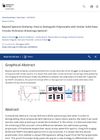
research Beyond Spectral Similarity: How to Distinguish Polymorphs with Similar Solid‐State Circular Dichroism Anisotropy Spectra?
A new method using solid-state circular dichroism anisotropy can distinguish similar chiral compounds better than traditional techniques.
research Pre-trained classification of scalp conditions using image processing
The system can automatically classify scalp conditions with 85% accuracy.
research Research on Efficacy of Nurturing Hair Products Evaluated by Dermoscopy Image Analysis Technology
Dermoscopy image analysis is a simple, effective way to evaluate hair growth and product efficacy.

research Validity and Advantages of Three-Dimensional High-Frequency Ultrasound in Dermatological Evaluation
3D high-frequency ultrasound can help diagnose skin and hair conditions without invasive biopsies.

research 41949 Raman spectroscopy of alopecia drugs to assess their potential for laser-assisted drug delivery
Raman spectroscopy is promising for measuring and enhancing drug delivery in alopecia treatments.
research Algorithms in Trichoscopy
Androgenetic alopecia is the only hair loss condition with specific diagnostic criteria in trichoscopy.
research The place of B‐mode ultrasonography, shear‐wave elastography, and superb microvascular imaging in the pre‐diagnosis of androgenetic alopecia
B-mode ultrasonography and shear-wave elastography can help predict androgenetic alopecia early.
research Stereological Quantification of Cell-Cycle Kinetics and Mobilization of Epithelial Stem Cells during Wound Healing
The method helps estimate and track skin cell growth and movement during healing.
research Laser-assisted hair transplantation: histologic comparison between holmium:YAG and CO2 lasers
The CO₂ laser is better for hair transplantation because it causes less damage than the Ho:YAG laser.
research Teletrichoscopy
Teletrichoscopy can effectively diagnose hair and scalp conditions remotely using smartphone apps and affordable tools.
research A Highly Sensitive MEMS Silicon-Hair Device Reproducing the Function of Hair Follicle
A new device mimics hair follicle functions and detects tiny forces with high sensitivity.

research TRICHOSCOPY AS A DIAGNOSTIC METHOD IN NON-SCARRING ALOPECIA
Trichoscopy is a quick, accurate, and non-invasive method to diagnose and treat non-scarring hair loss.
research Assessment of styling performance in hair gels and hair sprays by means of a new two-point stiffness test.
The new stiffness test works well for gels but not for sprays.
research 1500 Grafts Using the CO2 Silk Touch Laser, Choi Transplanters, and Calvitron Hair Tomer
The technique offers natural-looking hair transplants with minimal bleeding.
research Follicle trauma and the role of the dissecting microscope in hair transplantation
Using a microscope during hair transplants cuts damage to follicles in half and could improve hair growth.
research Tolerability, acceptability, and reproducibility of topical STAR particles in human subjects
STAR particles are safe, comfortable, and effective for enhancing drug delivery through the skin.
research Feature characterization of scarring and non-scarring types of alopecia by multiphoton microscopy (Conference Presentation)
Multiphoton microscopy can effectively distinguish between scarring and non-scarring alopecia.