24 citations
,
October 2024 in “International Journal of Extreme Manufacturing” 3D skin bioprinting has advanced but still faces challenges like safety and the need for better integration with sensors.
71 citations
,
September 2013 in “Materials Science and Engineering C” Keratin-based hydrogels from human hair and wool are promising for wound dressings and are more eco-friendly.
 May 2026 in “İzmir Katip Çelebi Üniversitesi Sağlık Bilimleri Fakültesi Dergisi”
 3D printed alginate-gelatin hydrogels are promising for drug delivery and testing treatments for diseases like Alzheimer's.
 September 2023 in “Bangladesh Journal of Neurosurgery”
 Stereotactic Radiosurgery is an effective non-invasive treatment for cerebral AVM, with successful outcomes and minimal side effects.
12 citations
,
September 2024 in “MedComm” Bioprinting shows promise in medicine but needs collaboration to overcome challenges.
January 2023 in “Springer eBooks” April 2017 in “The journal of investigative dermatology/Journal of investigative dermatology” Researchers developed a method to grow human hair follicles using 3D-printed skin models and modified cells.
48 citations
,
August 2001 in “Experimental dermatology” Researchers created a quick, cost-effective way to make skin-like tissue from hair follicles and fibroblasts.
1 citations
,
June 2023 in “Journal of Visualized Experiments” A new laser method helps observe and understand how intestines heal and change over time.
 January 2024 in “Wiadomości Lekarskie”
 Sweden's forensic medicine is expanding the use of CT and aims to integrate 3D photogrammetry for injury documentation.
5 citations
,
November 2024 in “Cells” Fish cell spheroids are a promising tool for replicating real-life conditions in research.
 March 2026 in “Preprints.org”
 Robotic systems in cosmetic surgery are promising but need more development and research.
 23 citations
,
January 2015 in “Stem cells international”
23 citations
,
January 2015 in “Stem cells international” Coating surfaces with human hair keratin improves the growth and consistency of important stem cells for medical use.
September 2025 in “OPAL (Open@LaTrobe) (La Trobe University)” SELP::KP improves hair strength, elasticity, and health, making it a promising hair cosmetic.
 4 citations
,
May 2013 in “Dermatologic Surgery”
4 citations
,
May 2013 in “Dermatologic Surgery” Three new techniques simplify and improve the preparation of tissue samples for skin cancer surgery.
 April 2017 in “Journal of Investigative Dermatology”
 Blood cells turned into stem cells can become skin cells similar to normal ones, potentially helping in skin therapies.
 September 2025 in “International Society of Hair Restoration Surgery”
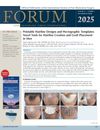
 Printable templates improve hair transplant accuracy and efficiency.
5 citations
,
March 2025 in “Tissue Engineering and Regenerative Medicine” 
3D bioprinting shows great promise for improving wound healing and skin restoration.
 15 citations
,
August 2013 in “Stem Cells and Development”
15 citations
,
August 2013 in “Stem Cells and Development” The method increases stem-like cells for better skin regeneration.
1 citations
,
March 2024 in “Nanomaterials” Biomimetic scaffolds are better than traditional methods for growing cells and could help regenerate various tissues.
 1 citations
,
January 2003 in “Expert Opinion on Therapeutic Patents”
1 citations
,
January 2003 in “Expert Opinion on Therapeutic Patents” Steroid sulfatase inhibitors could potentially treat hormone-related disorders like certain cancers, hair loss, acne, and improve cognitive dysfunction.
13 citations
,
August 2024 in “iScience” 3D spheroid culture makes stem cells better at reducing inflammation.
 37 citations
,
October 2006 in “Steroids”
37 citations
,
October 2006 in “Steroids” New sulfur-containing steroid analogs show promise for more targeted medical treatments.
 1 citations
,
April 2017 in “Journal of Investigative Dermatology”
1 citations
,
April 2017 in “Journal of Investigative Dermatology” A new one-step test can quickly identify skin cancer during surgery.
January 2025 in “Dermatologic Therapy” CO₂ laser therapy improves skin and hair growth in localized scleroderma without severe side effects.
 June 2017 in “Advances in intelligent systems and computing”
 The new device can implant cell mixtures more effectively for hair loss treatment and is easier for operators to use.
A new hydrogel made from human hair keratin can help regenerate skin and fight bacteria.
 July 2026 in “Organoid Research”
 A unified framework is needed to improve skin organoid construction for research and clinical use.

Human hair keratins can be turned into useful 3D biomedical scaffolds through a freeze-thaw process.