 63 citations
,
November 2009 in “British journal of dermatology/British journal of dermatology, Supplement”
63 citations
,
November 2009 in “British journal of dermatology/British journal of dermatology, Supplement” Sub3 is essential for fungus adherence but not for skin invasion.
55 citations
,
February 2013 in “The Anatomical Record” Mouse nails are similar to human nails, making them useful for studying nail diseases.
 33 citations
,
December 2004 in “Differentiation”
33 citations
,
December 2004 in “Differentiation” Mouse amnion can turn into skin and hair follicles with help from certain cells and factors.
24 citations
,
October 2022 in “Cell Regeneration” A new mouse model effectively mimics vitiligo for research and drug testing.
 10 citations
,
July 2019 in “Journal of Asia-Pacific Entomology”
10 citations
,
July 2019 in “Journal of Asia-Pacific Entomology” Different silkworm varieties have varying nutrient levels in their powders, which may promote hair growth.
8 citations
,
February 2025 in “Cell Systems” Engineered bacteria can deliver antioxidants to protect skin.
8 citations
,
December 2013 in “The journal of investigative dermatology. Symposium proceedings/The Journal of investigative dermatology symposium proceedings” Mouse models help understand alopecia areata and find treatments.
 7 citations
,
August 2017 in “PloS one”
7 citations
,
August 2017 in “PloS one” Key genes linked to hair growth and cancer were identified in hairless mice.
 1 citations
,
January 2024 in “Scientific reports (Nature Publishing Group)”
1 citations
,
January 2024 in “Scientific reports (Nature Publishing Group)” Human hair was used to make biodegradable plastic films that could be useful for packaging and disposable products.
 1 citations
,
December 2022 in “Biomolecules & therapeutics”
1 citations
,
December 2022 in “Biomolecules & therapeutics” Minoxidil may help reduce aging effects in brain cells.
 January 2023 in “The Egyptian Journal of Hospital Medicine”
 Platelet-Rich Plasma (PRP) is a promising new treatment for skin strain scars, with no risk of dark spots or infection.
 January 2019 in “Advances in Environmental Biology”
 Propionibacterium acnes contributes to acne and antibiotic resistance, needing new treatments.
114 citations
,
January 2007 in “International Journal of Dermatology” Caffeine can stimulate hair growth and counteract testosterone's suppressive effects on hair follicles.
 71 citations
,
March 1995 in “Journal of The American Academy of Dermatology”
71 citations
,
March 1995 in “Journal of The American Academy of Dermatology” Using both vertical and transverse sections for alopecia biopsies improves diagnosis without extra cost.
 42 citations
,
December 1990 in “The Journal of Dermatologic Surgery and Oncology”
42 citations
,
December 1990 in “The Journal of Dermatologic Surgery and Oncology” The study found that horizontal sections of scalp biopsies are better for analyzing hair loss, showing fewer hairs and more fine hairs in balding areas.
27 citations
,
July 2013 in “The journal of investigative dermatology/Journal of investigative dermatology” Lasers have become precise tools in skin treatment and diagnosis, with ongoing advancements improving their effectiveness.
![[4-t-Butylphenyl]-N-(4-imidazol-1-yl phenyl)sulfonamide (ISCK03) Inhibits SCF/c-kit Signaling in 501mel Human Melanoma Cells and Abolishes Melanin Production in Mice and Brownish Guinea Pigs](/images/assets/4eb017dc-711d-4926-bcd0-c3b8f48e3a99/small/19974.jpg) 26 citations
,
July 2007 in “Biochemical Pharmacology”
26 citations
,
July 2007 in “Biochemical Pharmacology” ISCK03 stops melanin production in human melanoma cells and lightens skin color in mice and guinea pigs.
 24 citations
,
September 2002 in “Dermatologic Surgery”
24 citations
,
September 2002 in “Dermatologic Surgery” The study found that hair follicles are above muscle connections in the scalp, which may help protect stem cell areas.
 19 citations
,
January 2021 in “Experimental dermatology”
19 citations
,
January 2021 in “Experimental dermatology” Acne inversa is an epithelial-driven disease where inflammation is caused by cyst rupture, and treatments should focus on preventing tendril growth for better results.
19 citations
,
March 2015 Human hair has electromagnetic properties.
 17 citations
,
January 2014 in “Annals of Dermatology”
17 citations
,
January 2014 in “Annals of Dermatology” Malassezia folliculitis mainly affects the trunk in males and is better detected with d-PAS staining.
 10 citations
,
January 2016 in “Dermatology online journal”
10 citations
,
January 2016 in “Dermatology online journal” Adults with persistent scalp issues unresponsive to typical treatments should be tested for the fungal infection tinea capitis to start the right antifungal medication.
 10 citations
,
June 2011 in “Archives of Dermatology”
10 citations
,
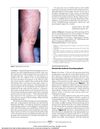
June 2011 in “Archives of Dermatology” Finasteride caused blisters on hands and feet.
10 citations
,
June 2009 in “Acta Biochimica Polonica” Old C57BL/6 mice with unsynchronized hair cycles show less melanin in their spleens.
9 citations
,
November 1999 in “Annals of Plastic Surgery” Ruby laser hair removal does not cause increased cell growth in the skin.
 6 citations
,
December 2010 in “Journal of Investigative Dermatology”
6 citations
,
December 2010 in “Journal of Investigative Dermatology” Albert M. Kligman made major contributions to dermatology, including inventing a stain for fungi and advancing knowledge on skin diseases, and his legacy continues through his trainees and philanthropy.
 4 citations
,
July 2018 in “International Journal of Research -GRANTHAALAYAH”
4 citations
,
July 2018 in “International Journal of Research -GRANTHAALAYAH” Human hair has a natural biomagnetic field.
 4 citations
,
November 2016 in “Journal of Cutaneous Pathology”
4 citations
,
November 2016 in “Journal of Cutaneous Pathology” Three characteristics of plasmacytoid dendritic cells help tell apart lupus-related hair loss from LPP.
3 citations
,
August 2018 in “Zenodo (CERN European Organization for Nuclear Research)” Human hair follicles have a natural biomagnetic field.
 3 citations
,
July 2018 in “International Journal of Research -GRANTHAALAYAH”
3 citations
,
July 2018 in “International Journal of Research -GRANTHAALAYAH” Human hair and mouse whiskers emit similar biomagnetic fields.