 December 2023 in “Redox biology”
 The substance DMC helps get rid of aging cells by triggering a process that causes cell death, which could treat age-related diseases.
 3 citations
,
January 2015 in “Journal of clinical and diagnostic research”
3 citations
,
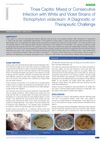
January 2015 in “Journal of clinical and diagnostic research” Treating a boy's scalp infection was challenging because two different colors of the same fungus appeared.
 May 2023 in “Journal of contemporary medicine”
 Using Favipiravir, a COVID-19 treatment drug, likely doesn't cause hair loss.
2 citations
,
June 2024 in “Parasites & Vectors” Chronic T. gondii infection may harm male fertility.
April 2026 in “Current HIV Research” Skin disorders in HIV patients have shifted, with more sexually transmitted infections and ART-related conditions now common.
3 citations
,
June 2001 in “Journal of Zoo and Wildlife Medicine” The lemur's testicular tumor was removed, improving its coat and behavior, with no signs of cancer spread.
5 citations
,
August 2021 in “Experimental dermatology” Overexpressing Merkel cell virus proteins in human hair follicles can create clusters of cells that resemble Merkel cell cancer.
 February 1938 in “Journal of the American Medical Association”
 Washing can prevent cancer from lubricating oils, extreme body temperatures need more study, Sulfomid is not recognized, no reliable diphtheria carrier treatment except surgery, eyelid injuries should heal before repair, heterophile antibody test is specific for mononucleosis, chlorine inhalations for colds are outdated, and wheat germ is safe.
6 citations
,
September 2013 in “Journal of Evolution of Medical and Dental Sciences” Low CD4 counts in HIV patients are linked to more skin disorders.
 January 2024 in “Editora In Vivo eBooks”
 H5N1 avian flu poses risks to birds and humans, requiring strict biosecurity measures.
 April 2026 in “The Open Biotechnology Journal”
 Resveratrol shows health benefits but faces challenges in effectiveness and regulation.
January 2016 in “Munich Personal RePEc Archive (Ludwig Maximilian University of Munich)” A new method using gold nanoshells and infrared light effectively delivers siRNA to cancer and stem cells with precision and minimal damage.
1 citations
,
July 2024 in “Journal of Investigative Dermatology” VYN201 shows promise as a safe and effective treatment for non-segmental vitiligo.
 3 citations
,
June 2022 in “Journal of the European Academy of Dermatology and Venereology”
3 citations
,
June 2022 in “Journal of the European Academy of Dermatology and Venereology” COVID-19 may cause early hair loss by infecting hair follicles.
 September 2015 in “International Journal of Dermatology”
 Skin diseases are common in HIV patients and could help detect HIV early in Ethiopia.
14 citations
,
March 2006 in “TSpace”  January 2026 in “GSC Biological and Pharmaceutical Sciences”
 Adapalene, Diosmin, and Azelastine could be repurposed to treat onchocerciasis.
 3 citations
,
September 2020 in “Molecular Brain”
3 citations
,
September 2020 in “Molecular Brain” The anti-viral drug Elvitegravir may protect brain cells from damage related to neurodegenerative diseases.
 13 citations
,
October 2021 in “The Journal of Microbiology”
13 citations
,
October 2021 in “The Journal of Microbiology” Human placenta hydrolysate may help treat COVID-19 by reducing virus replication and boosting immune response.
18 citations
,
October 2013 in “Stem Cell Research & Therapy” A specific combination of chemicals effectively expands genetically modified skin cells for potential use in skin therapy.
42 citations
,
April 2021 in “Pharmaceuticals” Five FDA-approved drugs may help block COVID-19 virus entry.
 198 citations
,
April 2020 in “Journal of Endocrinological Investigation”
198 citations
,
April 2020 in “Journal of Endocrinological Investigation” The virus was not found in the semen and urine of a man who tested positive for COVID-19.
 September 1980 in “PubMed”
 Using selenium disulfide on guinea pigs increased hair loss.
 April 2019 in “Journal of Investigative Dermatology”
 The search scheme SMRI is faster and more secure for retrieving encrypted data from the cloud.
Ongoing monitoring and treatment are crucial to manage sarcoptic mange in reintroduced red foxes.
January 2015 in “ScholarlyCommons (University of Pennsylvania)” IL-19 and IL-24 help cells respond to DNA damage and could be targeted for cancer and age-related disease treatments.
6 citations
,
October 2001 in “British Journal of Ophthalmology” Intralesional cidofovir may be a viable treatment for conjunctival lesions in Melkersson-Rosenthal syndrome without systemic toxicity.
 1 citations
,
October 2021 in “Australasian Journal of Dermatology”
1 citations
,
October 2021 in “Australasian Journal of Dermatology” The document's conclusion cannot be provided because the document is not available or cannot be understood.
 1 citations
,
January 2025 in “Frontiers in Oncology”
1 citations
,
January 2025 in “Frontiers in Oncology” REV7 is crucial for genome stability and cancer treatment, making it a potential target for therapy.
 13 citations
,
July 2020 in “bioRxiv (Cold Spring Harbor Laboratory)”
13 citations
,
July 2020 in “bioRxiv (Cold Spring Harbor Laboratory)” Four drugs were found that could potentially treat COVID-19 by inhibiting the virus in lab tests.