 2 citations
,
January 2025 in “Pharmaceutical Research”
2 citations
,
January 2025 in “Pharmaceutical Research” Angelica gigas Nakai root extracts may help with cancer, pain, memory loss, and metabolic issues.
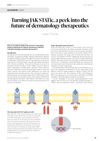 August 2024 in “New Zealand Medical Student Journal”
 JAK inhibitors show promise for treating skin diseases effectively and safely.
1 citations
,
January 2022 in “Springer eBooks”  1 citations
,
May 2023 in “PubMed”
1 citations
,
May 2023 in “PubMed” A certain type of skin cell, marked by EGFR, produces a lot of IGF1 and helps hair follicles grow back faster.
 August 2023 in “Military Medical Research”
 Scientists have improved 3D models of human skin for research and medical uses, but still face challenges in perfectly replicating real skin.
 September 2011 in “Clinical Biochemistry”
 The demineralized bone matrix scaffold is better for cell attachment than the mineralized bone allograft.
 8 citations
,
September 1993 in “British journal of dermatology/British journal of dermatology, Supplement”
8 citations
,
September 1993 in “British journal of dermatology/British journal of dermatology, Supplement” A new method helps isolate key hair components to study hair growth and loss.
 May 1991 in “Current problems in dermatology”
 Skin issues can indicate immune system problems.
 15 citations
,
March 2012 in “International journal of nanomedicine”
15 citations
,
March 2012 in “International journal of nanomedicine” Local injections of nanosized rhEPO can speed up skin healing and improve quality after deep second-degree burns.
 1 citations
,
January 2024 in “Nature communications”
1 citations
,
January 2024 in “Nature communications” Activating TLR5 in the gut can extend lifespan and improve health in aged mice.
14 citations
,
January 2019 in “PubMed” Vitamin D might be involved in the development of alopecia areata and could help in its treatment.
 21 citations
,
November 2010 in “Journal of molecular medicine”
21 citations
,
November 2010 in “Journal of molecular medicine” FoxN1 gene is essential for proper thymus structure and preventing hair loss.
Human hair can almost fully recover its structure within about 1,000 minutes after being stretched.
92 citations
,
September 2013 in “Journal of Investigative Dermatology” BMAL1 and Period1 genes can influence human hair growth.
9 citations
,
September 2022 in “Frontiers in Physics” The technique accurately identifies and evaluates hair follicle structures in skin.
24 citations
,
December 2023 in “Gels” 3D-printed hydrogels show promise in medicine but face challenges in resolution, cell viability, cost, and regulations.
March 2026 in “JID Innovations” Aire mutation reduces alopecia areata, while Notch4 mutation prevents it in mice.
 March 2026 in “Pharmaceutics”
 TheDES improve drug delivery through the skin but need more safety checks.
 March 2026 in “The Indian Journal of Animal Sciences”
 All Indian dromedary camel breeds have the same KRTAP7 gene affecting hair quality.
 8 citations
,
June 2019 in “Scientific Reports”
8 citations
,
June 2019 in “Scientific Reports” Increased PPARGC1α relates to hair thinning in common baldness.
January 2022 in “Stem cell biology and regenerative medicine” iPSCs could help develop treatments for hair loss.
August 2022 in “Precision Clinical Medicine” JAM-A helps hair regrowth in alopecia areata by protecting VCAN in skin cells.
 5 citations
,
March 2017 in “Laser Physics Letters”
5 citations
,
March 2017 in “Laser Physics Letters” Different scalp imaging methods are important for studying hair and scalp health and require more volunteers for better evaluation.
 11 citations
,
April 2019 in “Journal of Biological Research”
11 citations
,
April 2019 in “Journal of Biological Research” The study identified 12 potential biomarkers for hair loss and how they affect hair growth.
 76 citations
,
January 2007 in “American Journal of Clinical Dermatology”
76 citations
,
January 2007 in “American Journal of Clinical Dermatology” Women with PCOS often have skin problems like excessive hair, acne, hair loss, and dark patches, which can be treated with hormonal and non-hormonal therapies.
 66 citations
,
January 2017 in “Acta dermato-venereologica”
66 citations
,
January 2017 in “Acta dermato-venereologica” Isotretinoin's effects and side effects, like birth defects and depression, might be due to it causing cell death in various cells.
 January 2007 in “Elsevier eBooks”
 Alopecia areata is a reversible, autoimmune-related hair loss that can have significant emotional impact and uncertain treatment effectiveness.
 211 citations
,
October 2001 in “The FASEB Journal”
211 citations
,
October 2001 in “The FASEB Journal” Noggin is necessary to start the hair growth phase in skin after birth.
 21 citations
,
February 2009 in “Journal of the American Academy of Dermatology”
21 citations
,
February 2009 in “Journal of the American Academy of Dermatology” Some cases of tinea capitis, a fungal scalp infection, can look like scarring hair loss due to the body's immune response and the fungus itself.
 18 citations
,
March 2002 in “The journal of investigative dermatology/Journal of investigative dermatology”
18 citations
,
March 2002 in “The journal of investigative dermatology/Journal of investigative dermatology” Estrogen increases blood vessel growth factor production, while testosterone blocks this increase.