 66 citations
,
May 2021 in “Science Advances”
66 citations
,
May 2021 in “Science Advances” Different scaffold patterns improve wound healing and immune response in mouse skin, with aligned patterns being particularly effective.
57 citations
,
May 1980 in “International Journal of Dermatology” Langerhans cells are crucial for skin immunity and allergic reactions.
 49 citations
,
April 2000 in “Journal of The American Academy of Dermatology”
49 citations
,
April 2000 in “Journal of The American Academy of Dermatology” Despite progress in treatment, the exact cause of Alopecia areata is still unknown.
 47 citations
,
March 2019 in “Journal of immunology research”
47 citations
,
March 2019 in “Journal of immunology research” Valproic Acid could potentially be used to treat immune-related conditions due to its ability to modify immune cell functions.
37 citations
,
July 2002 in “Archives of Pathology & Laboratory Medicine” Tyrosinase and gp100 proteins can help diagnose and treat melanoma.
 34 citations
,
October 2017 in “Archivos Argentinos De Pediatria”
34 citations
,
October 2017 in “Archivos Argentinos De Pediatria” Alopecia Areata is a complex, unpredictable autoimmune hair loss condition with limited treatment options and a significant psychological impact.
 34 citations
,
October 2011 in “Pathology Research International”
34 citations
,
October 2011 in “Pathology Research International” Behçet's Disease may be caused by genetic and environmental factors leading to abnormal immune responses, and stress management and new treatments could improve patient outcomes.
 24 citations
,
January 2008 in “KARGER eBooks”
24 citations
,
January 2008 in “KARGER eBooks” The document concludes that ongoing research using animal models is crucial for better understanding and treating Alopecia Areata.
 17 citations
,
July 1994 in “Journal of Dermatological Science”
17 citations
,
July 1994 in “Journal of Dermatological Science” The cause of alopecia areata is likely a mix of genetics, immune system issues, and environmental factors, with more research needed to understand it fully.
 16 citations
,
April 2007 in “Journal of Medical Primatology”
16 citations
,
April 2007 in “Journal of Medical Primatology” The monkey's hair loss was due to an autoimmune disease, not genetics.
 14 citations
,
January 2005 in “Pediatric Dermatology”
14 citations
,
January 2005 in “Pediatric Dermatology” UVA1-light therapy successfully treated a child's skin condition, mycosis fungoides.
13 citations
,
March 2020 in “Acta veterinaria Scandinavica” Stem cells from fat improve dog wound healing better than standard treatment.
 11 citations
,
March 2007 in “Digestive Diseases and Sciences”
11 citations
,
March 2007 in “Digestive Diseases and Sciences” The conditions alopecia areata, primary sclerosing cholangitis, and ulcerative colitis may be linked by shared autoimmune and cell death mechanisms.
10 citations
,
April 2014 in “Molecular and Clinical Oncology” Alopecia areata can be an early sign of Hodgkin’s lymphoma and may improve with lymphoma treatment.
5 citations
,
July 2020 in “Recent patents on inflammation & allergy drug discovery” Childhood Alopecia Areata causes hair loss and requires varied treatments, with psychological support being crucial.
 5 citations
,
September 1989 in “Journal of The American Academy of Dermatology”
5 citations
,
September 1989 in “Journal of The American Academy of Dermatology” Talc in street cocaine can cause immune-reactive skin nodules where injected.
 4 citations
,
May 2019 in “Journal of The European Academy of Dermatology and Venereology”
4 citations
,
May 2019 in “Journal of The European Academy of Dermatology and Venereology” Hair loss treatment caused more hair loss in a man.
3 citations
,
December 2003 in “Archives of Pathology & Laboratory Medicine” The nodule was a benign cutaneous lymphadenoma, not cancer, and was successfully removed.
3 citations
,
September 1998 in “International Journal of Dermatology” Acitretin effectively improved the woman's skin condition.
 2 citations
,
August 2015 in “Journal of dermatology”
2 citations
,
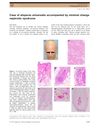
August 2015 in “Journal of dermatology” A possible link exists between minimal change nephrotic syndrome and complete hair loss.
1 citations
,
April 2017 in “Journal of Investigative Dermatology” ZNF750 and MPZL3 are important in causing seborrheic dermatitis.
1 citations
,
August 2005 in “Springer eBooks” Alopecia areata is an autoimmune disease with genetic links, treatable with certain medications, and can affect mental health.
 February 2026 in “Ciencia Latina Revista Científica Multidisciplinar”
 Early recognition and thyroid evaluation are crucial for managing diffuse alopecia areata linked to autoimmune thyroid disease.
December 2025 in “ACS Applied Bio Materials” The aloe-collagen dressing speeds up wound healing effectively.
 July 2025 in “Archives of Toxicology”
 The new skin model can predict how chemicals might cause skin allergies.
 January 2025 in “Recent Patents on Anti-Cancer Drug Discovery”
 The treatment showed high response rates and was well-tolerated, potentially extending patient survival.
October 2024 in “International journal of medicine and psychology.” Targeted immune modulation can help achieve stable remission in alopecia areata.
 June 2024 in “Archives of Medical Science”
 Telitacicept effectively improved hair regrowth in a woman with lupus and alopecia.
 June 2023 in “Zenodo (CERN European Organization for Nuclear Research)”
 Inflammation in hair follicles is a key risk factor for developing common baldness.
December 2019 in “Global pharmaceutical sciences review” New treatments for alopecia are being explored due to the limitations of current options.