 February 2024 in “Planta”
 TRM21 helps control flavonoid production and root hair growth in Arabidopsis thaliana.
 January 1999 in “American Journal of Medical Genetics Part A”
 The report expanded knowledge of MBTPS1-related disorders by identifying new symptoms.
 2 citations
,
February 2018 in “Journal of dermatology & cosmetology”
2 citations
,
February 2018 in “Journal of dermatology & cosmetology” Triangular temporal alopecia is a benign hair loss pattern best diagnosed with dermoscopy, with limited treatment options like surgery and hair transplantation.
April 2023 in “The Medical Journal of Australia” A five-year-old girl has a harmless, unchanging bald patch on her scalp.
 35 citations
,
January 1996 in “Dermatologic clinics”
35 citations
,
January 1996 in “Dermatologic clinics” Tinea capitis is a common scalp infection causing hair loss, mostly in young children.
3 citations
,
November 1998 in “Pediatrics in review” For hair fungal infections, take oral antifungals; for skin and nail infections, use topical antifungals, and keep affected areas cool and dry.
 May 2022 in “Experimental dermatology”
 Trichothiodystrophy hair is structurally abnormal with protein and organization issues.
 10 citations
,
June 2007 in “Journal of Oral and Maxillofacial Surgery”
10 citations
,
June 2007 in “Journal of Oral and Maxillofacial Surgery” A man's rare tumor caused unusual nerve-related symptoms that improved after surgery.
55 citations
,
November 2010 in “Journal of Allergy and Clinical Immunology” The L412F variant of TLR3 is linked to skin infections, more viral infections, and autoimmune issues.
10 citations
,
October 2009 in “Photomedicine and laser surgery” IPL treatment can significantly reduce hair in faun tail but may need local anesthesia.
3 citations
,
July 2022 in “Brain and Behavior” The HtrA1L364P mutation causes brain dysfunction and blood vessel damage.
 November 2023 in “Advanced Science”
 A specific hair protein variant increases the spread of breast cancer and is linked to worse survival rates.
3 citations
,
March 2016 in “Practical radiation oncology” Total skin electron therapy is an effective treatment for mycosis fungoides, balancing effectiveness and side effects.
September 2024 in “Journal of the American Academy of Dermatology” January 2003 in “Hepatology”  February 2016 in “The journal of allergy and clinical immunology/Journal of allergy and clinical immunology/The journal of allergy and clinical immunology”
 A new TP63 mutation was found in a baby with EEC syndrome, showing the need for TREC testing to check for immune issues.
10 citations
,
July 2015 in “Clinical and Experimental Dermatology” Etanercept may cause hair fragility and breakage.
3 citations
,
January 2017 in “Acta Dermato Venereologica” Lipid-antigen stimulation may play a role in folliculotropic mycosis fungoides.
35 citations
,
September 2011 in “The Journal of Dermatology” Trichoscopy helps accurately diagnose temporal triangular alopecia.
26 citations
,
October 2007 in “American Journal of Dermatopathology” Basal cell carcinoma with matrical differentiation is a rare type linked to hair follicles, with .-catenin important for its development.
4 citations
,
May 2022 in “Genes & Diseases” Thymosin β4 helps with healing, inflammation, and organ protection.
1 citations
,
March 2023 in “Journal of the Turkish Academy of Dermatology” Temporal triangular alopecia may be linked to sebaceous nevus and shows a new pinkish background feature.
May 2018 in “The journal of immunology/The Journal of immunology” Mutations in the FOXN1 gene cause severe immune issues but don't affect hair and nails.
3 citations
,
March 2017 in “Pediatric Dermatology” FOXN1 duplication can cause excessive hair growth.
35 citations
,
August 2006 in “Molecular genetics and metabolism” Tissue-specific variation in mutant load complicates genetic counseling and prenatal diagnosis.
 February 2026 in “Indian Journal of Dermatology”
 Upadacitinib may effectively treat twenty-nail dystrophy without causing pain.
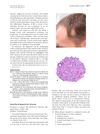
The man has Temporal Triangular Alopecia, a stable, non-scarring hair loss condition best treated with hair transplantation.
July 2025 in “International Journal of Trichology” Trichoscopy effectively diagnoses temporal triangular alopecia in children.