July 2025 in “International Journal of Trichology” Trichoscopy effectively diagnoses temporal triangular alopecia in children.
79 citations
,
October 2003 in “PubMed” Overexpression of PKCepsilon leads to increased TNFalpha, promoting metastatic squamous cell carcinoma in mice.
 69 citations
,
January 2013 in “Frontiers in Immunology”
69 citations
,
January 2013 in “Frontiers in Immunology” The FOXN1 gene is crucial for developing immune cells and preventing immune disorders.
7 citations
,
January 2025 in “Journal of Experimental & Clinical Cancer Research” PRMT5 inhibitors effectively fight adenoid cystic carcinoma in salivary glands.
 April 2023 in “The journal of investigative dermatology/Journal of investigative dermatology”
 T cells with memory features grow in number and gather around hair follicles when there are not enough immune cells.
 July 2012 in “European journal of cancer”
 MPA increases cancer spread by boosting Eph A2 activity.
 May 2017 in “Journal of The American Academy of Dermatology”
 An intact skin barrier is crucial to prevent infection in cases of tether-induced tenosynovitis.
33 citations
,
May 2017 in “Journal of Clinical Oncology” ETC-159 was safe up to 30 mg, but no tumor shrinkage was seen.
68 citations
,
August 2009 in “American Journal of Medical Genetics Part A” A new classification for trichothiodystrophy helps identify genetic causes and potential treatments.
28 citations
,
July 1980 in “British Journal of Dermatology” The hair disorder was caused by abnormal protein formation, making hair easily damaged.
17 citations
,
June 1994 in “Archiv für Pathologische Anatomie und Physiologie und für Klinische Medicin” Tenascin is present in normal skin and certain skin tumors but not in sebaceous glands or their tumors.

Skin tumor cells in patients with tuberous sclerosis have higher levels of a protein called cathepsin B.
188 citations
,
June 1998 in “Molecular cell” Researchers created a mouse with the same mutation as humans with trichothiodystrophy, showing similar symptoms and confirming the condition is due to defects in DNA repair and gene activity.
9 citations
,
April 2010 in “The Journal of Dermatology” Nestin helps identify certain melanoma cells in nodular melanoma.
April 2016 in “Journal of Investigative Dermatology” Mutations in the TSPEAR gene cause a new form of ectodermal dysplasia affecting hair and tooth development.
 105 citations
,
February 1996 in “Journal of biological chemistry/The Journal of biological chemistry”
105 citations
,
February 1996 in “Journal of biological chemistry/The Journal of biological chemistry” The TGM3 gene's promoter region is key for skin and hair cell function and may aid gene therapy.
June 2020 in “Zenodo (CERN European Organization for Nuclear Research)” Robertsonian translocation can cause recurrent miscarriages.
 4 citations
,
January 2001 in “Archives of Biochemistry and Biophysics”
4 citations
,
January 2001 in “Archives of Biochemistry and Biophysics” Activated ras can protect kidney cells from a certain substance that causes cell death.
 13 citations
,
June 2012 in “Journal of Dermatological Case Reports”
13 citations
,
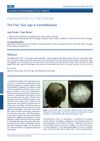
June 2012 in “Journal of Dermatological Case Reports” An 8-year-old boy with hair-pulling disorder had a bald patch that was confirmed not to be a fungal infection and was treated with therapy.
Deleting the MAD2L1 gene in mice led to rapid tumor growth despite chromosomal instability.
1 citations
,
November 2024 in “Neuro-Oncology” Temozolomide can cause severe bone marrow suppression, leading to life-threatening complications.
 June 2026 in “Current Oncology Reports”
 Sacituzumab Tirumotecan shows promise in treating gynecologic cancers with manageable side effects.
5 citations
,
August 2000 in “Archives of Pathology & Laboratory Medicine” The nodule on the woman's back was a benign hair follicle tumor, not cancer, but needed removal.
 14 citations
,
March 1995 in “Journal of cell science”
14 citations
,
March 1995 in “Journal of cell science” SV40 T antigen in hair follicles causes abnormal hair and health issues in mice.
April 2012 in “Informa Healthcare eBooks” Some drugs for inflammation may cause psoriasis-like hair loss.
The scant hair in snthr-1Bao mice is likely caused by a deletion affecting the Plcd1 gene.
 September 2022 in “Journal of medical sciences and health”
 A person had two different benign skin tumors, a trichoadenoma and melanocytic naevi, at the same time but in different places on the face.
17 citations
,
September 2009 in “British Journal of Dermatology” Fragile hair in children is rarely linked to trichothiodystrophy (TTD).
215 citations
,
November 2000 in “Journal of Investigative Dermatology” The system allows precise control of gene expression in mouse skin, useful for studying skin biology.
March 2009 in “European Urology Supplements”