3 citations
,
September 2025 in “ChemMedChem” Multitarget drugs are needed to better treat complex diseases.
2 citations
,
March 2025 in “Nanoenergy Advances” Bioelectronic nanogenerators show promise for cancer treatment but need better understanding and development.
26 citations
,
July 2006 in “International Journal of Cosmetic Science” Taurine helps protect and promote hair growth.
1 citations
,
January 2022 in “Burns” Taurine and apocynin together improve burn healing, especially later in recovery.
June 2026 in “Advanced Healthcare Materials” A new taurine-based liquid can help treat hair loss by improving hair follicle health and promoting regrowth.
November 2025 in “PROGRESS IN BIOCHEMISTRY AND BIOPHYSICS” Taurine may help reduce hair loss by improving hair growth cycles.
March 2021 in “World rabbit science” Adding 0.2% taurine to Angora rabbits' diet improves wool production and overall health.
 2 citations
,
January 2017 in “Folia biologica”
2 citations
,
January 2017 in “Folia biologica” The KRTAP7-1 gene is very similar across different cattle and yak breeds and likely plays a role in hair strength and shape.
January 2025 in “Open Veterinary Journal” Supplements improved the dog's hair growth without side effects.
 2 citations
,
February 2019 in “bioRxiv (Cold Spring Harbor Laboratory)”
2 citations
,
February 2019 in “bioRxiv (Cold Spring Harbor Laboratory)” The Asiatic lion has very low genetic diversity and unique genetic traits, highlighting the need for its conservation.
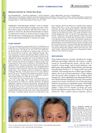 8 citations
,
August 2016 in “Acta dermato-venereologica”
8 citations
,
August 2016 in “Acta dermato-venereologica” Timolol eye-drops can cause hair loss.
1 citations
,
October 2025 in “Ophthalmology Science” Lower doses of topotecan are safe for eyes, but higher doses may harm the retina.
January 2016 in “Yanwaishang zhiye yanbing zazhi” Atropine and neosynephrine effectively prevent floppy iris syndrome during cataract surgery.
5 citations
,
February 2017 in “Cochrane library” There is not enough evidence to know if different ways of putting in eye drops for glaucoma work better than others.
 August 2024 in “Journal of Personalized Medicine”
 Tamsulosin increases the risk of floppy iris during eye surgery.
 22 citations
,
March 2019 in “European Journal of Ophthalmology”
22 citations
,
March 2019 in “European Journal of Ophthalmology” Preservative-free latanoprost effectively lowers eye pressure with fewer side effects.
Teprotumumab for thyroid eye disease commonly causes fatigue, brittle nails, dry eyes, hair loss, muscle spasms, and dry mouth, with rare serious events like blood clots.
Eye drops with β-blockers may cause hair loss.
 6 citations
,
July 2008 in “Clinical and experimental optometry”
6 citations
,
July 2008 in “Clinical and experimental optometry” Prostaglandin eye drops for glaucoma can rarely cause too much cheek hair growth.
 13 citations
,
March 1990 in “JAMA”
13 citations
,
March 1990 in “JAMA” Topical eye β-blockers might cause hair loss, which usually gets better after stopping the medication.
3 citations
,
November 2021 in “Frontiers in medicine” Methotrexate effectively controls eye inflammation in Japanese patients with non-infectious uveitis but requires careful monitoring for side effects.
3 citations
,
October 2015 in “PubMed” Finasteride may increase iris billowing risk during surgery, similar to tamsulosin.
 April 2024 in “Pharmaceuticals”
 Bimatoprost helps with hair growth and eye conditions but can be costly and have side effects.
March 2022 in “Oncology Times” Tebentafusp-tebn improves survival rates in uveal melanoma patients but has common side effects like rash and fatigue.
 January 2024 in “Wiadomości Lekarskie”
 Uveal melanoma is hard to treat when it spreads, but a new drug, tebentafusp, helps patients live longer.
 1 citations
,
February 2025 in “Notulae Scientia Biologicae”
1 citations
,
February 2025 in “Notulae Scientia Biologicae” Optimized emulgels with Levofloxacin effectively treat eye infections with prolonged drug release and safety.
 39 citations
,
April 2001 in “Journal of The American Academy of Dermatology”
39 citations
,
April 2001 in “Journal of The American Academy of Dermatology” Latanoprost, a glaucoma medication, caused excessive eyelid hair growth in many patients.
January 2015 in “Annals of dermatology/Annals of Dermatology” Using travoprost for glaucoma may cause extra hair growth and darker skin around the eyes, but these effects can reverse after stopping the drug.
January 2022 in “Essentials in ophthalmology” Tamsulosin increases the risk of floppy iris syndrome during cataract surgery.