 32 citations
,
February 2008 in “Journal of the American Academy of Dermatology”
32 citations
,
February 2008 in “Journal of the American Academy of Dermatology” KFSD is a genetic disorder causing hair loss and skin issues, with no effective treatment.
 March 2024 in “Journal of cosmetic dermatology”
 Isotretinoin can effectively reduce symptoms of frontal fibrosing alopecia.
 130 citations
,
February 2018 in “Journal of Investigative Dermatology”
130 citations
,
February 2018 in “Journal of Investigative Dermatology” Tofacitinib may help treat severe hair loss, but more research is needed.
 40 citations
,
September 2018 in “Journal of the American Academy of Dermatology”
40 citations
,
September 2018 in “Journal of the American Academy of Dermatology” Tofacitinib helped some young children with severe hair loss grow their hair back without bad side effects.
 56 citations
,
March 2010 in “Journal of Dermatology”
56 citations
,
March 2010 in “Journal of Dermatology” Most cases of Temporal Triangular Alopecia are found in early childhood and may be related to genetic conditions.
January 2012 in “Chinese Clinical Oncology” Disodium folinate can safely and effectively replace calcium folinate in colorectal cancer treatment.
4 citations
,
September 2024 in “Development” Researchers converted human embryonic stem cells into trophoblast stem cells using specific transcription factors.
January 2016 in “Indian dermatology online journal” The patient has frontal fibrosing alopecia (FFA).
5 citations
,
March 2021 in “Hepatitis Monthly” Tenofovir alafenamide fumarate is effective and safer for hepatitis B, with fewer side effects than tenofovir disoproxil fumarate.
 44 citations
,
October 2017 in “Journal of the American Academy of Dermatology”
44 citations
,
October 2017 in “Journal of the American Academy of Dermatology” Tofacitinib is effective and safe for treating severe hair loss in Korean patients.
 May 2026 in “Indian Journal of Dermatology”
 Tofacitinib shows promise for treating alopecia areata with significant hair regrowth and mild side effects.
 12 citations
,
March 2018 in “Anais brasileiros de dermatologia/Anais Brasileiros de Dermatologia”
12 citations
,
March 2018 in “Anais brasileiros de dermatologia/Anais Brasileiros de Dermatologia” A patient had both chronic cutaneous lupus erythematosus and frontal fibrosing alopecia.
April 2026 in “Clinical and Translational Science” Tofacitinib effectively treats severe alopecia areata, improving hair regrowth and patient satisfaction.
 1 citations
,
May 2017 in “Journal of the American Academy of Dermatology”
1 citations
,
May 2017 in “Journal of the American Academy of Dermatology” Tofacitinib helped a teenager with severe hair loss grow hair back, but more research is needed.
 1 citations
,
June 2022 in “International Journal of Dermatology”
1 citations
,
June 2022 in “International Journal of Dermatology” FFA in men shows unique features and treatment results vary widely.
 December 2022 in “Pakistan Journal of Medical and Health Sciences”
 Tofacitinib effectively treats Alopecia Areata.
 1 citations
,
September 2024 in “IP Indian Journal of Clinical and Experimental Dermatology”
1 citations
,
September 2024 in “IP Indian Journal of Clinical and Experimental Dermatology” Topical tofacitinib is a safe and effective treatment for autoimmune skin disorders.

Skin tumor cells in patients with tuberous sclerosis have higher levels of a protein called cathepsin B.
 January 2025 in “International Journal of Dermatology”
 Consider TFI in facial hypopigmentation diagnoses and confirm with a biopsy.
26 citations
,
October 2017 in “PubMed” Isotretinoin and acitretin may effectively stabilize the hairline in patients with frontal fibrosing alopecia.
November 2025 in “Bioactive Materials” TQC shows promise for better hair regrowth in treating hair loss.
 July 2018 in “European Medical Journal”
 Fumaric acid esters, especially dimethylfumarate, improve psoriasis treatment.
7 citations
,
August 2019 in “American Journal of Dermatopathology” Frontal fibrosing alopecia on limbs shows permanent inflammatory hair loss, not typical scarring.
12 citations
,
July 2020 in “Actas Dermo-Sifiliográficas” Frontal fibrosing alopecia mostly affects postmenopausal women, often involves eyebrows, and is linked to conditions like lichen planus and rosacea.
1 citations
,
January 2022 in “Annals of Dermatology” A new mutation in the MBTPS2 gene causes a mild form of IFAP syndrome.
 September 2024 in “Cutis”
 Sunscreen use may increase the risk of frontal fibrosing alopecia.
 5 citations
,
January 2021 in “Inflammatory Bowel Diseases”
5 citations
,
January 2021 in “Inflammatory Bowel Diseases” Tofacitinib improved ulcerative colitis, skin ulcers, and hair loss in a patient who didn't respond well to other treatments.
 January 2026 in “Frontiers in Medicine”
 FFA and FAPD might be related or stages of the same disease.
 7 citations
,
April 2021 in “British Journal of Dermatology”
7 citations
,
April 2021 in “British Journal of Dermatology” Topical tofacitinib may effectively and safely regrow facial hair in some people with alopecia areata.
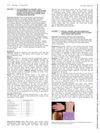
A TNFAIP3 gene mutation can cause unusual and varied symptoms of lupus and Sjogren's syndrome.