15 citations
,
July 2020 in “Applied Sciences” PRS injections can improve knee function and reduce pain for up to a year.
October 2022 in “The Korean Journal of Physiology and Pharmacology” Targeting the PGD2-DP2 pathway may help treat hair loss.
9 citations
,
August 2020 in “International Journal of Molecular Sciences” New compounds may help treat heart disease by activating specific potassium channels.
 12 citations
,
February 2010 in “Journal of the European Academy of Dermatology and Venereology”
12 citations
,
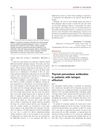
February 2010 in “Journal of the European Academy of Dermatology and Venereology” Some people with chronic hair loss may have thyroid autoimmunity.
 February 2024 in “Folia Medica”
 Platelet-rich plasma treatment is effective for hair loss in patients regardless of their thyroid antibody levels.
7 citations
,
August 2023 in “Frontiers in Immunology” Targeting TRP channels may help reduce excessive scarring.
58 citations
,
July 2018 in “Journal of Allergy and Clinical Immunology” Alopecia areata severity is linked to increased TH1 and TH2 activity.
 6 citations
,
December 2020 in “Biological & Pharmaceutical Bulletin”
6 citations
,
December 2020 in “Biological & Pharmaceutical Bulletin” Compounds from Eclipta prostrata L. plant have diabetes and obesity-fighting properties and reduce inflammation.
 4 citations
,
January 1998 in “Heterocycles”
4 citations
,
January 1998 in “Heterocycles” Researchers made two new compounds that could be used for medicine.
 7 citations
,
January 2016 in “Clinical Hemorheology and Microcirculation”
7 citations
,
January 2016 in “Clinical Hemorheology and Microcirculation” AGA patients have higher heart disease risk.
1 citations
,
January 2024 in “ACS Medicinal Chemistry Letters” TYK2 inhibitors show promise for treating cancer and autoimmune disorders.
 April 2018 in “Journal of Investigative Dermatology”
 Fetuin A, Anigozanthos Flavidus extract, and Ovol2 affect wound healing and skin regeneration.
8 citations
,
December 2023 in “International Journal of Molecular Sciences” Lower TNF-α levels in PRP may predict better treatment outcomes for bladder conditions.
248 citations
,
September 2006 in “PLANT PHYSIOLOGY” Extracellular ATP is crucial for plant root growth and signaling.
26 citations
,
January 2015 in “PubMed” Collagenase IV helps control hair growth by affecting certain growth factors.
 3 citations
,
April 2023 in “Frontiers in Pharmacology”
3 citations
,
April 2023 in “Frontiers in Pharmacology” ATP-sensitive K+ channel subunits, particularly Sur2A, play a significant role in various cancers.
 11 citations
,
December 2018 in “Bone”
11 citations
,
December 2018 in “Bone” Removing a methyl group from the ITGAV gene speeds up bone formation in a specific type of bone disease model.
The 1298CC genotype in RA patients leads to higher methotrexate toxicity, while the 1298AA genotype results in better treatment response.
 January 2026 in “Frontiers in Cell and Developmental Biology”
 Platelet-derived products can help regenerate the temporomandibular joint by enhancing natural healing processes.
17 citations
,
August 2014 in “Journal of Craniofacial Surgery” Botulinum toxin-A reduces wound and skin graft contraction.
30 citations
,
February 2021 in “Journal of Medical Virology” TMPRSS2 affects COVID-19 severity and treatment options.
10 citations
,
October 2014 in “Plastic & Reconstructive Surgery Global Open” Botulinum toxin type A injections improved hair growth and scalp health in a woman with radiation-induced hair loss.
6 citations
,
October 2014 in “International Journal of Molecular Sciences” Tanshinone IIA helps protect tissue from low oxygen damage by activating certain cell pathways.

Alopecia areata patients show increased inflammation and OX40 activation, suggesting a new treatment target.
 January 2024 in “Bratislavské lekárske listy/Bratislava medical journal”
 Chloroquine and cinchonine relax rat blood vessels by affecting calcium channels, with chloroquine needing caution in heart patients.
The treatment was not recommended due to limited effectiveness and significant side effects.
May 2005 in “Molecular Carcinogenesis” mrp/plf-mRNA can indicate tumor-promoting effects in skin.
1 citations
,
June 2016 in “FEBS open bio” Fish oil increased cell growth and macrophages in the skin but didn't affect COX-2 expression.
 April 2024 in “Lečaŝij vrač”
 Valproic acid can cause low platelet counts, especially at high doses or in elderly patients.
37 citations
,
April 2013 in “PLoS ONE” Thymosin Beta 4 helps human dental pulp cells develop into tooth-forming cells, suggesting it could aid dental regeneration.