 September 2023 in “Jurnal Ilmu Kesehatan Hewan”
 The dog improved significantly after treatment for skin mites and fungi.
38 citations
,
September 2017 in “Journal of zoo and wildlife medicine” Oclacitinib maleate successfully treated alopecia in Andean bears.
 4 citations
,
January 2000
4 citations
,
January 2000 Piedraia hortae fungi dissolve both the outer and inner layers of hair.
35 citations
,
September 2004 in “American Journal of Dermatopathology” A rare nail bed cancer was successfully treated with no recurrence after 4 years.
1 citations
,
May 2024 in “Skin Appendage Disorders” Trichoscopy helps better diagnose and treat Frontal Fibrosing Alopecia in black patients.
 April 2017 in “The journal of investigative dermatology/Journal of investigative dermatology”
 CD101 is highly effective in treating dermatophytosis in guinea pigs.
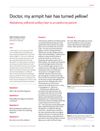
A 15-year-old boy's smelly, yellow armpit hair improved with clindamycin treatment.
53 citations
,
June 2019 in “JEADV. Journal of the European Academy of Dermatology and Venereology/Journal of the European Academy of Dermatology and Venereology” Frontal fibrosing alopecia mainly affects postmenopausal women and may be linked to thyroid hormones.
1 citations
,
January 2016 in “Dermatology Online Journal” Triangular temporal alopecia can occur in adults and should be correctly identified to prevent misdiagnosis.
January 2018 in “Indian Dermatology Online Journal” DM and AA may share a common cause.
 2 citations
,
July 1996 in “Annals of Internal Medicine”
2 citations
,
July 1996 in “Annals of Internal Medicine” Taking fluconazole for fungal infections might cause hair loss after about 3 months.
10 citations
,
September 1994 in “International Journal of Dermatology” Three Iranian men had reddish-brown facial pigmentation with no effective treatment.
 January 2025 in “Indian Journal of Dermatology”
 Frontal fibrosing alopecia is a challenging hair loss condition with no known cause or definitive treatment.
2 citations
,
June 2010 in “Medicina de Familia SEMERGEN” The girl's "dandruff" was actually harmless hair casts, not a hygiene issue.
14 citations
,
June 1989 in “Journal of dermatology” Three siblings had both Vohwinkel's disease and congenital alopecia, with no effective treatment.
 January 2023 in “Indian dermatology online journal”
 Leukemia can sometimes appear as unusual skin issues in children.
1 citations
,
May 2024 in “Skin Appendage Disorders” Hair regrowth was achieved using 5-Fluorouracil and Bleomycin for scalp atrophy caused by corticosteroids.
3 citations
,
June 2021 in “Actas Dermo-Sifiliográficas” Dermoscopy can effectively identify Malassezia folliculitis.
 11 citations
,
February 2021 in “Journal of Cosmetic Dermatology”
11 citations
,
February 2021 in “Journal of Cosmetic Dermatology” Oral tofacitinib helped regrow hair in over half of the patients with severe alopecia, but relapses and side effects were common.
June 2024 in “Indian Journal of Veterinary Medicine” The young goat had anaplasmosis and copper deficiency.
1 citations
,
September 1998 in “Journal of Advancement in Medicine” Thiamin deficiency might cause hair loss and mental health issues.
45 citations
,
March 1998 in “Journal of the American Academy of Dermatology” Majocchi's granuloma can occur in kidney transplant patients on tacrolimus and can be treated with antifungal medication.
March 2016 in “Actas dermo-sifiliográficas/Actas dermo-sifiliográficas” Stopping the use of a tight headband and using specific treatments led to partial hair regrowth.
 May 2015 in “Journal of The American Academy of Dermatology”
 Both azathioprine and betamethasone treatments help with hair regrowth in alopecia areata, but azathioprine may have fewer side effects.
 September 2023 in “Cureus”
 Early recognition and treatment of atypical alopecia areata in infants are crucial.
April 2026 in “Clinical Cosmetic and Investigational Dermatology” Androgenetic alopecia involves a fungal imbalance in hair follicles, suggesting potential for microbiome-targeted treatments.
September 2019 in “Ukrainian Journal of Dermatology Venerology Cosmetology” The combination treatment effectively and safely cured scalp microsporia in children faster and prevented recurrence.
Oral tofacitinib effectively treats alopecia areata long-term with manageable side effects.
 5 citations
,
April 2015 in “HSOA journal of clinical dermatology & therapy”
5 citations
,
April 2015 in “HSOA journal of clinical dermatology & therapy” Triamcinolone acetonide mesotherapy may be effective for treating patchy hair loss in alopecia areata.
October 2001 in “Journal of the American Academy of Dermatology” Topical minoxidil and anthralin work for patchy alopecia areata but not for alopecia totalis/universalis.