8 citations
,
January 2014 in “Journal of Stem Cell Research & Therapy” Stem cell therapy improves healing and reduces pain in cutaneous radiation syndrome.
4 citations
,
May 1981 in “Australian Journal of Biological Sciences” Rat hair follicle cells can produce and release various glycosaminoglycans over time.
 1 citations
,
April 2015 in “Current problems in dermatology”
1 citations
,
April 2015 in “Current problems in dermatology” The document concludes that the trichogram is a useful tool for diagnosing hair loss and suggests semi-organ cultures for practical trichological research.
 October 2023 in “Biomedical science and engineering”
 Innovative methods are reducing animal testing and improving biomedical research.
 December 2022 in “Journal of Experimental Biology and Agricultural Sciences”
 Using certain plant growth regulators together improves the cloning of the medicinal plant Eclipta alba.
 45 citations
,
August 2018 in “Stem Cells International”
45 citations
,
August 2018 in “Stem Cells International” Stem cells, especially from fat tissue and Wharton's jelly, can potentially regenerate hair follicles and treat hair loss, but more research is needed to perfect the treatment.
 July 2026 in “Organoid Research”
 A unified framework is needed to improve skin organoid construction for research and clinical use.
6 citations
,
February 2019 in “Journal of dermatology” Favus, a rare fungal infection, has reappeared in Japan.
 December 2023 in “Communications biology”
 Targeting the HEDGEHOG-GLI1 pathway could help treat keloids.
2 citations
,
January 1989 Researchers developed a method to grow skin-like tissue from hair cells.
December 2016 in “Chin J Anat Clin” Rat hair follicle stem cells can be effectively isolated and used for tissue engineering.
 June 2023 in “Frontiers in Bioengineering and Biotechnology”
 The conclusion is that accurately replicating the complexity of the extracellular matrix in the lab is crucial for creating realistic human tissue models.
96 citations
,
September 1996 in “PubMed” Desmocollin 1 and 3 have distinct patterns in human tissues, with Dsc1 in specific skin and hair layers and Dsc3 in various epithelial layers.
 April 2016 in “Journal of Investigative Dermatology”
 Scientists have found a way to grow hair follicles from human cells in a lab, which could help treat hair loss and skin damage.
 August 2013 in “Fertility and Sterility”
 PCOS may be influenced by factors in the blood, not just the ovaries.
4 citations
,
October 2004 in “Humana Press eBooks” Epidermal growth factor stops hair follicle formation in developing mouse skin.
 12 citations
,
September 2020 in “Stem cell research & therapy”
12 citations
,
September 2020 in “Stem cell research & therapy” Adult skin cell-based early-stage skin substitutes improve wound healing and hair growth in mice.
 4 citations
,
September 2024 in “Oncology Research Featuring Preclinical and Clinical Cancer Therapeutics”
4 citations
,
September 2024 in “Oncology Research Featuring Preclinical and Clinical Cancer Therapeutics” 3D models and organoids improve liposarcoma research and therapy development.
September 2004 in “Experimental Dermatology” The model effectively studies how sensory nerves interact with skin components, aiding research on wound healing and hair growth.
January 2011 in “Journal of Tissue Engineering and Reconstructive Surgery” Using dermal papillae cells and keratinocytes in skin substitutes speeds up healing and helps form hair follicles and glands.
44 citations
,
July 2020 in “Stem Cell Research & Therapy” Epidermal stem cells show promise for skin repair and regeneration.
38 citations
,
April 2005 in “Journal of Investigative Dermatology” Human hair follicle cells can become fat and bone cells, useful for therapy.
 25 citations
,
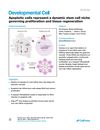
June 2021 in “Developmental Cell”
25 citations
,
June 2021 in “Developmental Cell” Dying cells can help with faster healing and new hair growth by releasing a growth-promoting molecule.
24 citations
,
October 2010 in “Tissue Engineering Part A” Tissue-engineered skin can support hair growth after grafting, especially with mouse-derived dermis.
9 citations
,
October 2024 in “Burns & Trauma” Air-liquid interface culture improves hair follicle development in skin organoids.
 8 citations
,
January 2023 in “Journal of Clinical and Translational Hepatology”
8 citations
,
January 2023 in “Journal of Clinical and Translational Hepatology” Advancements in cultured models improve understanding and treatment of gallbladder cancer.
 5 citations
,
August 2020 in “Stem Cell Research & Therapy”
5 citations
,
August 2020 in “Stem Cell Research & Therapy” Using fat-derived stem cells with the drug meglumine antimoniate can help control skin disease and reduce parasites in mice with leishmaniasis.
 February 2024 in “Tissue & Cell”
 New tissue engineering strategies show promise for regenerating human hair follicles, which could improve hair loss treatments.
 May 2023 in “Cytotherapy”
 Hair follicle and adipose cell vesicles both protect neurons and reduce inflammation similarly.
Equine hoof progenitor cells can help develop therapies for hoof diseases like laminitis.