 18 citations
,
May 2017 in “Head & Neck”
18 citations
,
May 2017 in “Head & Neck” Free tissue transfer is highly effective for fixing exposed implants after skull surgery.
 9 citations
,
February 2013 in “Plastic and Reconstructive Surgery”
9 citations
,
February 2013 in “Plastic and Reconstructive Surgery” The article explains how to rebuild parts of the head and face and how to transplant hair to cover scars, highlighting the need for careful planning and choosing the right method for each patient.
 36 citations
,
February 2018 in “British Journal of Dermatology”
36 citations
,
February 2018 in “British Journal of Dermatology” Sweat glands and hair follicles are structurally connected within a specific layer of skin fat.
31 citations
,
May 2018 in “Seminars in Plastic Surgery” An algorithm was created to simplify lip reconstruction after surgery.
6 citations
,
October 2022 in “Frontiers in Oncology” New techniques and materials improve sternum reconstruction and patient quality of life.
1 citations
,
August 2025 in “Biology Direct” Adipose tissue therapies have advanced from tissue to cell and cell-free treatments, showing promise but also limitations.
 May 2026 in “Zenodo (CERN European Organization for Nuclear Research)”
 3D bioprinting improves skin and hair regeneration and aids in emergency wound care.
 May 2026 in “Zenodo (CERN European Organization for Nuclear Research)”
 3D bioprinting improves skin and hair regeneration and aids in emergency wound care.
 July 2025 in “Frontiers in Bioengineering and Biotechnology”
 More research and standardization are needed for effective hypospadias treatment using tissue engineering.
January 2023 in “Medicines” Micronized-gingival connective tissues are safe and may help regenerate soft tissue around dental implants.
27 citations
,
October 2020 in “Biomedicine & Pharmacotherapy” Hair follicle stem cells help skin heal and grow better.
40 citations
,
July 2024 in “Bioengineering” 3D bioprinting holds promise for medicine but needs more research and clear regulations.
 October 2025 in “Indian Journal of Plastic Surgery”
 Stem cells show promise in anti-aging and reconstructive surgery, but more research is needed.
 31 citations
,
December 2014 in “Advances in Clinical and Experimental Medicine”
31 citations
,
December 2014 in “Advances in Clinical and Experimental Medicine” Stem cells could improve plastic surgery but are not widely used due to cost and safety concerns.
 1 citations
,
July 2016 in “Livestock science”
1 citations
,
July 2016 in “Livestock science” Nerve growth factor helps cashmere goat hair cells grow and is more active during the hair growth phase.
 December 2025 in “Drug Discovery and Molecular Docking (DDMD)”
 Single-cell transcriptomics reveals detailed cellular diversity and key pathways in tissue regeneration.
 6 citations
,
April 2025 in “Plastic and Aesthetic Research”
6 citations
,
April 2025 in “Plastic and Aesthetic Research” Biomaterial characteristics can influence macrophages to promote healing and improve tissue regeneration.
 September 2023 in “Chinese Medical Journal”
 Robotic surgical systems are being used more in plastic and reconstructive surgery due to their precision and control, improving patient outcomes and satisfaction, despite challenges like high costs.
25 citations
,
January 2003 in “Plastic & Reconstructive Surgery” Nail-matrical fibroblasts can make non-nail cells produce hard keratin, useful for nail repair.
 June 2023 in “Juan Cuevas eBooks”
 Personalized care and evaluation are crucial for successful plastic surgery outcomes.
63 citations
,
May 2020 in “Advanced Healthcare Materials” The new wound dressing helps skin heal completely, including blood vessels and hair growth.
 March 2026 in “European Journal of Biomedical and Life Sciences”
 Restorative dermopigmentation improves skin appearance and function by addressing specific skin issues.
 1 citations
,
May 1999 in “Journal of Oral and Maxillofacial Surgery”
1 citations
,
May 1999 in “Journal of Oral and Maxillofacial Surgery” Patients with mandible reconstruction had better quality of life and function than those with soft-tissue reconstruction.
115 citations
,
August 2014 in “Jo'jig gonghag gwa jaesaeng uihag/Tissue engineering and regenerative medicine” Human hair keratin can be used in many medical applications.
6 citations
,
January 2018 in “Advances in experimental medicine and biology” Researchers created artificial human skin using special cells, which could help treat skin conditions like albinism and vitiligo.
 4 citations
,
November 2003 in “Annals of Plastic Surgery”
4 citations
,
November 2003 in “Annals of Plastic Surgery” Hair from the head was successfully used to restore pubic hair, with additional procedures suggested for more natural results.
July 2025 in “Bioactive Materials” New engineering methods show promise for regenerating hair follicles using stem cells and advanced technologies.
 1 citations
,
November 2018 in “Elsevier eBooks”
1 citations
,
November 2018 in “Elsevier eBooks” The document concludes that transplantology has evolved with improved techniques and materials, making transplants more successful and expanding the types of transplants possible.
 June 2026 in “University of Science and Technology Journal for Medical Sciences”
 PRP gel may be slightly more effective than phenytoin cream for healing diabetic foot ulcers.
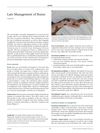 June 2002 in “Surgery (oxford)”
 The document says that treating burns late focuses on improving function, appearance, and helping patients return to normal life, using both non-surgical and surgical methods.