November 2025 in “Journal of Investigative Dermatology” TEDAR is crucial for skin cell differentiation and barrier formation.
January 2013 in “International Journal of Trichology” Early diagnosis and a multidisciplinary approach are crucial for children with Trichothiodystrophy and hidden learning disorders.
March 2003 in “Rosa P: A digital library for transportation research (United States Department of Transportation)” The tool kit helps transit agencies ensure safety by managing employees' medication use.
49 citations
,
January 2010 in “Plant and Cell Physiology” LPR1 regulates root growth under low phosphate stress independently of SIZ1 in Arabidopsis thaliana.
62 citations
,
June 2011 in “Lupus” Gender affects the symptoms and severity of systemic lupus erythematosus.
22 citations
,
September 2024 in “Chemical Engineering Journal” A new microneedle patch effectively and safely treats alopecia areata.
3 citations
,
April 2025 in “Advanced Healthcare Materials” Light-activated hyaluronic acid derivatives can enhance skin healing and regeneration.
 September 2025 in “Wound Repair and Regeneration”
 GLP-1 receptor agonists may help manage and prevent diabetic foot ulcers.
July 2024 in “Journal of Investigative Dermatology” CD8+ T cells attack hair follicle stem cells, causing scarring and hair loss in Discoid Lupus.
February 2026 in “Health Science Reports” Understanding acne medication chemistry helps doctors treat acne better.
 July 2020 in “bioRxiv (Cold Spring Harbor Laboratory)”
 Neutrophil extracellular traps slow down hair follicle healing after injury.
 10 citations
,
July 2001 in “Hair transplant forum international”
10 citations
,
July 2001 in “Hair transplant forum international” The document's conclusion cannot be provided because the document is not readable or understandable.
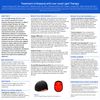 November 2025 in “SKIN The Journal of Cutaneous Medicine”
 Low-level light therapy safely increases hair growth in various types of hair loss.
2 citations
,
March 2010 in “Acta Biochimica Polonica” Raltitrexed conjugates are less potent than the free drug but more effective at high concentrations.
9 citations
,
May 2014 in “BMC medical genetics” A woman with a unique syndrome similar to TRPS has a genetic change near the TRPS1 gene, affecting its regulation.
143 citations
,
May 2002 in “PubMed” LGD1069 effectively prevents breast tumors in mice without toxicity.
 1 citations
,
December 2018 in “Journal of genetic medicine”
1 citations
,
December 2018 in “Journal of genetic medicine” A small change in the TRPS1 gene leads to a less severe form of a syndrome affecting hair, nose, and finger development.
 April 2018 in “International journal of nanotechnology and nanomedicine”
 Low-level laser therapy effectively reduces the size of pressure ulcers compared to placebo.
60 citations
,
September 2023 in “Science” BTNL proteins help control inflammatory bowel disease by maintaining specific immune cells.
215 citations
,
November 2000 in “Journal of Investigative Dermatology” The system allows precise control of gene expression in mouse skin, useful for studying skin biology.
5 citations
,
May 2022 in “Diagnostics” Certain genetic markers can indicate higher or lower risk for systemic lupus erythematosus.
 10 citations
,
March 2015 in “Journal of dermatology”
10 citations
,
March 2015 in “Journal of dermatology” The boy's severe skin disorder is caused by two new mutations in his TGM1 gene.
28 citations
,
June 2021 in “Frontiers in immunology” A protein called lfTSLP is important in causing allergic and other skin diseases and could be a target for treatment.
22 citations
,
September 2011 in “Journal of Investigative Dermatology” TCF/Lef1 is essential for skin barrier function by regulating lipid metabolism.
7 citations
,
March 2023 in “The Journal of Biochemistry” LONRF1 is important for oxidative damage response and tissue remodeling during wound healing.
October 1984 in “Immunology Today” 
Low-level laser therapy may help stem cells grow and function better, aiding in healing and tissue repair.
1 citations
,
February 2026 in “ACS Nano” The TLMG hydrogel improves wound healing and monitoring with strong adhesion and conductivity.
 33 citations
,
January 2021 in “Aesthetic Surgery Journal”
33 citations
,
January 2021 in “Aesthetic Surgery Journal” Low-Level Light Therapy (LLLT) is a safe and effective method for skin rejuvenation, acne treatment, wound healing, body contouring, and hair growth, but more well-designed trials are needed for confirmation.
433 citations
,
April 2015 in “Photomedicine and laser surgery” Photobiomodulation Therapy (PBMT) is recommended as a more inclusive term and shows potential benefits in various treatments.