68 citations
,
August 2009 in “American Journal of Medical Genetics Part A” A new classification for trichothiodystrophy helps identify genetic causes and potential treatments.
1 citations
,
January 2022 in “Annals of Dermatology” A new mutation in the MBTPS2 gene causes a mild form of IFAP syndrome.
 13 citations
,
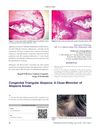
January 2011 in “International Journal of Trichology”
13 citations
,
January 2011 in “International Journal of Trichology” CTA is often mistaken for AA but doesn't respond to steroids and may require hair transplantation.
28 citations
,
November 2013 in “Cell and Tissue Research” October 2025 in “Diagnostics” Temporal triangular alopecia is a harmless, non-progressive hair loss condition.
21 citations
,
February 1988 in “Toxicology” High doses of TCB cause severe health issues in marmoset monkeys.
 May 2022 in “Experimental dermatology”
 Trichothiodystrophy hair is structurally abnormal with protein and organization issues.
July 2025 in “Journal of Investigative Dermatology” Tissue-engineered skin substitutes can model junctional epidermolysis bullosa and may help develop gene therapy.
 6 citations
,
October 2012 in “Journal of Heredity”
6 citations
,
October 2012 in “Journal of Heredity” The Itpr3 gene causes a specific hair pattern in mice.
March 2005 in “Journal of the American Academy of Dermatology” Recognizing minor skin lesions can help identify serious cancer syndromes.
2 citations
,
June 2025 in “Drug Testing and Analysis” The method effectively detects MeT and TP in dried blood spots after cream application.
 2 citations
,
January 2017 in “Folia biologica”
2 citations
,
January 2017 in “Folia biologica” The KRTAP7-1 gene is very similar across different cattle and yak breeds and likely plays a role in hair strength and shape.
 March 2013 in “Molecular & Cellular Toxicology/Molecular & cellular toxicology”
 m-Aminophenol in hair dye can cause skin cell toxicity and stress responses.
November 2025 in “PROGRESS IN BIOCHEMISTRY AND BIOPHYSICS” Taurine may help reduce hair loss by improving hair growth cycles.
 March 2026 in “The Indian Journal of Animal Sciences”
 All Indian dromedary camel breeds have the same KRTAP7 gene affecting hair quality.
18 citations
,
April 2016 in “The journal of immunology/The Journal of immunology” Thymic mesenchymal cells have unique gene expression that supports their specific functions in the thymus.
March 2026 in “Bioengineering & Translational Medicine” PEGylated thymosin β4 shows promise for treating heart attacks effectively.
477 citations
,
March 2004 in “Proceedings of the National Academy of Sciences” The DMI3 gene is essential for nodule development and symbiosis in certain plants.
CCC1 is essential for ion balance and proper plant cell function.
 16 citations
,
June 2009 in “Dermatologic Surgery”
16 citations
,
June 2009 in “Dermatologic Surgery” A 17-year-old boy with Temporal Triangular Alopecia successfully grew new hair after a hair restoration surgery using follicular unit transplantation.
3 citations
,
May 2018 in “Psychiatry and Clinical Psychopharmacology” N-acetylcysteine may help treat trichotillomania.
 April 2018 in “Journal of Investigative Dermatology”
 The conclusion is that a new method combining magnetic tweezers and traction force microscopy may help understand skin cell interactions and diseases.
September 2019 in “The journal of investigative dermatology/Journal of investigative dermatology” A new mutation in the STING protein causes a disease with lupus-like symptoms and responds well to a specific inhibitor treatment.
 6 citations
,
April 2021 in “Scientific Reports”
6 citations
,
April 2021 in “Scientific Reports” Phytochrome A is crucial for normal metabolism and development in tomato seedlings under far-red light.

Mealworm extract may help prevent hair loss and promote hair growth due to its antioxidant activity.
26 citations
,
June 2003 in “PubMed” Alpha-difluoromethylornithine prevents cancer in mice but causes hair loss.
November 2024 in “Tạp chí Y học Cộng đồng” Oral and topical tranexamic acid effectively and safely improve melasma.
Matriptase-2 helps control iron levels by suppressing hepcidin, and its deficiency can cause iron-deficiency anemia.
 April 2023 in “The journal of investigative dermatology/Journal of investigative dermatology”
 Lack of TG2 increases fat storage and lowers cell cleanup in skin oil cells.
 September 2022 in “bioRxiv (Cold Spring Harbor Laboratory)”
 A parasite-derived molecule speeds up skin healing and affects immune cell behavior without increasing scarring.