 May 2026 in “Frontiers in Cell and Developmental Biology”
 Collagen networks play a key role in hair loss and follicle miniaturization.
 January 2025 in “Institutional Repositories DataBase (IRDB)”
 Maslinic acid from olive extracts promotes hair growth like minoxidil.

Minoxidil and nebivolol can help prevent aortic aging in diabetic mice.
 March 2024 in “bioRxiv (Cold Spring Harbor Laboratory)”
 Minoxidil treatment improves heart defects in a DiGeorge syndrome model.
 September 2023 in “International Journal of Applied Pharmaceutics”
 The formulated gel is a promising treatment for alopecia areata.
 January 2007 in “Dermatologic Surgery”
 A new scalp surgery technique leads to significantly thinner scars.
 October 2024 in “International Journal of Research in Dermatology”
 Mintop serum effectively reduces hair fall and promotes new growth safely.
 May 2024 in “Clinical, cosmetic and investigational dermatology”
 5% topical minoxidil effectively treated a boy's congenital triangular alopecia without side effects.
 September 2023 in “International journal of biomedicine”
 Minoxidil might help treat acne scars by reducing collagen buildup.
 July 2023 in “International journal of advanced research in medical and pharmaceutical sciences”
 The gel combining minoxidil and Aloe vera could be an effective, non-irritating treatment for hair loss.
 November 1995 in “Dermatologic Surgery”
 The concentric mini-micrografting method is effective for extensive baldness, creating a natural look and efficiently using donor hair.
 68 citations
,
September 1990 in “Biochemical Pharmacology”
68 citations
,
September 1990 in “Biochemical Pharmacology” Minoxidil activates hair growth by being sulfated by P-PST in the human liver.
 46 citations
,
January 1991 in “Journal of Investigative Dermatology”
46 citations
,
January 1991 in “Journal of Investigative Dermatology” Minoxidil works in liver and outer hair root sheath for hair growth.
 13 citations
,
January 2015 in “Molecular Pharmaceutics”
13 citations
,
January 2015 in “Molecular Pharmaceutics” Minoxidil works well as a high permeability reference drug for biopharmaceutics classification.
 11 citations
,
January 1980 in “Southern Medical Journal”
11 citations
,
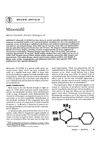
January 1980 in “Southern Medical Journal” Minoxidil effectively treats severe hypertension but has notable side effects.
 153 citations
,
August 2002 in “Dermatologic Surgery”
153 citations
,
August 2002 in “Dermatologic Surgery” Follicular Unit Extraction (FUE) is a less invasive hair transplant method with minimal scarring, suitable for about 60% of patients, especially those needing fewer grafts and quicker recovery.
 28 citations
,
May 2019 in “Life Sciences”
28 citations
,
May 2019 in “Life Sciences” Ginsenoside Rb1 from Panax ginseng helps mink hair grow by activating certain cell signals.
 11 citations
,
April 2020 in “Life sciences”
11 citations
,
April 2020 in “Life sciences” Pantothenic acid helps mink hair follicles grow by affecting certain cell signals.
 March 2026 in “Collagen and Leather”
 The hydrogel speeds up wound healing and fights bacteria, making it great for emergency use.
 January 2025 in “Journal of Veterinary Medical Science”
 Environmental conditions can affect toxic mineral levels and gut bacteria in working dogs.
 May 2017 in “Journal of microscopy and ultrastructure”
 Water quality affects mineral content in hair, and coconut oil can protect against damage.
 June 2013 in “Annals of the rheumatic diseases”
 Methotrexate dose has little effect on its toxicity when used with adalimumab for early rheumatoid arthritis.
 58 citations
,
October 2016 in “Journal of Investigative Dermatology”
58 citations
,
October 2016 in “Journal of Investigative Dermatology” Activating Nrf2 protects human hair follicles from oxidative stress and helps prevent hair growth inhibition.
 August 2016 in “PolyPublie (École Polytechnique de Montréal)”
 Doxorubicin causes heart damage, so early detection and monitoring are important during chemotherapy.
 May 2023 in “Frontiers in chemistry”
 Zolpidem shows up in hair from the top back of the head after one dose and fades over time, suggesting it gets into hair through blood and sweat.
 72 citations
,
July 2008 in “Dermatologic Therapy”
72 citations
,
July 2008 in “Dermatologic Therapy” CCCA is a scarring hair loss condition mainly in African descent women, possibly caused by genetics and hairstyling, treated with gentle hair care and medications.
 September 2024 in “Journal of the American Academy of Dermatology”
 The New York Times article boosted interest in using low dose oral minoxidil for hair loss.
 July 2023 in “The Egyptian Journal of Hospital Medicine”
 Using minoxidil with carboxytherapy is more effective for female pattern hair loss than minoxidil alone.
May 2023 in “Hair transplant forum international” Oral minoxidil shows promise for hair growth but needs more research on dosing and side effects.
 March 2020 in “Hair transplant forum international”
 Taking minoxidil by mouth for hair growth might not be safe if you also take aspirin.