 5 citations
,
June 2015 in “Veterinary dermatology”
5 citations
,
June 2015 in “Veterinary dermatology” A dog with complete hair loss regrew most hair after treatment, with no relapse after stopping treatment.
5 citations
,
June 2016 in “University of Zagreb University Computing Centre (SRCE)” Most canine follicular tumors in Croatia are benign, but some can be malignant, so testing is important.
18 citations
,
November 1989 in “Clinical and experimental dermatology” Griseofulvin is the best treatment for severe scalp infection caused by Microsporum canis.
 10 citations
,
April 2013 in “Veterinary dermatology”
10 citations
,
April 2013 in “Veterinary dermatology” A new skin disease in four Labrador retrievers responded well to immunosuppressive treatment.
 October 2023 in “Jurnal Ilmu Kesehatan Hewan”
 The kitten's skin condition improved significantly after 4 weeks of treatment.
 June 2024 in “Infection and Drug Resistance”
 An adult woman with scalp infection recovered after antifungal treatment, with no return of symptoms.
83 citations
,
July 1993 in “Journal of the American Veterinary Medical Association” Diagnosis of adrenal issues in ferrets should use symptoms, ultrasound, and surgery, not ACTH tests.
 April 2018 in “Asian-Australasian journal of bioscience and biotechnology”
 The study concluded that tick infestation was the most common skin problem in hospitalized dogs in Chennai, with various treatments used for different conditions.
5 citations
,
February 2023 in “Veterinary Sciences” Adhesive tape impression is a useful tool for diagnosing dermatophytosis in dogs and cats.
6 citations
,
January 2022 in “Veterinary Sciences” Feline cutaneous lymphocytosis is likely reactive, while canine cutaneous lymphocytosis needs more study to understand its nature.
1 citations
,
January 1987 in “Veterinary Dermatology” Topical 0.1% tacrolimus improved a rare ear condition in cats.
 33 citations
,
September 2007 in “Veterinary dermatology”
33 citations
,
September 2007 in “Veterinary dermatology” Topical 0.1% tacrolimus significantly improved ear infections in cats.
3 citations
,
October 2024 in “Veterinary Medicine and Science” Topical moxidectin effectively treats mange in wombats.
 January 2024 in “International journal of advanced biochemistry research”
 Fluralaner successfully treated dogs with severe demodicosis in 2 months.

Posaconazole successfully treated a resistant skin infection in a Spitz dog when other antifungals failed.
12 citations
,
January 1980  May 2023 in “Buletin Veteriner Udayana”
 Dogs with dermatitis show significant skin changes and higher white blood cell counts.
 July 2018 in “Journal of Dairy & Veterinary Sciences”
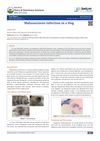
 The dog recovered from a skin infection after treatment with medication.
6 citations
,
January 2013 in “Journal of Veterinary Medical Science” The dog's skin and anemia issues returned after stopping treatment for Babesia gibsoni.
5 citations
,
October 2012 in “Veterinary Pathology” A Doberman Pinscher had a rare form of autoimmune disease causing hair loss and other severe symptoms.
2 citations
,
October 2001 in “Mycoses” A cat had a rare fungal infection caused by Microsporum gypseum.
 4 citations
,
September 2017 in “Skin appendage disorders”
4 citations
,
September 2017 in “Skin appendage disorders” The dog with an Alopecia Areata-like condition showed signs of an autoimmune disease and partially regrew hair without treatment, suggesting dogs could be models for human AA research.
36 citations
,
January 2015 in “Clinical and Translational Allergy” Humans and pets share similar allergy mechanisms, and studying pet allergies can help treat both human and animal allergies.
 August 2019 in “International journal of current microbiology and applied sciences”
 Young dogs in Odisha with dermatitis are most often infected by Microsporum fungus, and Miconazole is the most effective treatment.
19 citations
,
April 2014 in “Veterinary Dermatology” Demodicosis should be considered in cats with facial skin issues exposed to inhalant glucocorticoids.
28 citations
,
January 1999 in “Dermatology” Fluconazole is the preferred treatment for deep skin infections in immunocompromised patients.
 84 citations
,
March 2004 in “Veterinary Dermatology”
84 citations
,
March 2004 in “Veterinary Dermatology” Cyclosporin is effective in treating dog skin diseases and has fewer side effects compared to other treatments.
 6 citations
,
April 2013 in “Assiut Veterinary Medical Journal/Maǧallaẗ Asyūṭ al-ṭibiyyaẗ al-baytariyyaẗ”
6 citations
,
April 2013 in “Assiut Veterinary Medical Journal/Maǧallaẗ Asyūṭ al-ṭibiyyaẗ al-baytariyyaẗ” Most cats with ear infections recovered after treatment, especially Turkish Angora and Persian breeds.
November 2025 in “World Journal of Advanced Research and Reviews” Young cats need regular skin care and deworming to prevent skin problems.