3D-ultrasound can non-invasively detect and predict alopecia areata phases and outcomes.
April 2023 in “Journal of Investigative Dermatology” 3D ultrasound can detect hair follicle changes and disease phases in alopecia areata.
 December 2014 in “PubMed”
 A scalp biopsy can help confirm hair loss types when other methods don't provide a clear diagnosis.
September 2009 in “Hair transplant forum international” A committee was formed to improve hair restoration for certain hair diseases by collecting and analyzing data.
November 2025 in “Pediatric Dermatology” The boy's hair fully regrew after treatment for a rare hair loss condition.
11 citations
,
July 2019 in “Pediatric dermatology” Children with alopecia areata have different trichoscopic features than adults, including more empty follicular openings and pigtail hairs.
2 citations
,
September 2023 in “Journal of the Egyptian Womenʼs Dermatologic Society” Exclamation mark hairs and broken hairs best indicate active alopecia areata.
 122 citations
,
April 1995 in “Journal of Cutaneous Pathology”
122 citations
,
April 1995 in “Journal of Cutaneous Pathology” The document describes how to tell different types of non-scarring hair loss apart by looking at hair and scalp tissue under a microscope.
 36 citations
,
June 2018 in “Journal of The American Academy of Dermatology”
36 citations
,
June 2018 in “Journal of The American Academy of Dermatology” Dermoscopy is useful for diagnosing various skin, hair, and nail disorders and can reduce the need for biopsies.
January 2022 in “Clinical Cases in Dermatology” A 12-year-old boy has a rare, harmless hair loss on his chin with no need for treatment.
 April 2016 in “Journal of The American Academy of Dermatology”
 The study found that Temporal Triangular Alopecia often starts in early childhood, while Folliculitis Decalvans is characterized by tufted hairs and redness around hair follicles.
 March 2012 in “Journal of The American Academy of Dermatology”
 Dermoscopy helps diagnose different hair loss conditions, and characteristics vary among ethnicities and individual cases.
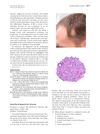
The man has Temporal Triangular Alopecia, a stable, non-scarring hair loss condition best treated with hair transplantation.
 1 citations
,
January 2014 in “Annals of Dermatology”
1 citations
,
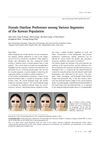
January 2014 in “Annals of Dermatology” Korean people prefer M-shaped hairlines and lower foreheads, with no major differences across various demographics.
 May 2024 in “CRC Press eBooks”
 Children's hair loss can have various causes, including infections, autoimmune issues, physical stress, nutritional problems, and genetic factors.
 January 2011 in “International Journal of Trichology”
 The document concludes that doctors should recognize congenital triangular alopecia to avoid unnecessary treatments, as it does not respond to steroids like alopecia areata does.
 July 2025 in “Health Sciences”
 A 7-year-old girl with non-scarring alopecia will have hair follicle transplantation to improve her quality of life.

A woman with a rare hair loss condition developed skin cancer in the bald area.
 10 citations
,
January 2011 in “Case reports in dermatological medicine”
10 citations
,
January 2011 in “Case reports in dermatological medicine” Hair transplant surgery effectively treated a specific type of hair loss and is recommended as a primary treatment option.
October 2025 in “Diagnostics” Temporal triangular alopecia is a harmless, non-progressive hair loss condition.
 December 2020 in “TURKDERM”
 A 3-year-old boy was diagnosed with a rare, non-scarring hair loss condition called temporal triangular alopecia.
 July 2024 in “Dermatology Practical & Conceptual”
 LC-OCT helps accurately diagnose different types of infant hair loss without invasive methods.
101 citations
,
July 1985 in “Journal of the American Academy of Dermatology” Biotin improved hair growth and combability in one child with uncombable hair syndrome.
1 citations
,
July 2017 in “Skin appendage disorders” A 9-year-old Hispanic girl has Uncombable Hair Syndrome, which may improve with age and biotin treatment.
7 citations
,
June 2018 in “Journal of the American Academy of Dermatology” The document suggests finding a simpler, cheaper way to diagnose Uncombable Hair Syndrome.
 1 citations
,
February 2014 in “Hair therapy & transplantation”
1 citations
,
February 2014 in “Hair therapy & transplantation” A baby boy had two types of temporary hair loss at birth, which might be two forms of newborn hair loss combined.
 January 2010 in “Springer eBooks”
 Pubic hair transplantation can help women with little to no pubic hair, using scalp hair for a natural look and requires careful aftercare.
 3 citations
,
April 2011 in “Dermatologic Surgery”
3 citations
,
April 2011 in “Dermatologic Surgery” Different women have various natural hairline shapes, and understanding this is important for designing hair transplants.
2 citations
,
June 2013 in “In Vitro Cellular & Developmental Biology - Animal” Melanocytes from human fetal hair follicles were successfully cultured, showing potential for hair disease research and clinical use.
Trichoscopic examination is crucial for diagnosing congenital triangular alopecia.