 January 2026 in “Forum Dermatologicum”
 Hair loss can be caused by cancer, treatments, or skin conditions, and trichoscopy helps diagnose it.
30 citations
,
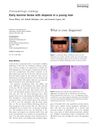
August 2005 in “British journal of dermatology/British journal of dermatology, Supplement” A specific gene mutation causes hair loss and potential eye issues, even if vision seems normal.
 3 citations
,
April 2016 in “International Journal of Dermatology”
3 citations
,
April 2016 in “International Journal of Dermatology” A young man was diagnosed with trichoepitheliomas, causing thick skin and hair loss.
26 citations
,
April 2011 in “British Journal of Dermatology” New mutations in the DSG4 gene cause a rare hair condition.
 September 2024 in “Pediatrics in Review”
 A trichobezoar caused the girl's recurrent intussusception, and surgery plus psychiatric therapy resolved her symptoms.
October 2015 in “CRC Press eBooks” Trichoscopy is a useful tool for examining and monitoring hair and scalp conditions.
19 citations
,
March 1999 in “PubMed” Trichotillomania is a chronic condition where people uncontrollably pull out their hair, often starting in childhood.
 3 citations
,
May 2019 in “Australasian Journal of Dermatology”
3 citations
,
May 2019 in “Australasian Journal of Dermatology” Hair loss in Cronkhite-Canada syndrome may be caused by autoimmune factors, not just stress or malabsorption.
 1 citations
,
January 2013 in “International Journal of Trichology”
1 citations
,
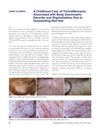
January 2013 in “International Journal of Trichology” A girl with red hair developed hair-pulling and body image disorders after being bullied for her hair color.
January 2022 in “Clinical Cases in Dermatology” The girl's hair loss is due to trichotillomania, which may improve with behavioral therapy or a combination of treatments.
1 citations
,
January 2013 in “Indian journal of dermatology, venereology, and leprology” A girl inherited excessive body hair from her mother and grandmother.
 March 2024 in “IP Indian journal of clinical and experimental dermatology”
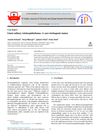
 Giant solitary trichoepithelioma is a rare, usually non-cancerous hair follicle tumor that can sometimes turn into skin cancer.
People with Down syndrome have a higher risk of skin disorders and need better screening and treatment.
5 citations
,
March 2005 in “Pediatric dermatology” Keratosis Follicularis Spinulosa Decalvans is a rare genetic disorder causing skin and hair issues, often inherited through the X chromosome.
1 citations
,
January 2022 in “Annals of Dermatology” A new mutation in the MBTPS2 gene causes a mild form of IFAP syndrome.
13 citations
,
July 2020 in “Anais brasileiros de dermatologia/Anais Brasileiros de Dermatologia” Trichoscopy can help diagnose and monitor the progression of dissecting cellulitis.
 November 2017 in “Pediatrics in Review”
 A 4-year-old girl with hair loss was diagnosed with early-onset trichotillomania and improved with behavioral interventions.
13 citations
,
February 2012 in “International Journal of Dermatology” A new genetic mutation in the CDH3 gene causes hair loss and eye problems in young people.
June 2025 in “British Journal of Dermatology” A rare skin condition in a boy is likely due to a specific genetic mutation pattern.
 August 2021 in “Acta medica Philippina”
 A girl's hair loss was found to be caused by both a hair-pulling disorder and another hair loss condition.
 1 citations
,
October 2023 in “BMC oral health”
1 citations
,
October 2023 in “BMC oral health” Two patients treated with TAC for mouth fibrosis improved but developed Cushing's Syndrome symptoms.
 October 2024 in “Dermatology Practical & Conceptual”
 Using dermoscopy improves diagnosis of scalp and hair disorders in children.
 March 2022 in “Journal of South Asian Association of Pediatric Dentistry”
 Dentists should start preventive treatments early for children with Ichthyosis Vulgaris to avoid dental problems.
 April 2024 in “Oral Surgery Oral Medicine Oral Pathology and Oral Radiology”
 The patient was diagnosed with oral lichen sclerosus and needs long-term monitoring.
 5 citations
,
February 2015 in “JEADV. Journal of the European Academy of Dermatology and Venereology/Journal of the European Academy of Dermatology and Venereology”
5 citations
,
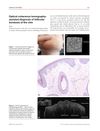
February 2015 in “JEADV. Journal of the European Academy of Dermatology and Venereology/Journal of the European Academy of Dermatology and Venereology” OCT can non-invasively diagnose follicular keratosis and other hair follicle disorders.
15 citations
,
August 2010 in “Annals of saudi medicine/Annals of Saudi medicine” Hair tourniquet syndrome is a rare condition where hair wraps around an infant's body part, needing quick removal to prevent damage.
13 citations
,
January 1985 in “International Journal of Dermatology” The document found differences in lesion distribution and microscopic features among trichostasis spinulosa and similar skin conditions.

Dupilumab improved hair and skin in a woman with Netherton syndrome.
 September 2025 in “Egyptian Journal of Dermatology and Venerology”
 Dermoscopy is crucial for diagnosing rare scalp tumors like trichofolliculoma.
 3 citations
,
May 2024 in “Cureus”
3 citations
,
May 2024 in “Cureus” Early detection and removal of hair can prevent damage in hair-thread tourniquet syndrome.